Beyond its religious significance, the Kanwar Yatra has also become one of India's largest seasonal pilgrimages, generating an estimated Rs 8,000 crore to Rs 16,000 crore in economic activity.
Four Popular Beliefs: The origins of the Kanwar Yatra are rooted in Hindu mythology, although different traditions credit different figures as the first Kanwariya.
The story, mentioned in the Vishnu Purana and Linga Purana, is considered by many to be the inspiration behind the Kanwar Yatra.
6 / 14 Five Types Of Kanwar Yatra: Although all Kanwariyas carry holy Ganga water, the pilgrimage is performed in different ways.
By 2015, participation had risen to nearly 2 crore devotees.
Last Updated: July 31, 2026, 13:42 IST
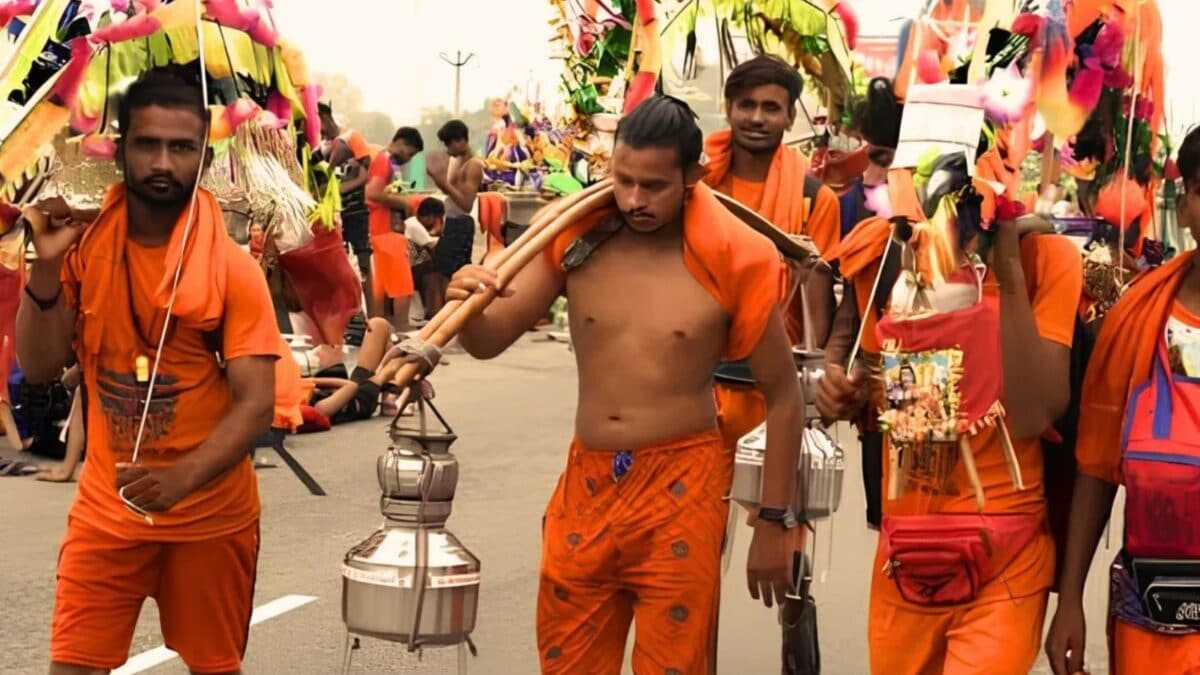
1 / 14 Kanwar Yatra 2026: With the arrival of the holy month of Sawan, millions of Shiva devotees dressed in saffron have once again taken to the roads carrying Kanwars on their shoulders and chanting 'Bol Bam'. Across North India, the annual Kanwar Yatra has begun, with pilgrims travelling on foot to collect holy Ganga water for Jalabhishek (ritual offering of water) at Shiva temples.
2 / 14 Uttar Pradesh witnesses the largest number of Kanwariyas in the country, followed by Uttarakhand, Haryana and Delhi. During the pilgrimage, highways across western Uttar Pradesh are transformed into rivers of saffron as devotees walk barefoot towards their chosen temples. Beyond its religious significance, the Kanwar Yatra has also become one of India's largest seasonal pilgrimages, generating an estimated Rs 8,000 crore to Rs 16,000 crore in economic activity.
ADVERTISEMENT
3 / 14 Who Was The First Kanwariya? Four Popular Beliefs: The origins of the Kanwar Yatra are rooted in Hindu mythology, although different traditions credit different figures as the first Kanwariya. One belief traces the tradition to Lord Ram, who is said to have collected Ganga water from Sultanganj in present-day Bihar before offering it to Lord Shiva at Deoghar in Jharkhand. According to tradition, this journey followed King Bhagiratha's efforts to bring the River Ganga to Earth. (AI Generated)
4 / 14 Another popular belief identifies Ravana, one of Lord Shiva's greatest devotees, as the first Kanwariya. According to the Valmiki Ramayana, Ravana carried Ganga water from Haridwar and offered it at the Pura Mahadev Temple in Baghpat after Lord Shiva consumed the deadly poison released during the Samudra Manthan. Many also believe that Lord Parashuram brought Ganga water from Garhmukteshwar's Brajghat and performed Jalabhishek at the Pura Mahadev Temple in Baghpat after undertaking severe penance to please Lord Shiva. (AI Generated)
ADVERTISEMENT
5 / 14 Another widely accepted belief links the Kanwar tradition to Shravan Kumar, who carried his elderly blind parents in a shoulder-mounted palanquin resembling today's Kanwar on a pilgrimage to Haridwar. The story, mentioned in the Vishnu Purana and Linga Purana, is considered by many to be the inspiration behind the Kanwar Yatra.
6 / 14 Five Types Of Kanwar Yatra: Although all Kanwariyas carry holy Ganga water, the pilgrimage is performed in different ways. Bol Bam Kanwar is the most common form of the pilgrimage. Devotees walk barefoot and may stop to rest, but the Kanwar must never touch the ground. Instead, it is suspended from a stand or tree before the journey resumes. In Khadi Kanwar, the Kanwar remains upright throughout the journey. A helper accompanies the pilgrim and supports the Kanwar during rest breaks, ensuring it never rests on the ground.
ADVERTISEMENT
7 / 14 Considered one of the fastest forms of the pilgrimage, Dak Kanwariyas do not stop after collecting Ganga water and complete their Jalabhishek within 24 hours. They usually wear white clothing, and many Shiva temples provide dedicated lanes for them. Dandavat Kanwar, on the other hand, is regarded as the most physically demanding form of the pilgrimage. Devotees repeatedly lie fully prostrate on the ground, mark the distance covered by their body length and continue until they reach the temple. Depending on the distance, the journey can take several days.
8 / 14 In case of Jhula Kanwar, a specially designed bamboo swing carries pots filled with Ganga water on either side. Whenever pilgrims halt, the Kanwar is hung at an elevated position rather than being placed on the ground.
ADVERTISEMENT
9 / 14 Kanwar Yatra Routes: Thousands of Kanwariyas undertake foot pilgrimages ranging from 50 to 150 kilometres, carrying holy Ganga water to some of Uttar Pradesh's most revered Shiva temples. Among the most popular routes are the 152-km journey from Haridwar to Pura Mahadev Temple in Baghpat, the 139-km route from Haridwar to Aughadnath Temple in Meerut, the 112-km pilgrimage from Prayagraj to Kashi Vishwanath Temple in Varanasi, the 120-km journey from Bithoor in Kanpur to Lodheshwar Mahadev Temple in Barabanki, and the 55-km route from Kachhla Ghat in Badaun to Bankhandi Nath Temple in Bareilly. These routes witness lakhs of devotees every year during the holy month of Sawan.
10 / 14 Rules Every Kanwariya Follows: The Kanwar Yatra is guided by several religious traditions that devotees observe throughout their pilgrimage. Kanwariyas abstain from alcohol, tobacco and all other intoxicants, follow a strictly vegetarian diet, and walk barefoot for the entire journey. Many also avoid using leather items, sleep on the ground instead of beds, and ensure that the Kanwar carrying the holy Ganga water never touches the ground. Devotees traditionally address one another as 'Bhole' or 'Bam' rather than by their names, while maintaining discipline, humility and respectful behaviour throughout the yatra.
ADVERTISEMENT
11 / 14 A Pilgrimage Worth Thousands Of Crores: The Kanwar Yatra has also emerged as one of India's largest seasonal economic events, generating business worth thousands of crores every year. A typical Kanwariya spends between Rs 2,000 and Rs 4,000 during the pilgrimage, including Rs 500-Rs 1,000 on purchasing and decorating a Kanwar, Rs 1,000-Rs 2,000 on food and refreshments along the route, Rs 300-Rs 500 on new saffron attire, and Rs 200-Rs 500 on prasad and other religious offerings. With an estimated 4 crore devotees participating, the total market generated by the pilgrimage is expected to range between Rs 8,000 crore and Rs 16,000 crore, providing a major boost to local businesses, roadside vendors and the hospitality sector.
12 / 14 With an estimated 40 million (4 crore) Kanwariyas participating this year, the overall market generated by the pilgrimage is expected to range between Rs 8,000 crore and Rs 16,000 crore, benefiting local businesses, roadside vendors, eateries, transport providers and religious goods sellers across North India.
ADVERTISEMENT
13 / 14 How The Kanwar Yatra Has Changed Over Three Decades? The Kanwar Yatra has evolved dramatically over the past 30 years. In 1990s, the pilgrimage expanded rapidly across Uttar Pradesh. Matching saffron outfits and decorated Kanwars became increasingly popular, while around 20 lakh devotees participated each year. In 2000s, the concept of vehicle-assisted Kanwars began to emerge. Pilgrims increasingly travelled with music systems, while governments started setting up organised camps, food stalls and accommodation along major routes. By 2015, participation had risen to nearly 2 crore devotees.