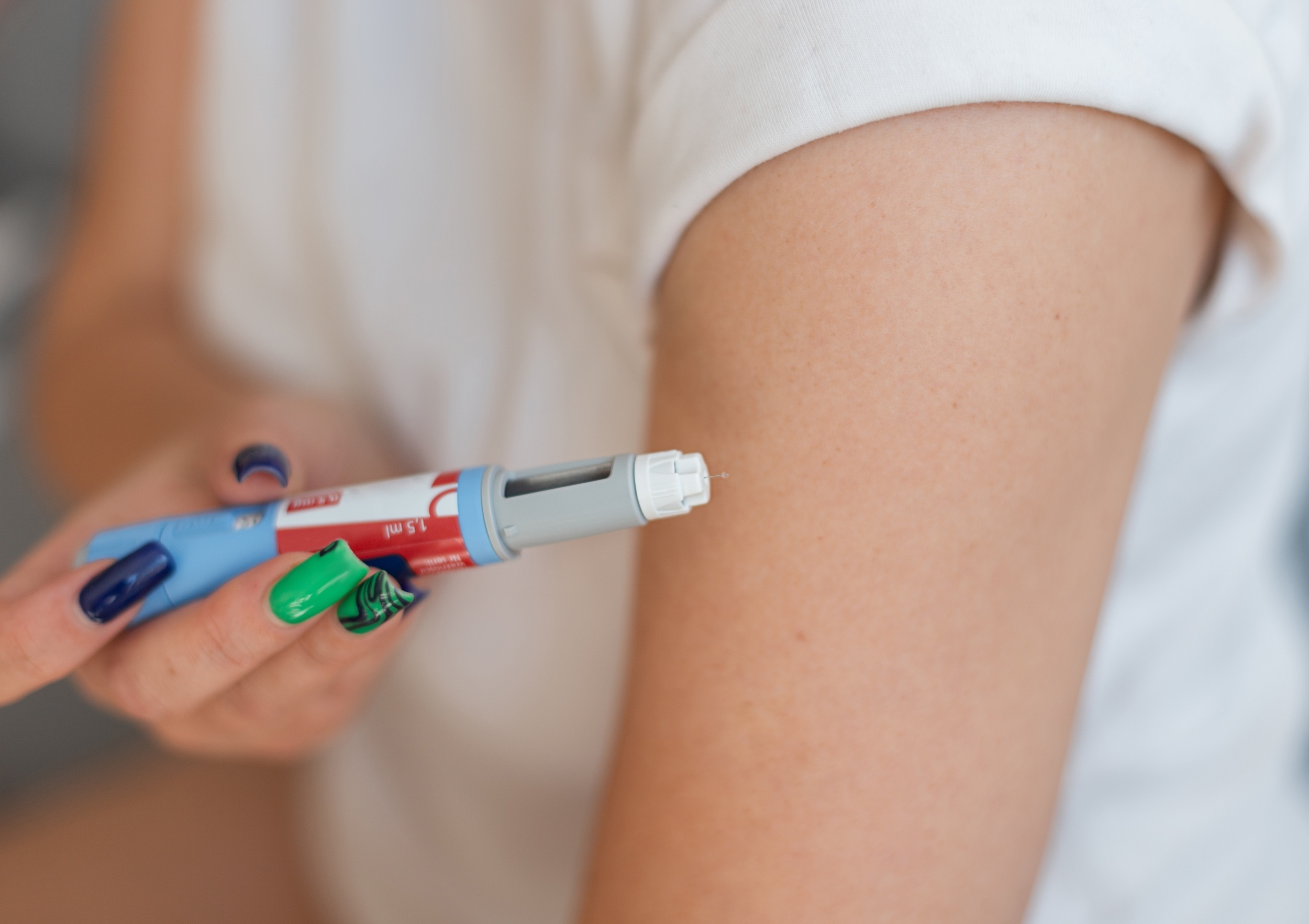
The finding complicates a common assumption behind the boom in weight-loss injections, that dropping pounds automatically makes life feel better.
What stayed unsettled was whether that weight loss actually left people healthier, and at what cost.
By comparison, only about two percent of people relying on lifestyle changes alone reached that mark.
Nausea, vomiting, and diarrhea rose sharply on the strongest agents, roughly tripling or quadrupling compared with lifestyle changes.
On orforglipron, people dropped out at about four times the rate seen with lifestyle changes alone.
A sweeping new analysis of obesity drugs has found that medications able to strip away roughly a seventh of body weight in a year barely improved how people rated their own health.
Across dozens of trials, not one drug lifted quality of life enough to count as a real change.
The finding complicates a common assumption behind the boom in weight-loss injections, that dropping pounds automatically makes life feel better.
It also sharpens a trade-off for patients, because the drugs that removed the most weight tended to carry the most side effects.
A vast comparison
The work pulled together 262 randomized trials involving nearly 100,000 adults with extra weight or obesity.
Each tested one or more of 19 drugs against diet and exercise alone, the benchmark each treatment had to beat.
Professor Sheyu Li at West China Hospital of Sichuan University (SCU) in Chengdu, China, led the analysis with colleagues across several countries.
Rather than tracking weight alone, they graded each drug on 24 separate measures of benefit and harm. That wider lens is what sets the study apart.
A separate analysis published in 2025 had already ranked the newer injections by how much weight they take off.
What stayed unsettled was whether that weight loss actually left people healthier, and at what cost.
The weight came off
On the scale, the numbers were large. Compared with lifestyle changes alone, tirzepatide and the experimental drug CagriSema each reduced body weight by nearly 15 percent over one year.
Semaglutide, the compound behind Ozempic and Wegovy, landed a step below.
Its injected form cut about ten percent of body weight, while a newer pill version reached closer to eleven percent.
Two other drugs, orforglipron and phentermine-topiramate, fell in the eight to ten percent range.
For context, between a third and a half of people on tirzepatide or CagriSema reached at least a 20 percent drop in weight within a year.
By comparison, only about two percent of people relying on lifestyle changes alone reached that mark. Reductions that large approach what some weight-loss surgeries achieve.
Life did not improve
Quality of life, captured through standard questionnaires that ask people about physical function, energy, pain, and mood, barely moved no matter which drug they took.
Researchers set the bar for a meaningful change at ten points on a 100-point scale. The best-performing drugs managed about four points or fewer. Most came in lower still.
That means a person could lose a seventh of their body weight and still report feeling about the same as before. The pattern held across the studies.
It showed up across every drug backed by solid evidence, drawn from 43 trials and more than 45,000 people. Why the gap exists is not fully clear.
Side effects may cancel out some of the emotional lift of losing weight, and a year may be too short for gains in mood and daily function to appear.
The cost of losing weight
The drugs that stripped away the most weight also caused the most side effects.
Nausea, vomiting, and diarrhea rose sharply on the strongest agents, roughly tripling or quadrupling compared with lifestyle changes. Fatigue was common.
On one older combination drug, naltrexone-bupropion, the risk climbed nearly ninefold – adding more than 300 cases of fatigue for every 1,000 people treated in a year.
Muscle and adherence
Newer agents like orforglipron and CagriSema brought smaller but real increases. Those side effects drive people to quit.
On orforglipron, people dropped out at about four times the rate seen with lifestyle changes alone.
Real-world tracking suggests that roughly half stop these drugs within the first year regardless. The medications also trim muscle, not just fat.
Lean mass fell most on tirzepatide, which cut fat by about a quarter but also took off more than eight percent of lean tissue.
For older adults or anyone who is at risk of frailty, that loss carries its own concern.
One drug apart
One result stood out from the pack. Injected semaglutide was the only drug tied to a lower risk of death from any cause, cutting it by roughly a fifth, along with fewer heart attacks.
That benefit leans heavily on a large trial in people who already had heart disease, where the drug lowered the risk of heart attacks, strokes, and deaths from heart disease by about 20 percent.
Both semaglutide and tirzepatide also cut the risk of heart failure. The upshot is that no single drug wins on everything.
Tirzepatide and CagriSema take off the most weight, while injected semaglutide has the strongest case for helping people live longer.
This is why the team casts the decision as a set of trade-offs rather than a search for one best pill.
Weight loss and well-being
The benefits also depend on staying on the drug. A recent review of 37 studies found that people regain weight at about 0.9 pounds (0.4 kilograms) a month after stopping.
They drift back toward their starting weight within roughly two years. For many patients, that turns obesity treatment into a long-term commitment rather than a short course.
The consequences ripple outward, touching drug costs, ongoing side-effect monitoring, and how health systems budget for millions of continuing prescriptions.
What the study makes clear is that weight loss and well-being are not the same thing, and that today’s drugs deliver the first far more reliably than the second.
For patients and doctors, the real question is no longer just how much weight will come off. It is what a person trades to get there, and whether they can keep it up.
The study is published in the journal The BMJ.
—–
Like what you read? Subscribe to our newsletter for engaging articles, exclusive content, and the latest updates.
Check us out on EarthSnap, a free app brought to you by Eric Ralls and Earth.com.
—–