A multidisciplinary research team from the School of Life Sciences at the University of Hyderabad (UoH) has received a ₹4.98-crore grant from the Indian Council of Medical Research (ICMR) to study Polycystic Ovary Syndrome (PCOS) and develop a low-cost diagnostic platform.
The proposed diagnostic platform is intended to support more detailed classification of PCOS and research into treatment responses.
The project brings together expertise in reproductive biology, computational science and clinical reproductive medicine.
Researchers will examine the potential of molecular classification to complement existing approaches to PCOS diagnosis and fertility care.
The project is expected to generate research publications and intellectual property while creating a population-specific scientific resource for further studies on PCOS and reproductive health.
A multidisciplinary research team from the School of Life Sciences at the University of Hyderabad (UoH) has received a ₹4.98-crore grant from the Indian Council of Medical Research (ICMR) to study Polycystic Ovary Syndrome (PCOS) and develop a low-cost diagnostic platform.
The four-year project, sanctioned under the ICMR Intermediate Extramural Grants, also known as the ICMR Nischayak Anveshan Extramural Grants 2026, will combine single-cell transcriptomics, genomics and artificial intelligence to study molecular changes associated with PCOS. The project received ICMR sanction on September 1, 2026, with work commencing on September 16.
An initial ₹1.52 crore has been allocated for the first year. Titled “Multi-Modal Artificial Intelligence Integration of Systemic and Follicular Single-Cell Transcriptomics for Non-Invasive PCOS Theranostics, Molecular Endotyping, and Early Discovery”, the project aims to investigate whether molecular signatures in blood can provide information about the follicular environment in women with PCOS.
The researchers plan to analyse circulating immune cells from blood samples and use machine-learning models to identify molecular patterns associated with different forms of the condition. The proposed diagnostic platform is intended to support more detailed classification of PCOS and research into treatment responses.
Another major component of the project is the development of an India-specific single-cell transcriptomic atlas of PCOS. The resource is expected to provide a reference for researchers studying the molecular characteristics of the condition among Indian populations and could support future research in reproductive health and drug discovery.
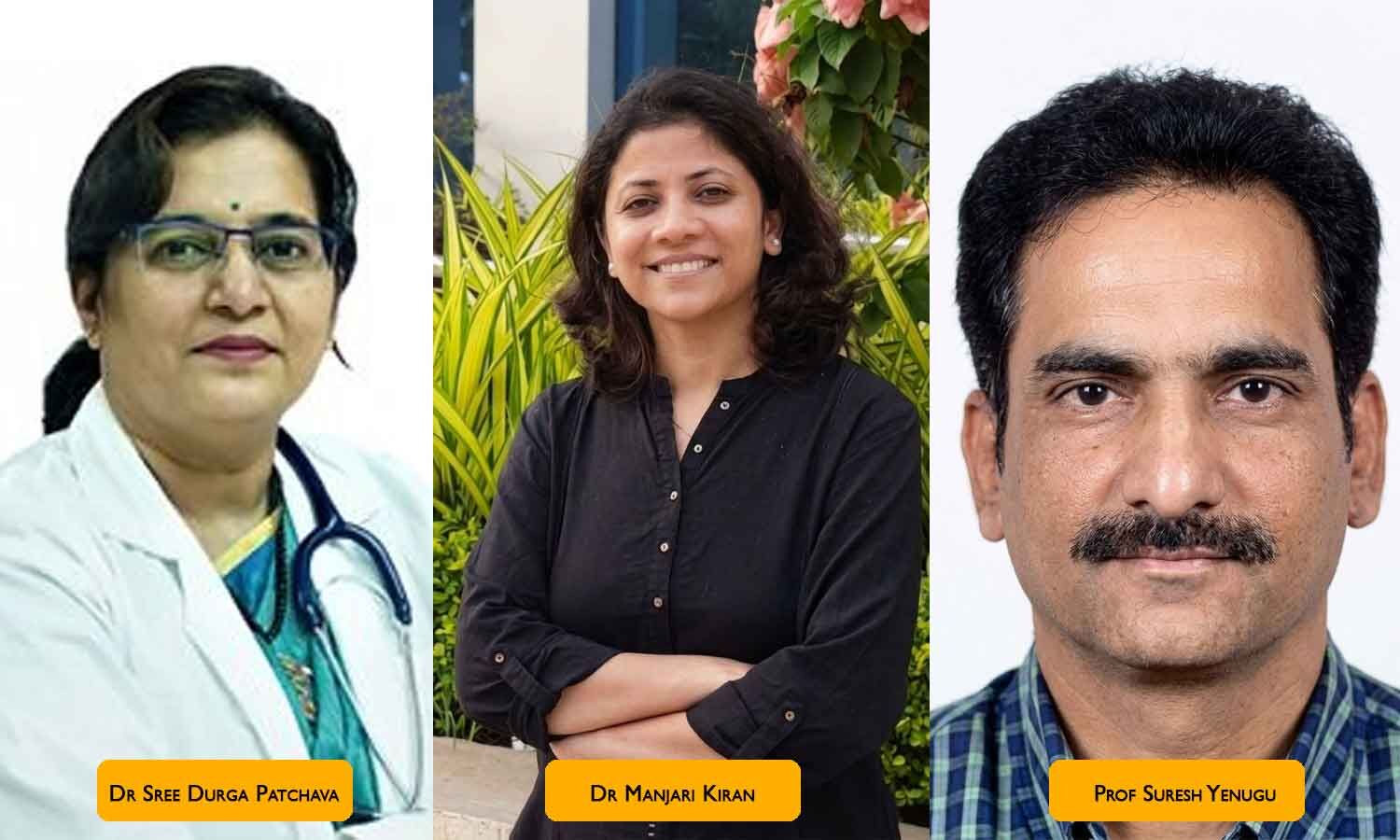
Prof. Suresh Yenugu of the Department of Animal Biology, School of Life Sciences, is the principal investigator. Dr Manjari Kiran from the Department of Systems and Computational Biology is the co-investigator, while Dr Sree Durga Patchava, Head of Reproductive Medicine at Virinchi Hospitals, Hyderabad, is the clinical co-investigator.
The project brings together expertise in reproductive biology, computational science and clinical reproductive medicine. Researchers will examine the potential of molecular classification to complement existing approaches to PCOS diagnosis and fertility care. As part of the project, UoH will also strengthen its research infrastructure with a high-performance GPU computing workstation and a real-time PCR system. The grant will additionally support specialised research positions for young scientists.
The project is expected to generate research publications and intellectual property while creating a population-specific scientific resource for further studies on PCOS and reproductive health.