The UK's Skilled Worker visa is similar to the US' H-1B visa in that it allows highly skilled overseas professionals to work in the country, as well as brin their dependents with them.
WHAT IS THE UK SKILLED WORKER VISA PROGRAMME?
The Skilled Worker visa is the UK's primary immigration route for highly-skilled foreign professionals seeking long-term employment in the country.
advertisement"The Skilled Worker visa route is clearly being abused on an industrial scale," Philp said.
The UK Home Office has taken several steps to curb the use of the Skilled Worker visa for lower-skilled roles.
The UK Skilled Worker visa that was introduced in 2020 in the aftermath of Brexit (the country's exit from the European Union) to attract highly skilled professionals from across the world, is facing allegations of widespread misuse.
According to multiple British media reports and statements by UK politicians, businesses such as convenience stores, corner shops, restaurants, franchises and even religious institutions are now misusing the visa programme by bringing in large numbers of low-skilled workers using a visa meant for highly-skilled professionals.
Read Full Story
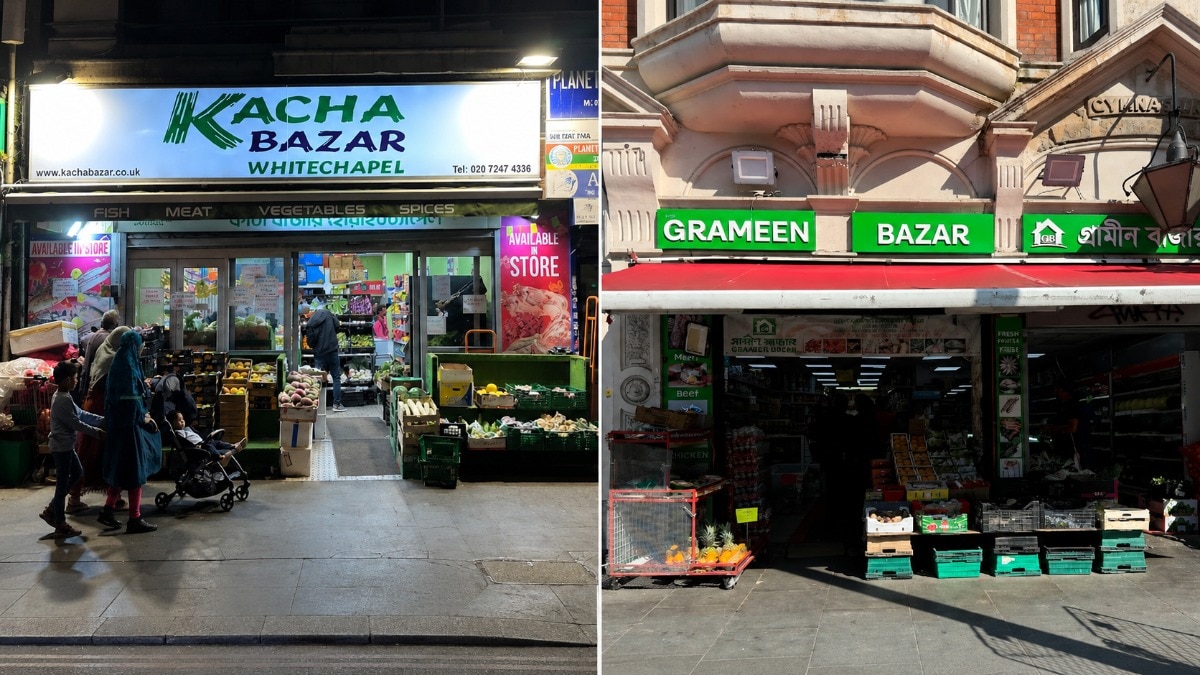
In a clip posted on X on Saturday, Conservative Party leader and MP Chris Philp highlighted several such small enterprises, many run by Bangladeshi immigrants in London's Whitechapel Street which had been issued the licence to sponsor overseas workers via the Skilled Worker visa despite having little obvious need for skilled professionals.
The UK, like many other Western European countries, has faced a persistent shortage of highly skilled professionals, particularly in healthcare, Information Technology (IT), Engineering, among others. The Skilled Worker visa programme was instituted to address this shortage, enabling eligible businesses to obtain a sponsor licence and recruit qualified foreign workers.
However, critics, including elected politicians, have argued that loopholes within this programme have allowed thousands of employers, including corner shops, convenience stores and kebab shops to recruit large numbers of overseas workers for roles that do not align with the scheme's original objective of attracting highly skilled professionals.
The UK's Skilled Worker visa is similar to the US' H-1B visa in that it allows highly skilled overseas professionals to work in the country, as well as brin their dependents with them. Unlike the H-1B visa, however, individuals who qualified for the Skilled Worker visa can also apply for permanent settlement (known officially as Indefinite Leave to Remain) after five continuous years in the UK.
WHAT IS THE UK SKILLED WORKER VISA PROGRAMME?
Before we go into how the UK Skilled Worker visa programme has been subject to misuse by UK-based employers, let's first have a look at how the programme works in the first place.
The Skilled Worker visa is the UK's primary immigration route for highly-skilled foreign professionals seeking long-term employment in the country.
Operating on a points-based system, eligible candidates need to produce a genuine job offer from a UK Home Office approved employer, meet specific salary thresholds (at least 41,700 pounds a year), and demonstrate sufficient English proficiency. Individuals who qualify for the via are allowed to bring dependents into the UK, as well as apply for permanent settlement (known officially as Indefinite Leave to Remain) after five continuous years.
For businesses to sponsor workers, they must secure a Sponsor Licence from the UK Home Office. Eligible businesses must be able to demonstrate a legitimate trading presence in the UK (registration documents, corporate bank accounts, physical premises among others), no history of convictions or crimes, as well as designated personnel to monitor overseas workers.
advertisement
Importantly, just about business (with key exceptions like adult social care, healthcare, financial services among others), can qualify for the Sponsor Licence so long as they are able to prove their legitimate operating presence in the UK.
As Ben Brindle, a senior researcher at the Migration Observatory at the University of Oxford told the BBC, there are no restrictions on which businesses can apply.
"They just have to be a genuine business that is actively trading in the UK," Brindle was quoted as saying by the BBC, adding that, "The most relevant restriction for getting onto the register is whether they intend to offer 'eligible roles'."
RESTAURANTS, CORNER SHOPS, RELIGIOUS INSTITUTES GOT LICENCES TO SPONSOR HIGHLY SKILLED VISAS
Even though the UK Skilled Worker visa programme was originally intended to attract highly skilled workers from across the world, the businesses that have secured the Sponsor Licence from the UK Home Office include restaurants, cafes, corner stores and other small businesses.
advertisement
According to a report by the BBC published earlier this month, analysis of Home Office data found about 2,000 businesses and organisations in the county of Kent alone held visa sponsor licences. This includes more than 200 restaurants, takeaways and cafes, plus almost 250 corner shops, mini-markets and convenience stores – with 95% of licences being for the skilled worker route.
The figure also included several religious organisations in Kent, including Canterbury Cathedral, the Gravesend Gurdwara, the Longfield Gurdwara's kabaddi team, Sittingbourne Islamic Cultural Centre, Ashford Muslim Association, Dartford & Gravesend Muslim Association, the Kent branch of the Redeemed Christian Church of God and the Dartford branch of the People of Grace Gospel Mission, reported the local news outlet, Kent Online.
Another report by the UK-based news outlet, The Sun, published in June, UK Home Office data revealed that there were at least 159 kebab shops, and numerous car washes and vape shops held Sponsor Licences issued by the UK Home Office, allowing them to legitimately hire and bring out overseas workers, and their dependents.
UK MPS ALLEGE SKILLED WORKER VISA BEING MISUSED
Similarly, Conservative Party MP Chris Philp, also highlighted the issue in a clip posted on X on Saturday. During a visit to London's Whitechapel Road, Philip found several small-scale grocery shops, phone repair shops and other convenience stores, several of them run by immigrants from countries like Bangladesh, had been issued a Sponsor Licence, and had overseas workers on their payroll.
advertisement
"The Skilled Worker visa route is clearly being abused on an industrial scale," Philp said. "We need to reform the system, so there is no low-skilled immigration whatsoever. Only people with genuinely high levels of skills should be able to come into our country."
Echoing those concerns, Weald of Kent MP Katie Lam was quoted by the BBC as saying that the findings showed the immigration system was being used in "absurd" ways. She argued that the Skilled Worker visa was designed for people with specialist skills who make a "major contribution", not to fill "low-skilled roles". Lam urged the government to "close the loophole", adding that businesses unable to recruit locally should instead "raise wages, improve training and invest in British workers."
However, immigration experts quoted by the BBC argued that the situation was more nuanced, noting that the presence of a sponsor licence does not mean an employer is recruiting workers for low-skilled roles or misusing the immigration system.
advertisement
Ironically, it is actually more expensive to hire overseas workers for these low-skill posts via the Skilled Worker visa programme due to the litany of fees that employers need to shell out. Licences cost 611 pounds for small employers, along with an immigration skills charge of at least 480 pounds per worker for each year of sponsorship. And each of these employees is required by law to be paid a minimum of 41,700 pounds a year, regardless of their role. That, however, has not stopped employers across all sectors, regardless of whether they need highly skilled employees or not to apply for, and acquire the Sponsorship Licence.
The UK Home Office has taken several steps to curb the use of the Skilled Worker visa for lower-skilled roles. In 2025, it removed more than 100 occupations from the list of jobs eligible for sponsorship (including cooks, bakers, and other hospitality industry roles), raised salary thresholds and tightened the eligibility criteria for employers seeking to recruit overseas workers. It has also sharply increased enforcement, with sponsor licence revocations rising from 347 in 2023 to 3,299 in 2025.
However, many have argued that the programme's biggest loophole remains unchanged, that being almost any legitimate UK business can apply for a sponsor licence. Once approved, employers can sponsor overseas workers for eligible roles, leading opponents to contend that some businesses are using the system to recruit workers for jobs that were never intended to fall within a visa designed to attract highly skilled professionals.
- Ends