Warm blood appeared three timesThe tree placed the origin of Scombridae right around the asteroid strike.
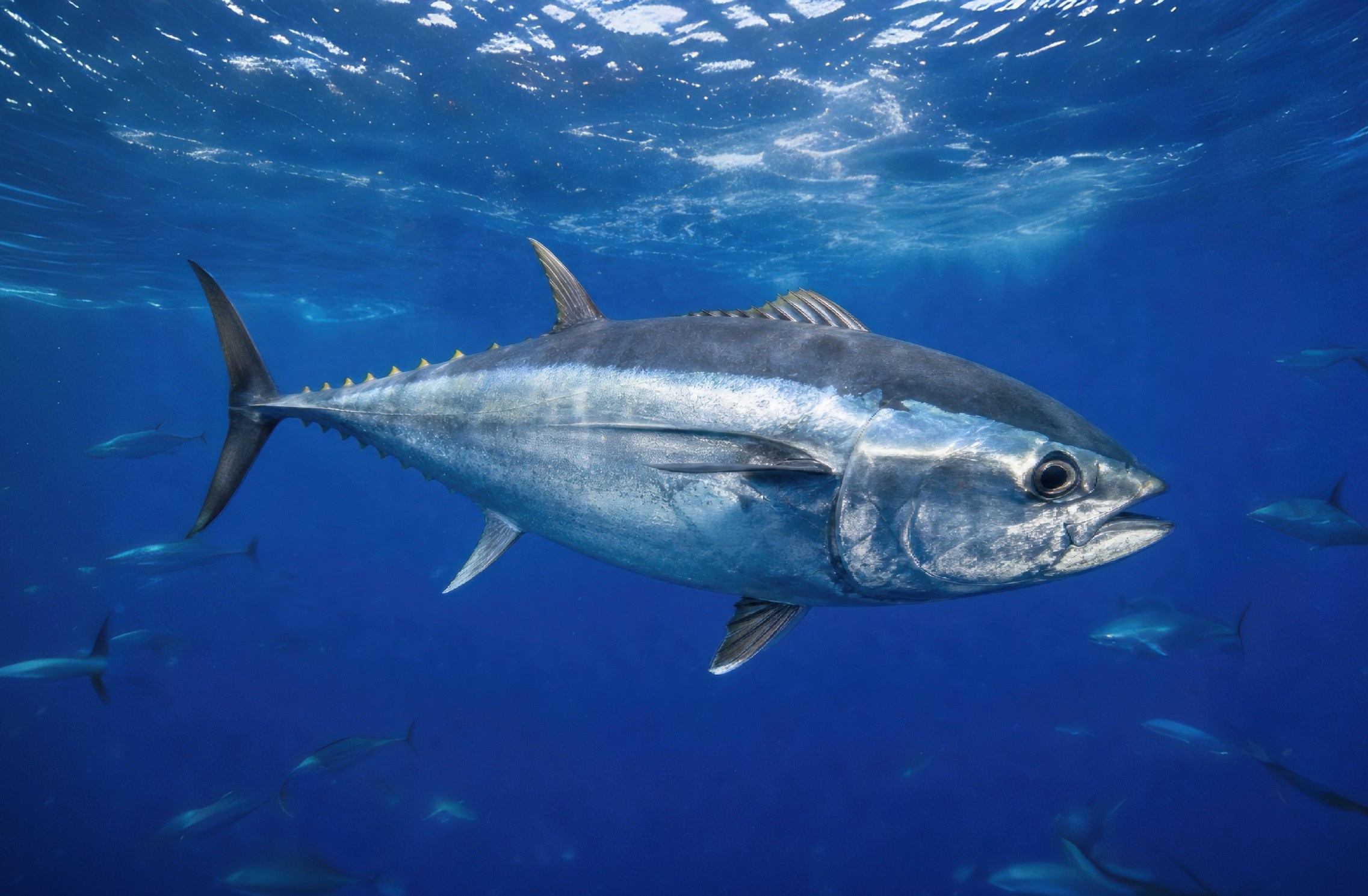
The most dramatic jump happened in the market tunas, the only warm-blooded fish among the big-bodied members of the group.
One large species stayed cold-blooded, while one warm-blooded species stayed small.
Different lineages picked up size and warm blood at different moments, as conditions opened and closed around them.
Why the timing mattersSize and warm blood were never a single package.
For a long time, the story of the tuna began with a catastrophe. An asteroid struck Earth 66 million years ago, wiped out the non-avian dinosaurs, and cleared the oceans of their largest predatory fish.
The tidy version says tunas and their fast, warm-blooded cousins rushed in to fill that empty water.
A new study from Yale University says the truth was slower and stranger.
An old idea about tuna
The comparison feels natural at first. Mammals climbed to the top after the dinosaurs vanished, and tunas looked like the ocean’s version of that same rebound.
The empty sea was real enough. Huge predatory fish had ruled the Mesozoic oceans, and the impact swept nearly all of them away.
Some of those lost hunters may even have been warm-blooded themselves. Their disappearance left open water that a fast new predator could, in theory, grow into.
For years, the fossil record seemed to fit that neat picture. One disaster looked like it explained the size, the speed, and the warm bodies all at once.
Building a fish family tree
Testing the idea meant working out when tunas actually changed.
Researchers combined genetic data with fossil specimens to build the most complete dated family tree yet for Scombridae, the group that holds tunas and mackerels.
The work leaned on hundreds of genetic markers across nearly every living species in the family. That breadth let the timeline hold firm where older trees stayed fuzzy.
That group matters more than its plain name suggests. It contains about half of all living warm-blooded ray-finned fish species.
Some of the tissue and DNA came from the Yale Peabody Museum, a collection built for exactly this kind of deep-time work.
Fossils pinned the tree to real geological time, while the genes sorted out the branching order.
Warm blood appeared three times
The tree placed the origin of Scombridae right around the asteroid strike. But the traits people care about showed up much later.
Warm-bloodedness, or endothermy, did not arrive in one burst. It evolved three separate times in these fish, and at least two of those origins came 10 to 15 million years after the impact.
“Our results demonstrate the K-Pg extinction did not trigger the evolution of tunas and related large, endothermic predators,” said Chase Brownstein, lead author of the study.
“We show that the body plans of these predators evolved over tens of millions of years and that there is no connection between the origins of endothermy and large body sizes in these lineages.”
“More broadly, this paper highlights the need to be cautious when interpreting the evolution of species’ body plans directly from evolutionary trees.”
Big bodies came later
Large size followed its own separate schedule. Bodies longer than six feet appeared several times over, always well after the extinction.
Most of these giants turned up in just the last 25 million years. The most dramatic jump happened in the market tunas, the only warm-blooded fish among the big-bodied members of the group.
There was a long gap between the two traits. More than 20 million years separated the arrival of warm blood in that lineage from the moment its body ballooned.
Size and warm blood also refused to move as a pair. One large species stayed cold-blooded, while one warm-blooded species stayed small.
The ocean kept changing
Behind that slow build sits a restless ocean. Fish communities turned over again and again across the past 66 million years, reshuffling which animals held the top spots.
The open niche did not simply wait to be filled. It kept shifting shape while tunas gradually grew into the predators alive today.
Tunas themselves came late to the party. Their fastest burst of new species unfolded only in the last 10 million years or so.
That churn helps explain the staggered pattern. Different lineages picked up size and warm blood at different moments, as conditions opened and closed around them.
Why the timing matters
Size and warm blood were never a single package. Each trait appeared at its own moment, shaped by different pressures across the family.
Put together, the modern tuna body took shape over roughly 50 million years.
A slow assembly like that is easy to miss when a branching diagram compresses it into one clean picture.
None of this makes the tuna any less impressive. It simply swaps a single lucky break for a long run of small, separate steps.
What it means for tunas
Thomas Near is a professor of ecology and evolutionary biology at Yale and the study’s senior author. He sees value in this history that reaches well beyond the deep past.
Better knowledge of tuna biology can support conservation. Populations of the commercially important Atlantic bluefin tuna have fallen sharply from decades of overfishing.
Tuna is also a nutrient-rich food for people all over the world. Seeing how the fish grew and lived across deep time can help shape smarter limits on the catch.
A link to human health
“Understanding that endothermy independently evolved multiple times in tunas and mackerels provides insight into the fundamental machinery underlying metabolism and thermoregulation,” said Professor Near.
“These are systems that are central to disease and health conditions in humans, such as obesity, diabetes, and metabolic syndrome.”
“To be clear, there is no explicit connection here, but studying how our biodiversity has dealt with similar challenges over the long sweep of time is relevant to better understanding human health.”
The research reminds us that even the ocean’s fastest predators were shaped by patience, not by a single moment in Earth’s history.
The study is published in the journal Proceedings of the Royal Society B.
—–
Like what you read? Subscribe to our newsletter for engaging articles, exclusive content, and the latest updates.
Check us out on EarthSnap, a free app brought to you by Eric Ralls and Earth.com.
—–