The Iran ConflictThe most alarming signal from the podium was Trump’s direct threat regarding the ongoing seven-month war involving the U.S., Israel, and Iran.
More from Opinion More from OpinionWhy India is annoyedTrump’s speech contained two specific, highly sensitive claims that directly challenged India’s official geopolitical stances and national sovereignty.
This signals that India must continuously manage Trump’s unpredictable, personalised style of diplomacy, ensuring that its sovereign security interests are not compromised by Washington's transactional deals.
2) In his speech, Trump directly singled out China and India as the primary funders of the Russia-Ukraine war.
Trump's aggravated friction points in the Washington–New Delhi relationship by publicly questioning India's strategic autonomy.
At the UNGA, Trump revived two contentious issues at the heart of India-US ties
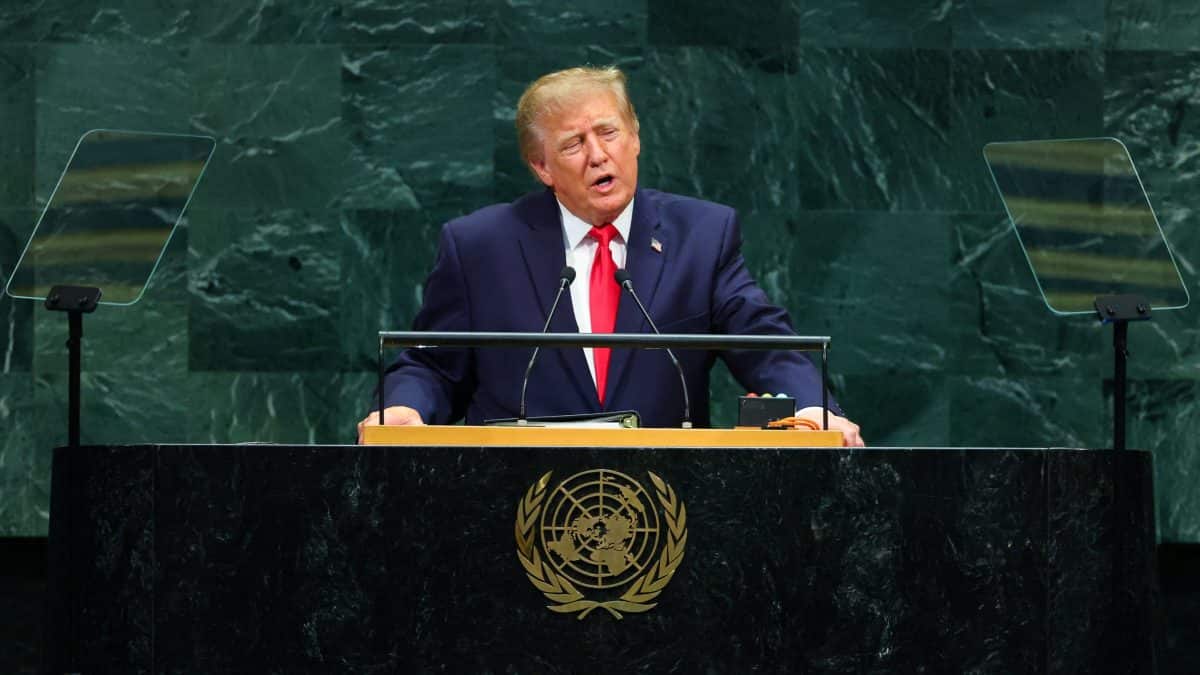
The United Nations General Assembly was founded in 1945 on the ashes of global conflict, designed explicitly to act as a shield against unilateral aggression and to promote international cooperation. However, when President Donald Trump stepped up to the green-marble rostrum at the UN General Assembly, the contrast between his worldview and the institution's call for global unity could not have been more pronounced. Rather than adopting the traditional, diplomatic vernacular of a world summit, Trump delivered a speech that mirrored a domestic political rally—blending boasts about American economic achievements with aggressive geopolitical ultimatums.
The Iran Conflict
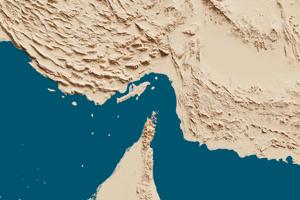
The most alarming signal from the podium was Trump’s direct threat regarding the ongoing seven-month war involving the U.S., Israel, and Iran. Framing the conflict around a "big decision" to be made following the U.S. midterm elections, Trump presented a stark ultimatum: Iran must either capitulate to a new deal or face complete "annihilation".
Advertisement
Advertisement
While defenders may view such rhetoric as a classic brinkmanship tactic to force Tehran to the negotiating table, using the UN General Assembly—a body dedicated to global peace—to casually threaten the total destruction of a sovereign nation shocked many delegates. It indicated that the United States willing to bypass traditional rules of engagement, heightening the risk of catastrophic escalation in an already volatile West Asia.
‘To the victor go the spoils’
Touting a recent oil agreement following the military ousting of Venezuela's authoritarian leader earlier in the year, Trump directly cited a notorious page of American political history, stating, "To the victor go the spoils”. This statement sent a chilling message to smaller or resource-rich nations. By treating foreign national resources as literal spoils of military intervention, the speech signalled a retreat from the respect for state sovereignty that has underpinned international relations for decades. It replaced democratic idealism with a doctrine of raw resource extraction, validating fears that American intervention is fundamentally driven by commercial and territorial gain.
More from Opinion More from Opinion
Why India is annoyed
Trump’s speech contained two specific, highly sensitive claims that directly challenged India’s official geopolitical stances and national sovereignty. India was reportedly annoyed by the following statements:
1) Trump again claimed during his address that his administration successfully resolved eight major international conflicts, highlighting his personal mediation in the brief 2025 India-Pakistan military confrontation. Trump referred to Pakistan as a "great country" and called PM Shehbaz Sharif a "terrific man" and an excellent person. Trump stated that Sharif called to thank him and credited his administration's intervention with helping bring an end to a military conflict between Pakistan and India in May 2025, claiming it "saved 30 million lives".
Advertisement
Advertisement
This narrative stands in stark contrast to the stance of New Delhi. The Indian government has repeatedly rejected any claims of third-party US mediation, firmly maintaining that the May 2025 ceasefire was negotiated strictly through direct, bilateral military-to-military channels between the Directors General of Military Operations of both countries. While Trump likely meant this as a boast of his prowess as a global peacemaker, New Delhi historically rejects third-party mediation regarding its bilateral relations with Pakistan.
This signals that India must continuously manage Trump’s unpredictable, personalised style of diplomacy, ensuring that its sovereign security interests are not compromised by Washington's transactional deals.
2) In his speech, Trump directly singled out China and India as the primary funders of the Russia-Ukraine war. He targeted India for its continued purchase of discounted Russian crude oil, reiterating a long-standing grievance that New Delhi's energy trade fills Moscow's war chests.
Trump's remarks rubbed salt into an existing wound; the Trump administration had previously waged a tariff war against India—imposing severe 50 per cent duties on certain Indian exports as a penalty for buying Russian oil—before partially dialling them back under an ongoing trade negotiation. India has consistently defended its oil imports from Russia as a pragmatic necessity to protect its own energy security and shield its large population from global inflation spikes. Trump's aggravated friction points in the Washington–New Delhi relationship by publicly questioning India's strategic autonomy.
Rejection of Globalist Frameworks
In his address, President Donald Trump delivered a blunt reassertion of American sovereignty that explicitly rejected several key global frameworks and international bodies. Centring his message on an "America First" doctrine, Trump forcefully pushed back against multilateral oversight, declaring that the United States “totally rejects” any international attempt to construct a globalist scheme to regulate artificial intelligence. His remarks directly countered a call by UN Secretary-General António Guterres for a global AI management framework.
Beyond technology, Trump renewed sharp criticisms of long-standing global institutions, labelling the International Criminal Court (ICC) an institution "full of evil people" with no authority over the US, while urging other nations to withdraw from it. He further targeted the UN Human Rights Council, UNESCO, and the International Maritime Organisation, arguing that these bodies should not advance global governance or override sovereign independent actions. Asserting that "there is no global government" and promising to block any form of global taxation, Trump framed unilateral military and economic resolve as the only credible path to security, effectively signalling a profound disregard for traditional multilateral cooperation.
Advertisement
Advertisement
Conclusion
Donald Trump's address to the 81st UN General Assembly went beyond standard political rhetoric. It signalled a fundamental erosion of international norms. By threatening total annihilation, bragging about the "spoils" of war, and rejecting collective oversight on critical future technologies like AI, the speech presented a bleak outlook on global stability. For a global audience watching from the UN floor, the message was unmistakable: the world's most powerful nation is increasingly pivoting away from diplomacy, favouring a philosophy of raw power and unilateral action.
(The writer is a retired Indian diplomat and had previously served as ambassador in Kuwait and Morocco and as consul general in New York. Views expressed in the above piece are personal and solely those of the author. They do not necessarily reflect Firstpost’s views.)