Trump’s Surprise Versailles Move: What's Inside The Last-Minute Rush Behind Iran DealPublished By :,Last Updated: June 21, 2026, 08:05 ISTTrump’s surprise decision at a Versailles dinner triggered a midnight scramble, leading to the early signing of the Iran agreement and cancelling a planned Swiss ceremony.
The pivotal moment came on June 17 during a dinner hosted by French President Emmanuel Macron at Versailles.
Videos shared by Macron and White House officials later showed Trump signing the agreement at the dinner table before handing the document and pen to Rubio.
Trump rejected suggestions that the deal reflected weakness, arguing that Iran entered negotiations because of US military pressure.
First Published: June 21, 2026, 08:05 ISTNews world Trump’s Surprise Versailles Move: What's Inside The Last-Minute Rush Behind Iran DealDisclaimer: Comments reflect users’ views, not News18’s.
Trump’s Surprise Versailles Move: What's Inside The Last-Minute Rush Behind Iran Deal
Published By :
,
Last Updated: June 21, 2026, 08:05 IST
Trump’s surprise decision at a Versailles dinner triggered a midnight scramble, leading to the early signing of the Iran agreement and cancelling a planned Swiss ceremony.
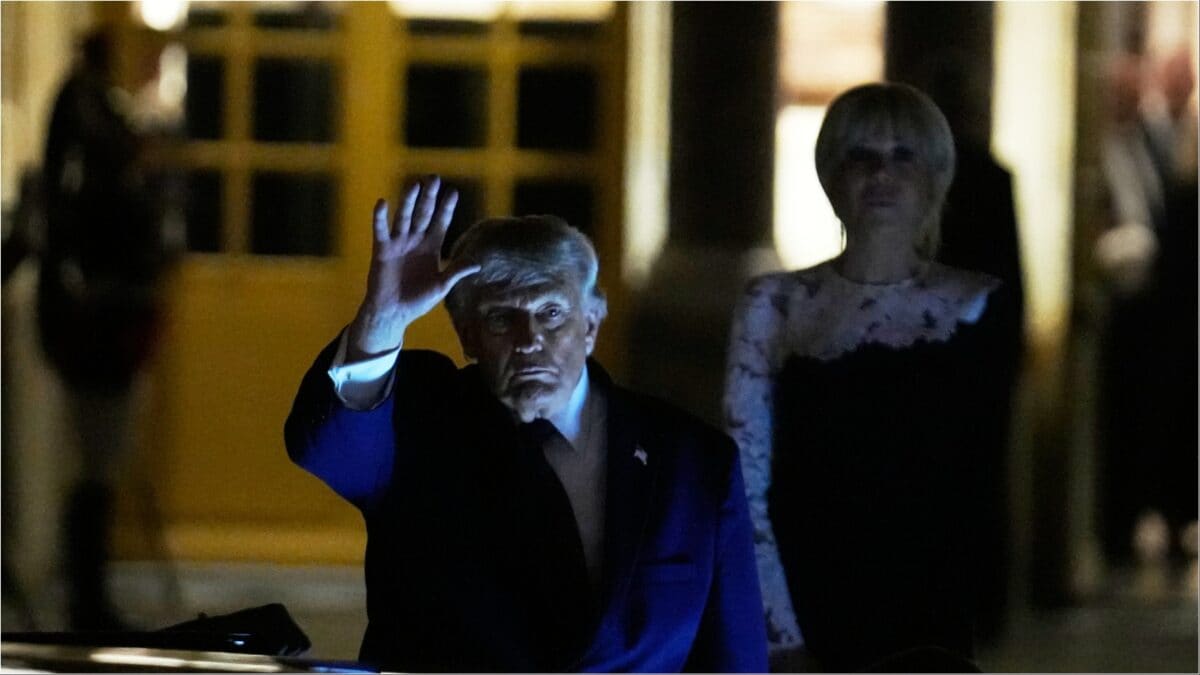
Donald Trump departs after the dinner at the Palace of Versailles (Photo: AP)
A planned signing ceremony in Switzerland was abruptly abandoned after US President Donald Trump made an unexpected decision during a state dinner at the Palace of Versailles, setting off a late-night diplomatic scramble that culminated in the signing of an initial agreement with Iran in the early hours of June 18.
Multiple reports suggest that Trump decided at the last minute that he wanted the agreement signed immediately rather than waiting for a formal ceremony that had been scheduled in Lucerne two days later.
The pivotal moment came on June 17 during a dinner hosted by French President Emmanuel Macron at Versailles.
Trump had been preparing to attend the official signing event in Switzerland, but shortly before dinner, he informed Macron and his aides that he wanted the deal finalised that same night.
French officials quickly moved to accommodate the request.
As Trump and Macron toured the palace, US Secretary of State Marco Rubio worked alongside French officials to prepare the necessary documents.
French Finance Minister Roland Lescure, who attended the dinner, described the surprise announcement.
“The President of the United States thanked everyone for the G7 and for the dinner, and in his speech, said, ‘And by the way, I have a good agreement with Iran, and I’m going to sign it,’" Lescure told RTL radio.
He added, “We literally saw (US Secretary of State) Marco Rubio leave, I don’t know if he had already printed the memorandum of agreement or went to print it, and came back. We cleared the plates."
Another French official said Rubio received a message regarding the agreement at around 11 pm during the dinner.
Rubio and French Foreign Affairs Minister Jean-Noël Barrot then left the room to review the memorandum of understanding before returning with versions of the document in English and Farsi for Trump’s signature.
Videos shared by Macron and White House officials later showed Trump signing the agreement at the dinner table before handing the document and pen to Rubio.
Macron, seated nearby, was heard telling him, “Good job. Bravo."
The signing took place shortly after 1 am local time.
As he departed the palace, Trump informed reporters, “We signed in Versailles."
The move effectively cancelled the planned Lucerne ceremony.
Vice President JD Vance, who had led the US negotiating effort, subsequently postponed his Switzerland trip after Iran withdrew from the event amid renewed fighting involving Israel and Hezbollah in Lebanon.
The hurried signing capped months of difficult negotiations marked by regional tensions and repeated setbacks.
According to officials cited by CNN, US negotiators struggled to maintain communication channels, partly because Iran’s Supreme Leader frequently changed locations for security reasons.
The talks were also tested by military incidents, including a collision between a US helicopter and an Iranian drone earlier in June that triggered new exchanges of strikes.
Qatari mediators later helped narrow differences between the two sides.
Another crisis emerged after an Israeli strike on Beirut during Trump’s birthday weekend.
US officials reportedly feared the attack could derail negotiations.
Iran was said to be close to retaliating with ballistic missiles before Qatari mediators intervened during 17 hours of discussions.
One of Tehran’s conditions was that the agreement not be announced on Trump’s birthday. The deal was ultimately unveiled shortly after midnight in Tehran.
Trump’s team had reportedly sought an end to the conflict for months amid concerns about shrinking oil reserves and growing economic pressure.
Trump later said worries about a possible economic downturn and comparisons to former US President Herbert Hoover influenced his decision to finalise the agreement quickly.
The agreement has since faced criticism in the United States, including from some of Trump’s supporters, particularly over a reported $300 billion reconstruction fund for Iran.
Trump rejected suggestions that the deal reflected weakness, arguing that Iran entered negotiations because of US military pressure.
Even after the signing, the full text of the 14-point agreement remained undisclosed for several days at Iran’s request.
Officials have also acknowledged the existence of additional “understandings" outside the written document, though Vance downplayed concerns, saying verification would matter more than specific wording.
The agreement establishes a 60-day period for technical negotiations aimed at limiting Iran’s nuclear programme.
Vance, special envoy Steve Witkoff and Jared Kushner are expected to lead the US side in the next phase of talks, while several senior American officials reportedly remain sceptical about whether Tehran will fully implement its commitments.
News18 Newsletter Handpicked stories, in your inbox A newsletter with the best of our journalism submit
About the Author Vani Mehrotra Vani Mehrotra is the Deputy News Editor at News18.com. She has more than 10 years of experience in national and international news and has previously worked on multiple desks.
First Published: June 21, 2026, 08:05 IST
News world Trump’s Surprise Versailles Move: What's Inside The Last-Minute Rush Behind Iran Deal
Disclaimer: Comments reflect users’ views, not News18’s. Please keep discussions respectful and constructive. Abusive, defamatory, or illegal comments will be removed. News18 may disable any comment at its discretion. By posting, you agree to our Terms of Use and Privacy Policy Loading comments...