News world Trump-Xi Summit Ends With Trade Reprieve, But Big Fault Lines Remain: Five TakeawaysTrump-Xi Summit Ends With Trade Reprieve, But Big Fault Lines Remain: Five TakeawaysPublished By :,Last Updated: September 25, 2026, 08:02 ISTFrom a short trade reprieve to competing approaches on AI, the Washington summit showed where US-China ties stand, and where the gaps remain.
While the two sides agreed to extend their trade truce, the summit also showed that several of the biggest issues in US-China ties remain unsettled.
For businesses, tariff rates remain lower for now, but the short extension means uncertainty over the future direction of US-China trade policy remains.
There was also no immediate White House readout of the exchange.
How did Donald Trump and Xi Jinping differ on artificial intelligence at the White House summit?
News world Trump-Xi Summit Ends With Trade Reprieve, But Big Fault Lines Remain: Five Takeaways
Trump-Xi Summit Ends With Trade Reprieve, But Big Fault Lines Remain: Five Takeaways
Published By :
,
Last Updated: September 25, 2026, 08:02 IST
From a short trade reprieve to competing approaches on AI, the Washington summit showed where US-China ties stand, and where the gaps remain.
Rapid Read
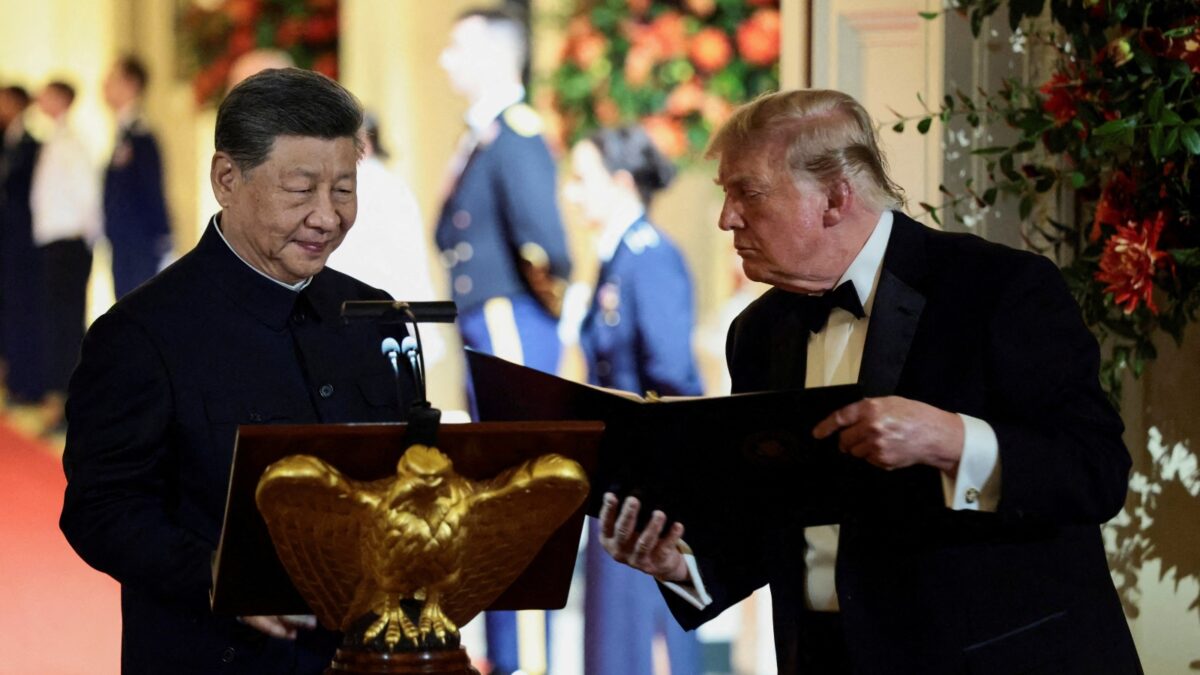
US President Donald Trump holds a binder as he stands next to Chinese President Xi Jinping before Xi delivers a speech during a state dinner at the White House in Washington, DC. (REUTERS)
US President Donald Trump and Chinese President Xi Jinping put trade, Taiwan, artificial intelligence and the wider strategic rivalry between the two countries in focus as they met at the White House on Thursday.
The talks came during an elaborate state visit by Xi, months after Trump travelled to Beijing in May. While the two sides agreed to extend their trade truce, the summit also showed that several of the biggest issues in US-China ties remain unsettled.
Here are five key takeaways from the Trump-Xi summit in Washington
The Trade Truce Lives On, But There Is Still No Bigger Deal
The most immediate outcome of the summit was more time on trade, rather than a broader breakthrough.
US Treasury Secretary Scott Bessent said the two sides agreed to extend their existing trade agreement by two months, pushing its expiry from November 10 to January 10, 2027. The deal had brought an end to last year’s trade war.
The extension would give Washington and Beijing “more time to see what we can do on the economic front," Bessent said.
But the short extension leaves some of the biggest issues between the two sides — tariffs, Chinese purchases, rare-earth supplies and technology restrictions — for another round of negotiations.
There are also gaps in the implementation of the earlier agreement. Bessent said on Wednesday that Beijing was meeting its commitment to buy 25 million tons of soybeans but was behind on its pledge to purchase $17 billion in other agricultural goods.
US officials have also said rare-earth deliveries were falling short.
For businesses, tariff rates remain lower for now, but the short extension means uncertainty over the future direction of US-China trade policy remains.
Xi Wants Trump To Go Further On Taiwan. Washington Hasn’t Budged
Xi used the summit to press Trump on Taiwan, including on a potentially significant distinction in how Washington describes its position on the self-governing island claimed by Beijing.
According to China’s official news agency, Xi said China hoped the US would “handle the Taiwan question with prudence". The agency’s English-language service also reported that Xi hoped the US would oppose Taiwan independence.
That would go further than Washington’s longstanding formulation that it does not “support" Taiwan independence. There was no indication that the Trump administration planned to change that wording.
There was also no immediate White House readout of the exchange.
US officials have long avoided explicitly saying that Washington opposes Taiwanese independence. Any shift in that language would raise questions about Washington’s resolve to defend the island and provoke opposition in Congress.
Trump Returned Xi’s Beijing Hospitality With A Show Of US Power
If Xi used history and exclusivity to impress Trump in Beijing, Trump’s answer in Washington was presidential ceremony and military spectacle.
During Trump’s May visit, Xi took him on a tour of a Ming dynasty temple and a walled-off garden retreat rarely opened to foreigners.
In Washington, troops wearing wigs and tri-corner hats marched in formation and played music, while fighter jets and bombers flew overhead during ceremonies on Wednesday and Thursday. One of the flyovers was loud enough to cause Trump to flinch.
Xi was also taken on a tour of the Marine One helicopter and the recently redesigned South Lawn of the White House, which features a large helipad bearing the presidential seal.
When reporters were brought in to cover the two leaders, however, they heard little about the substance of their discussions. “He loves good granite," Trump said of Xi. “Great meeting."
The Risk Of Conflict Hasn’t Gone Away, But Xi Wants More Guardrails
The summit showed that attempts to stabilise US-China ties are taking place against continuing concerns about where the strategic rivalry could eventually lead.
Xi invoked the “Thucydides Trap", an academic theory that competition between a rising power and an established one tends towards war.
But Xi said the risk “can be overcome", arguing that both countries stood to gain from cooperation and lose from confrontation.
He called for regular military dialogue and stronger crisis-prevention mechanisms between the two sides.
Trump also emphasised the scope for cooperation, invoking the two countries’ wartime alliance against Japan as he argued that they could accomplish much by pursuing common interests.
The exchange put both sides’ efforts to prevent their rivalry from escalating into military confrontation firmly on the summit agenda.
Trump Says Leave AI Alone. Xi Says It Needs To Be Managed
One of the clearest differences to emerge from the summit was over how the rapid development of artificial intelligence should be handled.
Trump, who has said AI should instead be called “super intelligence" or SI, said in a social media post that he wants to “to leave it exactly where it is" and rely on the US Department of Justice rather than introduce new guardrails.
He also insisted that China held the same position.
Xi’s remarks on Thursday, however, emphasised managing the technology and keeping it under human control. “We have both the capability and responsibility to develop and manage AI for good, and ensure that the development of AI is always under human control and serves the well-being of the people," Xi said.
Some of the biggest names in artificial intelligence attended Trump’s state dinner for Xi at the White House on Thursday, including Alphabet CEO Sundar Pichai, OpenAI CEO Sam Altman and Nvidia CEO Jensen Huang.
News18 Newsletter Handpicked stories, in your inbox A newsletter with the best of our journalism submit
Quick Answers Powered by Ask News18 What was the outcome of the US-China trade negotiations during the Trump-Xi summit? The US and China agreed to extend their existing trade agreement by two months, pushing the expiry date from November 10 to January 10, 2027. However, major issues like tariffs, rare-earth supplies, and technology restrictions remain unresolved for future negotiations. How did Donald Trump and Xi Jinping differ on artificial intelligence at the White House summit? Donald Trump stated he wants to leave artificial intelligence where it is and rely on the Department of Justice rather than introducing new guardrails. In contrast, Xi Jinping emphasized the need to actively manage the technology and keep it under human control. Did the Trump administration alter its official position on Taiwan during the state visit? No, there was no indication that the Trump administration planned to change its wording or adopt China's preference for the US to explicitly oppose Taiwan independence. Washington has historically maintained its longstanding formulation that it does not 'support' Taiwan independence. Powered by Ask News18
About the Author Karishma Jain Karishma Jain, Chief Sub Editor at News18.com, writes and edits opinion pieces on a variety of subjects, including Indian politics and policy, culture and the arts, technology and social change. Follo... Read More
ADD YOUR COMMENT
First Published: September 25, 2026, 08:02 IST
Disclaimer: Comments reflect users’ views, not News18’s. Please keep discussions respectful and constructive. Abusive, defamatory, or illegal comments will be removed. News18 may disable any comment at its discretion. By posting, you agree to our Terms of Use and Privacy Policy Loading comments...