But such supply chains stretch across the world, as no country is self-sufficient in all the components.
That is why the American President is of the view that to “dominate the modern battlefield” the US needs secure access to critical materials and components.
4872 is Trump’s view that defense supply chains are a national security vulnerability, not just a procurement issue.
It means that no critical defense input should come from an adversary without a plan to replace it.
That is – no country can dominate the modern battlefield if it does not know where its critical materials and components come from.
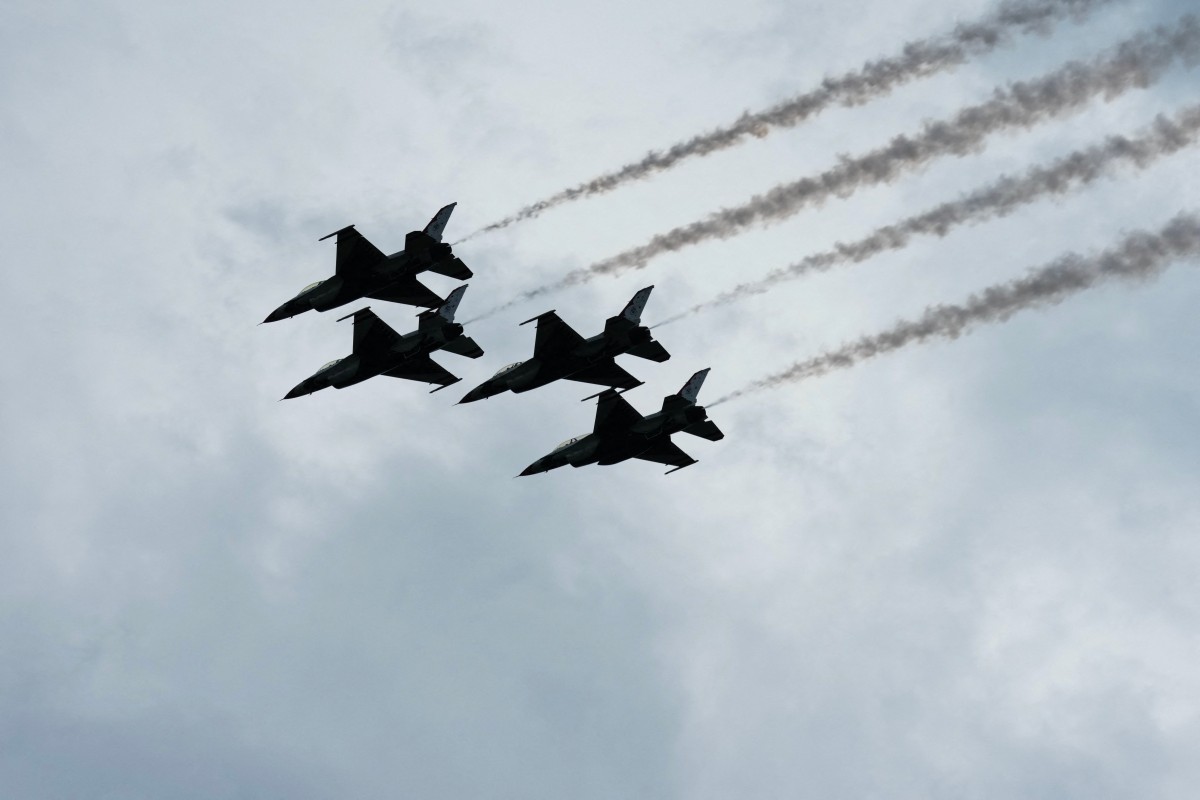
Among the many lessons that the ongoing wars in Ukraine and the Middle East have provided, one is the critical importance of a secure supply chain in making a fighter jet, missile battery, naval vessel, radar system, drone, or armored vehicle.
These weapons and platforms have components like minerals, metals, magnets, chips, chemicals, software, castings, and forgings.
But such supply chains stretch across the world, as no country is self-sufficient in all the components. Therefore, while trying to become as self-reliant as possible, major military powers are trying to avoid the critical components from adversarial countries as much as possible.
Keeping this in mind, US President Donald Trump issued an “Executive Order 14415” on July 20 that aims to “Securing America’s Defense Supply Chains and Ensuring Domestic Acquisition of Critical Materials”.
In this order, Trump said, “It is the policy of the United States that not only the finished equipment deployed by our military, but also the critical materials and components necessary to manufacture, maintain, sustain, and repair that equipment, are sourced domestically or from allied nations.”
Accordingly, this order, which we will explain a little later, Trump announced that “Despite the longstanding prohibition on the use of sensitive materials sourced from geopolitical adversaries, defense contractors have historically underprioritized domestic production and resilience.
“My Administration will act to ensure that the statutory requirements of 10 U.S.C. 4872 are strictly observed and result in resilient domestic and allied supply chains.
“Sec. 2. Restricting Waivers. (a) On January 1, 2027, the Secretary of War (Secretary) and the Secretaries of the military departments shall cease to issue waivers under 10 U.S.C. 4872(c)(1) for the acquisition of covered materials under 10 U.S.C. 4872, except as provided in subsection (b) of this section”.
It may be noted that 10 U.S.C. 4872 is the US defense law that prohibits the Department of Defense from buying certain critical materials and components from “covered nations” like China, Russia, Iran, and North Korea. It covers specialty metals, magnets, semiconductors, and other items used in weapons systems.
However, this law allowed the Secretary of Defense to issue “waivers” if domestic sources were not available. Such waivers have been applied so frequently that a weapons system is considered “ American” simply because the final assembly happens in America, even when critical inputs come from foreign adversaries or suppliers vulnerable to foreign ownership, control, or influence. As a result, America is becoming more and more vulnerable, particularly during times of war.
Trump’s “Executive Order” has tightened this route. As Peter Navarro, the White House Senior Counselor for Trade and Manufacturing, says: “The Trump policy is simple and tough: end the loose waiver process, expose hidden supply chains, vet the lower tiers, qualify trusted sources and hold contractors accountable.
“Beginning January 1, 2027, waivers under 10 U.S.C. 4872(c)(1) and (e) will no longer be business as usual. A contractor seeking relief must identify the noncompliant source, document exhaustive efforts to find compliant material or prove none was available, lay out the steps to remove it from the supply chain, and commit to a strict timeline”.
Though Trump’s Executive Order is a long and detailed one, its main key changes to the waiver process are:
1. The Order limits circumstances in which the Secretary of Defense can issue waivers for critical materials from covered nations under 10 U.S.C. 4872. In some cases, it now requires a “mitigation plan to onshore supply chains”.
2. As Navarro says, the order will “end the waiver racket,” which allows contractors to bypass prohibitions on sourcing from China, Russia, Iran, and North Korea.
3. The Department of War was directed to require “more comprehensive supply chain mapping” and to encourage defense contractors to qualify new domestic and partner-nation sources. The Pentagon has also been asked to speed up testing of new source materials to replace “unreliable foreign suppliers”. As Navarro points out, “For decades, contractors have hidden behind slow qualification processes while adversary-linked suppliers stayed embedded in America’s defense industrial base. No more.”
4. Any waiver request now requires a formal, approved mitigation plan with a strict timeline to remove noncompliant materials from the supply chain completely.
5. Navarro has argued that the danger is in “five or six tiers deep” supply chains where visibility stops at tier 1 or 2. “The dangers are buried in the lower tiers: the subcontractors and vendors supplying specialty metals, electronics, chemical software, and raw materials that Washington is not watching”. Now, contractors must document exhaustive, genuine efforts to find domestic or allied sources. Simply failing to qualify a supplier does not count as nonavailability.
6. National security waivers under subsection (e) will face high-level scrutiny and require direct referral to the Assistant to the President for National Security Affairs.
It is apparent that the “Core reasoning” behind Trump’s Order is that despite longstanding prohibitions, “supply chain resilience and domestic production has been historically under-prioritized”. That is why the American President is of the view that to “dominate the modern battlefield” the US needs secure access to critical materials and components.
Trump seems to have realized that there is a “National Security Risk” when weapons like fighter jets, missiles, drones, and radar start with “minerals, metals, magnets, chips, chemicals,” and if these come from an adversary, they could be sabotaged, contain backdoors, or be cut off during a conflict.
This is a great “supply chain risk”, evident from the wars in Ukraine and the Middle East. These wars have shown that munitions, semiconductors, and rare earths are chokepoints. One cannot surge production if the inputs are controlled abroad.
Viewed thus, it may be said that behind the amendment of 10 U.S.C. 4872 is Trump’s view that defense supply chains are a national security vulnerability, not just a procurement issue.
His goal seems to be shifting from the practice of “buy cheapest” to “buy secure” by limiting waivers and forcing industry to build from US sources. If not possible, then his amendment talks of procuring from allied sources such as Australia, Canada, and Japan, which is called “Friend-shoring”.
For instance, there is the US-Australia Critical Minerals Agreement, an $8.5 billion bilateral framework signed by Trump and Australian Prime Minister Anthony Albanese on October 21, 2025. It aims to counter China’s dominance in rare earth supply chains by fast-tracking mining, processing, and refining projects for clean energy and defense technology.
In essence, Trump’s policy, which will take effect from January 1, 2027, does not mean zero imports. It means that no critical defense input should come from an adversary without a plan to replace it.
The message is clear to contractors: there will be no more free waivers for adversary-sourced inputs. If they want to sell to the Pentagon, they must show a plan to move out of China, Russia, Iran, and North Korea within a timeline.
Incidentally, what Trump has done is something that other leading military powers, including India, are also attempting. In fact, India is leveraging groupings like the Quad or bilateral partnerships to establish resilient, trusted supply corridors for materials like titanium, tungsten, and cobalt, locking out hostile supply chains.
The India-US Initiative on Critical and Emerging Technologies (iCET), launched in May 2022 and led by both national security councils, drives co-development in AI, quantum computing, semiconductors, and defense tech. It aims to build resilient, trusted tech supply chains and position India as a strategic alternative to China.
As it is, India imports 100% of lithium, cobalt, nickel, and 70% of rare earths — mostly processed in China. These are needed for EVs, drones, missiles, and solar technology. Many Indian defense platforms still use Chinese electronics, magnets, and chips via third countries. Historically, India’s defense public sector undertakings (DPSUs) have relied on emergency waivers or “non-availability certificates” to source cheaper sub-components or raw metals from China.
However, now, in line with Prime Minister Narendra Modi’s “Atmanirbhar Atmanirver(self-reliant) mission “ India does appear to be changing its policy. Not only is India exploring and auctioning new mines of critical minerals, but it is also “friend-shoring”.
Apart from iCET with the US, India has tied up with Australia, Argentina, and Chile for lithium/cobalt. For semiconductors, Indian companies like the Tatas are collaborating with Taiwan’s Powerchip Semiconductor Manufacturing Corporation (PSMC). The collaboration involves a landmark ₹91,000 crore ($11 billion) project to build India’s first commercial semiconductor fabrication plant (Fab) in Dholera, Gujarat.
India’s latest “Defense Acquisition Procedure” mandates priority to Indian vendors. It has banned imports of more than 5,000 items by 2027. Of course, it realizes that it cannot ban all imports. In fact, it is doing what Trump’s Executive Order plans to do – “De-risk, not Decouple”— reduce dependence on one adversary, build capacity at home, and partner with the Quad, the US, and the European Union.
Viewed thus, Trump’s Executive Order reflects the hard truth, which is not only relevant for America but also for others. That is – no country can dominate the modern battlefield if it does not know where its critical materials and components come from. Secure supply chains are now the first line of defense.