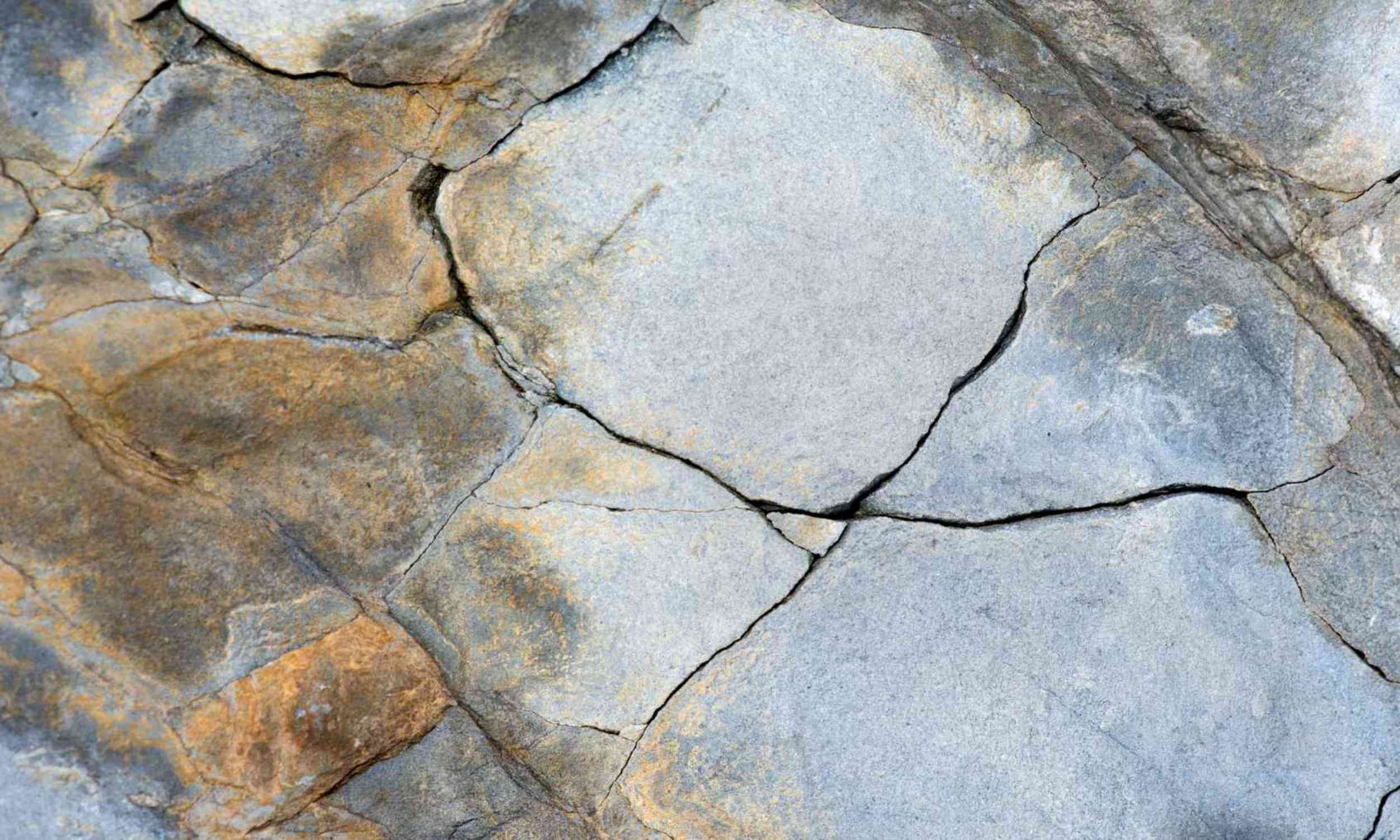
Models that track how pollution drifts through fractured rock treat the crossing points between cracks as passive, well-connected junctions.
But the Earth squeezes those crossings just as it squeezes any other bit of rock underground.
Rock cracks that crossCracks in rock are highways for fluids below the surface.
These crossings, called fracture intersections, govern how fluids spread across a whole web of cracks.
Cracks and cross sectionsAll rock underground sits under geologic stress, and pressure is known to alter fluid flow through individual cracks.
Models that track how pollution drifts through fractured rock treat the crossing points between cracks as passive, well-connected junctions.
That assumption runs through nearly every simulation used to predict where underground contaminants end up.
But the Earth squeezes those crossings just as it squeezes any other bit of rock underground.
That pressure can pinch a junction nearly shut. The direction of the squeeze is what decides whether it stays open.
Rock cracks that cross
Cracks in rock are highways for fluids below the surface. Far more permeable than the solid stone around them, they pull in groundwater and dissolved pollutants.
Where two cracks meet, flows of different chemistry converge and mix before heading back out.
These crossings, called fracture intersections, govern how fluids spread across a whole web of cracks.
Peter K. Kang, a geoscientist at the University of Minnesota, and his colleagues set out to learn how the junctions behave under pressure.
Cracks and cross sections
All rock underground sits under geologic stress, and pressure is known to alter fluid flow through individual cracks.
What happens where those cracks intersect, however, has remained largely guesswork.
What happened at the crossings had remained mostly guesswork. Models treated them as fixed hubs, because no one had watched a real intersection deform under load.
Printing rock cracks
To watch it happen, the team built fractures they could control. Using 3D printing, they made small crossing networks from resin blocks, each with a rough surface.
These mimicked how real crack walls touch and intersect underground. Natural rock varies too much for identical repeat experiments.
Each sample went into a small rig that pressed down with a steady, rising force. Between presses, they took 3D X-ray scans to see inside the rock, then mapped the open spaces, gap by gap.
Imaging cracks as they deform builds on a growing body of work. One such study followed fracture behavior inside pressured rock.
The new tests set each crossing at two angles to the squeeze – a plus (+) and a tilted cross (×).
A squeeze with direction
Direction controlled almost everything that took place. In the plus crossing, rising pressure squeezed the horizontal crack shut while the vertical one stayed open.
On the scans, bright contact patches spread along the flattened crack where the walls pressed together.
The tilted cross behaved more strangely. One crack closed as expected, but its partner widened instead, its rough walls apparently sliding and riding up over each other to pry the gap open.
Push harder still, and the junction itself then began to close. As the squeeze grew, the neat X pinched into a pair of V-like channels joined by one narrow opening.
The team calls it the intersection throat. It shrank further with each added press. No one had directly watched a junction transform this way. This suggests that stress remakes the geometry.
Following the flow
Knowing the geometry was only half the story, so the team ran fluid simulations through the scanned junctions.
They sent plain water into one branch and water mixed with a dissolved marker into another, then measured how much of that marker crossed to the far outlet.
In the plus crossing, the answer stayed tidy. As the horizontal crack closed, flow into the open vertical crack climbed by roughly 80 percent under the heaviest press.
The mixing rose smoothly, matching the predictions of standard models. With the tilted cross, the picture darkened.
More of the dissolved marker crossed over at first, as one branch widened. Then the junction pinched shut. Mixing collapsed toward zero.
Even at a crawl, where models assume fluid always blends, the choked throat kept the two streams apart.
When the models break
The old models held up fine for the plus crossing. For the tilted cross, not at all. At high pressure the standard equations predicted plenty of mixing while the simulations showed almost none.
The cause was the narrow opening. Standard models predict where fluid goes at a junction using the width of each crack alone, assuming the crossing stays open.
Once the throat clamps down it steers the flow itself, undercutting an assumption that runs through much of the research on fractured rock.
So the team built a correction into the standard models, adding one number for how far the throat has narrowed under stress.
Fed that detail, the corrected equations matched how mixing actually behaved, even where the old models went most wrong.
What this changes
The central finding is direct. Geologic stress can transform the crossings where cracks meet, and its direction decides whether a junction keeps blending fluids or seals them apart.
The models used to forecast contaminant transport through fractured rock, or how injected fluid moves through a geothermal field, have left out a force that redraws the paths.
The stakes run highest for carbon storage, the plan to lock carbon dioxide into rock as solid minerals.
Stress decides how much fluids mix, and where, so a junction that is blending fluids could clog and choke itself off.
Knowing where those reactions will occur, and how the Earth’s slow squeeze shifts them, provides engineers with a lever they didn’t have before.
The crossings underground were never as fixed as the previous models had assumed.
The study is published in Communications Earth & Environment.
—–
Like what you read? Subscribe to our newsletter for engaging articles, exclusive content, and the latest updates.
Check us out on EarthSnap, a free app brought to you by Eric Ralls and Earth.com.
—–