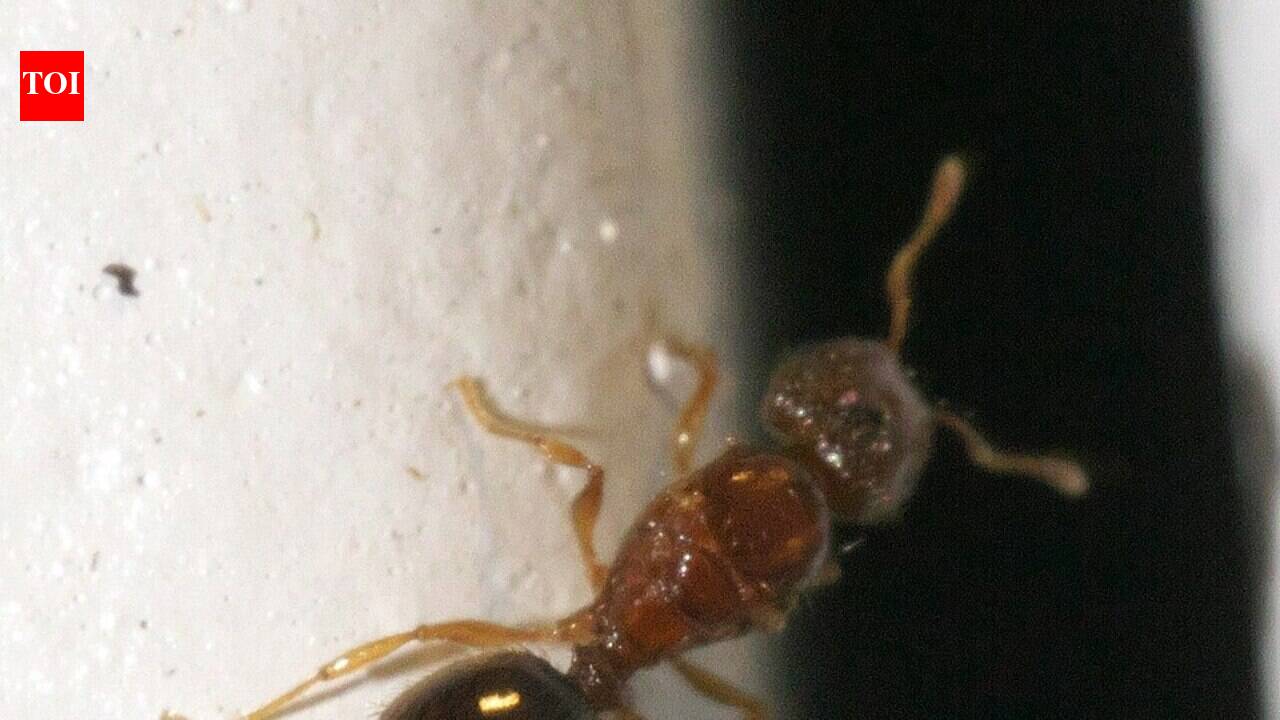
A tiny invasive ant species, Pheidole parva, has been found in Florida.
Image Credit: Wikimedia CommonsPheidole parvaNeotropical EntomologyPheidole parvaA small ant species that has spread around the worldPheidole parvaNeotropical EntomologyThis ant, native to Asia, spreads globally through international trade routes.
A small invasive ant species that has spread to several regions around the world has been detected in the United States for the first time, according to researchers.
The study concluded that introduced ants had affected the native ant community in several ways, with non-native ants increasing while some native ants declined.
Invasive species might change ecosystems by competing with native species and altering food webs and biodiversity.
A tiny invasive ant species, Pheidole parva, has been found in Florida. Image Credit: Wikimedia Commons
Pheidole parva
Neotropical Entomology
Pheidole parva
A small ant species that has spread around the world
Pheidole parva
Neotropical Entomology
This ant, native to Asia, spreads globally through international trade routes. Florida's climate and trade connections make it a common entry point for exotic species. Image Credit: iNaturalist
Genetic evidence indicates the ant may already be established
Why invasive ants make researchers concerned
Pheidole parva
Pheidole parva
Florida’s climate could provide a suitable habitat for the species
Solenopsis invicta
Pheidole megacephala
Pheidole parva
What's next?
A small invasive ant species that has spread to several regions around the world has been detected in the United States for the first time, according to researchers. The non-native ant species, calledand referred to as the small big-headed ant, was found in Florida, where there is concern that the species could already be widely established.In a recent study published in the journal, available through PubMed , researchers reported the first North American record of. Through a genetic analysis of 26 ant specimens collected from various locations in Florida, researchers were able to determine that the ants could belong to a widespread population rather than sporadic invasions. The ant may have reached Florida through multiple introductions.is a species of big-headed ant whose native habitat is in the Indomalayan region. The Indomalayan region encompasses parts of South and Southeast Asia. According to a study published in, the ant has a well-known history of invading regions outside its natural habitat, mostly as a result of being transported around the world through global trade routes.Researchers found that this species was spotted outside its natural habitat more than a hundred years ago in the Seychelles Islands.After that, it has been seen in several other regions, such as Japan, the Arabian Peninsula, Cyprus, and Lebanon. The study notes that these ants are known as “tramp ants”. This term refers to ant species that spread easily with human activity, especially through shipments of goods and cargo.According to the United States Department of Agriculture’s Animal and Plant Health Inspection Service (USDA APHIS), invasive pests can enter new regions through human-assisted pathways, including the movement of plants, agricultural commodities and other materials through international trade.This species was not identified in Florida from a single accidental sighting. Experts conducted tests on samples that were collected from various locations within the state, in addition to observations made via citizen science websites.Scientists used the DNA barcoding method and examined a fragment of the mitochondrial cytochrome oxidase subunit I (COI) gene of the ants. The findings showed three distinct genetic haplotypes in the 26 Florida samples. Two of these genetic types have previously been observed in introduced populations around the globe, while the third has been found only in the native population. Based on the presence of more than one genetic lineage in Florida, the researchers concluded that the ants probably invaded the region more than once rather than spreading from one point of entry into Florida.Even thoughis very tiny, invasive ants may have much larger impacts. Introduced ant species that have succeeded in settling in new conditions are able to compete with native insects and affect ecosystems and the human environment.A 2023 study in Current Biology examined more than 50 years of museum records and current data from Florida. The study concluded that introduced ants had affected the native ant community in several ways, with non-native ants increasing while some native ants declined. Invasive species might change ecosystems by competing with native species and altering food webs and biodiversity. But scientists say it is too early to state what ecological impactwould make in Florida. Further research would be required.Due to the hot climate, trade connections, and international travellers, Florida is now considered a regular port of entry for various exotic species. This state has already seen the introduction of invasive ants such as the red imported fire ant () and the big-headed ant (), both of which are recognised invasive ant species in the United States, according to the USDA National Invasive Species Information Center The Florida Department of Agriculture and Consumer Services also noted that the subtropical climate of Florida allows many introduced insects to thrive and reproduce there. Scientists of the new study also stressed that the discovery ofrepresents another species added to the growing number of exotics in Florida.According to the researchers, early detection is crucial when foreign species invade. The quick detection of newly formed populations will help to monitor their expansion and identify if any management is required. For now, the findings are a warning sign, not proof of major environmental harm. However, the presence of 26 specimens from Florida implies that this ant was living there for some time before it was discovered by scientists.As global trade expands, even small creatures such as Pheidole parva can travel thousands of kilometres and establish themselves in new environments. The ant’s appearance in Florida is another reminder that invasive species often arrive unnoticed.