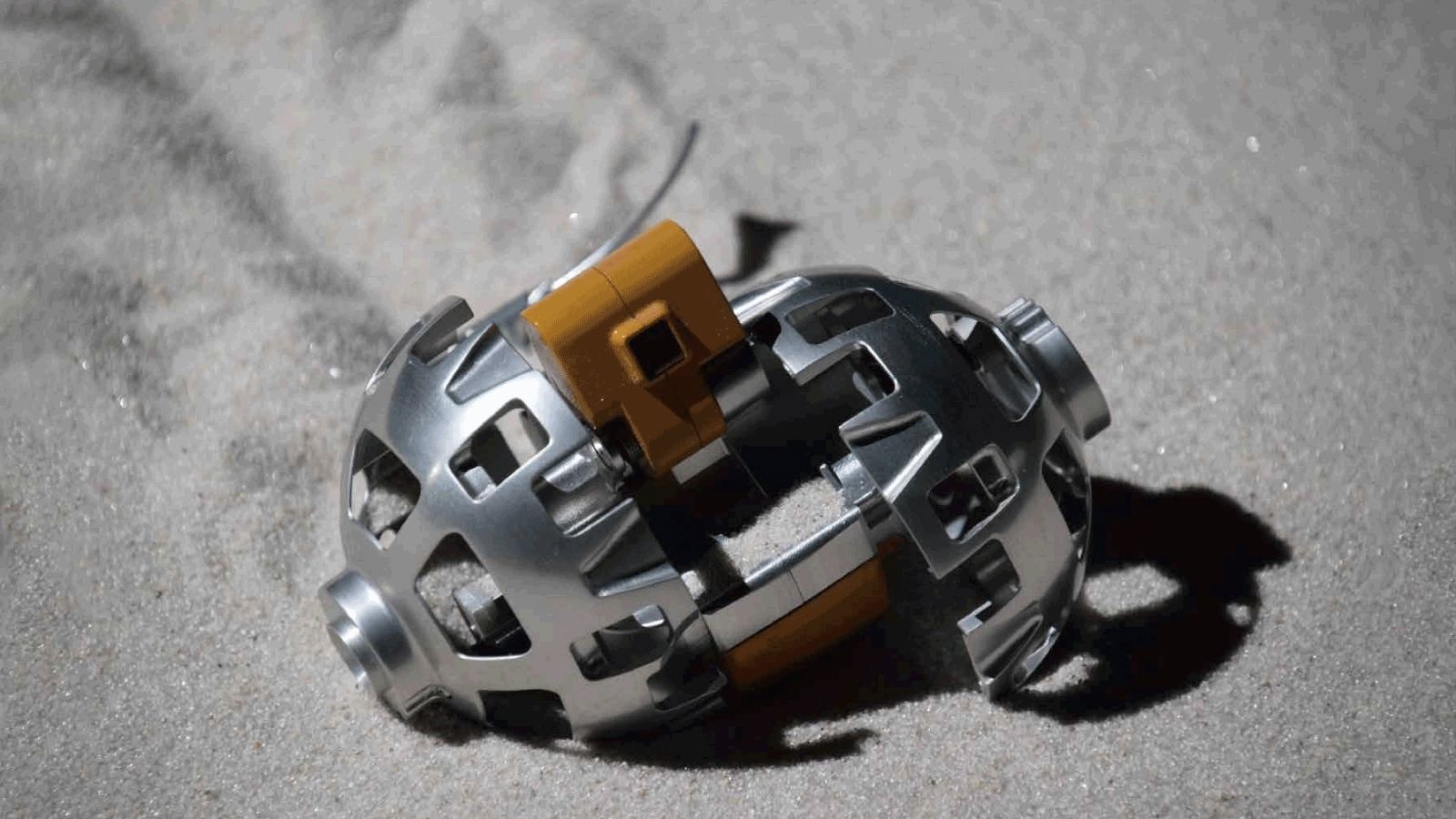
The rover, which resembles the BB-8 droid from Star Wars, can transform from a spherical shape into a small wheeled vehicle.
(Image: JAXA)A tiny shape-shifting robot no bigger than a palm has become one of the most unlikely heroes of lunar exploration.
The miniature rover, known as the Palm-Sized Lunar Excursion Vehicle 2 (LEV-2), helped scientists solve what went wrong with Japan’s SLIM moon lander on the lunar surface in January 2024.
Developed by the Japan Aerospace Exploration Agency, LEV-2 was deployed from the SLIM spacecraft shortly after landing.
Japan became the fifth nation to achieve a soft landing on the moon, but celebrations were quickly overshadowed when engineers discovered that the SLIM lander was unable to generate sufficient power because it had landed in the wrong orientation.
The rover, which resembles the BB-8 droid from Star Wars, can transform from a spherical shape into a small wheeled vehicle. (Image: JAXA)
A tiny shape-shifting robot no bigger than a palm has become one of the most unlikely heroes of lunar exploration. The miniature rover, known as the Palm-Sized Lunar Excursion Vehicle 2 (LEV-2), helped scientists solve what went wrong with Japan’s SLIM moon lander on the lunar surface in January 2024.
New research published in the journal Science Robotics explains how the rover successfully explored the moon, captured historic images, and demonstrated technologies that could play an important role in future lunar and Mars missions.
Developed by the Japan Aerospace Exploration Agency, LEV-2 was deployed from the SLIM spacecraft shortly after landing. Japan became the fifth nation to achieve a soft landing on the moon, but celebrations were quickly overshadowed when engineers discovered that the SLIM lander was unable to generate sufficient power because it had landed in the wrong orientation.