Heat continues to dominate large parts of the country, while key atmospheric drivers that normally fuel the monsoon remain unusually weak.
Satellite imagery highlights extensive dry air over the western Indian Ocean, visible as large brownish regions on moisture maps.
Normally, this branch delivers heavy rainfall to the west coast, central India and large agricultural regions across Maharashtra, Gujarat and Madhya Pradesh.
Meteorologists also expect the Somali Jet to intensify, potentially drawing larger amounts of moisture into the Arabian Sea and reviving monsoon activity over India.
advertisementForecast guidance suggests humidity levels could begin increasing within the coming week, with a more significant monsoon revival possible toward the end of June.
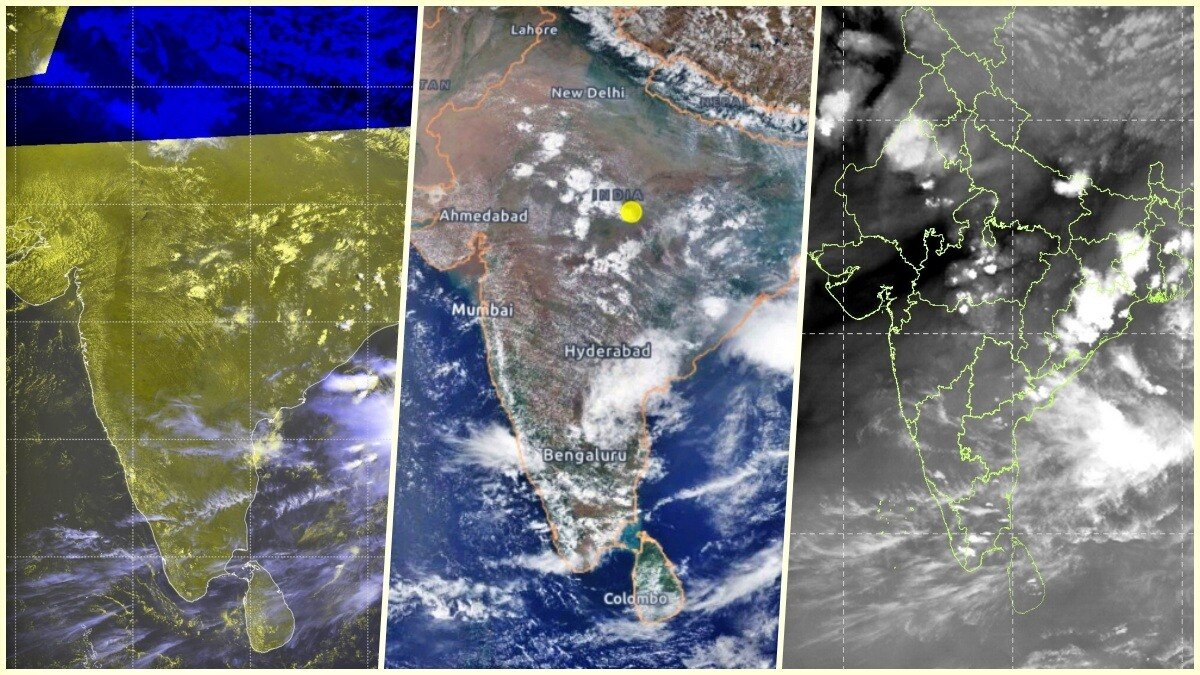
Fresh satellite imagery from European and American weather agencies has revealed an alarming picture of India's southwest monsoon, with cloud cover across large parts of the country appearing unusually sparse for mid-June, raising concerns about a prolonged rainfall deficit during a critical phase of the season.
Images captured on Tuesday by the European weather satellite Meteosat Indian Ocean Data Coverage (IODC), operated by EUMETSAT, NOAA's weather satellite, and Isro's Insat-3DS show vast stretches of central, western and peninsular India largely devoid of the dense cloud bands typically associated with an active monsoon.
Read Full Story
The images present a striking contrast to what meteorologists would normally expect nearly two weeks after the monsoon's onset over Kerala. Satellite image taken by EUMETSAT.
Instead of widespread moisture-laden clouds advancing across the subcontinent, much of India appears dry, with only scattered patches of convection visible over parts of the Bay of Bengal and eastern regions.
Weather experts say the situation reflects a significant weakening of the monsoon circulation. Heat continues to dominate large parts of the country, while key atmospheric drivers that normally fuel the monsoon remain unusually weak.
Among the biggest concerns is the absence of a strong Somali Jet, a powerful low-level wind current that transports enormous amounts of moisture from the equatorial Indian Ocean toward India during the monsoon season. The accompanying cross-equatorial flow, another crucial component of the monsoon engine, has also remained weak.
Satellite imagery highlights extensive dry air over the western Indian Ocean, visible as large brownish regions on moisture maps. Satellite image taken by the US Noaa.
Meteorologists attribute this to widespread sinking air over the region, a phenomenon that suppresses cloud formation and limits the northward transport of moisture into the Arabian Sea.
The weakness of the Arabian Sea branch of the monsoon has become particularly evident. Normally, this branch delivers heavy rainfall to the west coast, central India and large agricultural regions across Maharashtra, Gujarat and Madhya Pradesh. However, rainfall activity has remained patchy and below normal in many of these areas.
The India Meteorological Department (IMD) has already warned of prolonged below-normal rainfall across the country's crucial "monsoon core zone," which includes central, western and peninsular India, regions that account for a substantial share of the nation's agricultural output.
There are, however, some encouraging signs on the horizon. Forecast models indicate that cross-equatorial winds may strengthen during the next two weeks. Meteorologists also expect the Somali Jet to intensify, potentially drawing larger amounts of moisture into the Arabian Sea and reviving monsoon activity over India.
advertisement
Forecast guidance suggests humidity levels could begin increasing within the coming week, with a more significant monsoon revival possible toward the end of June.
- Ends