Not much food up thereThe animal’s diet has puzzled the scientists behind the discovery for years.
How the mice stay warmTo learn how the highland mice cope, the researchers raised highland and lowland animals under identical conditions.
The highland mice held their heat output far closer to normal than lowlanders of the same species.
This finding suggests the poisons change as the plants change with elevation.
Gains against thin air can weaken the toxin defenses, and gains against a toxic diet can weaken the response to thin air.
Mice living at high altitudes in the Andes survive the thin air of volcano summits partly by detoxifying plants that would poison most other animals, according to a new study.
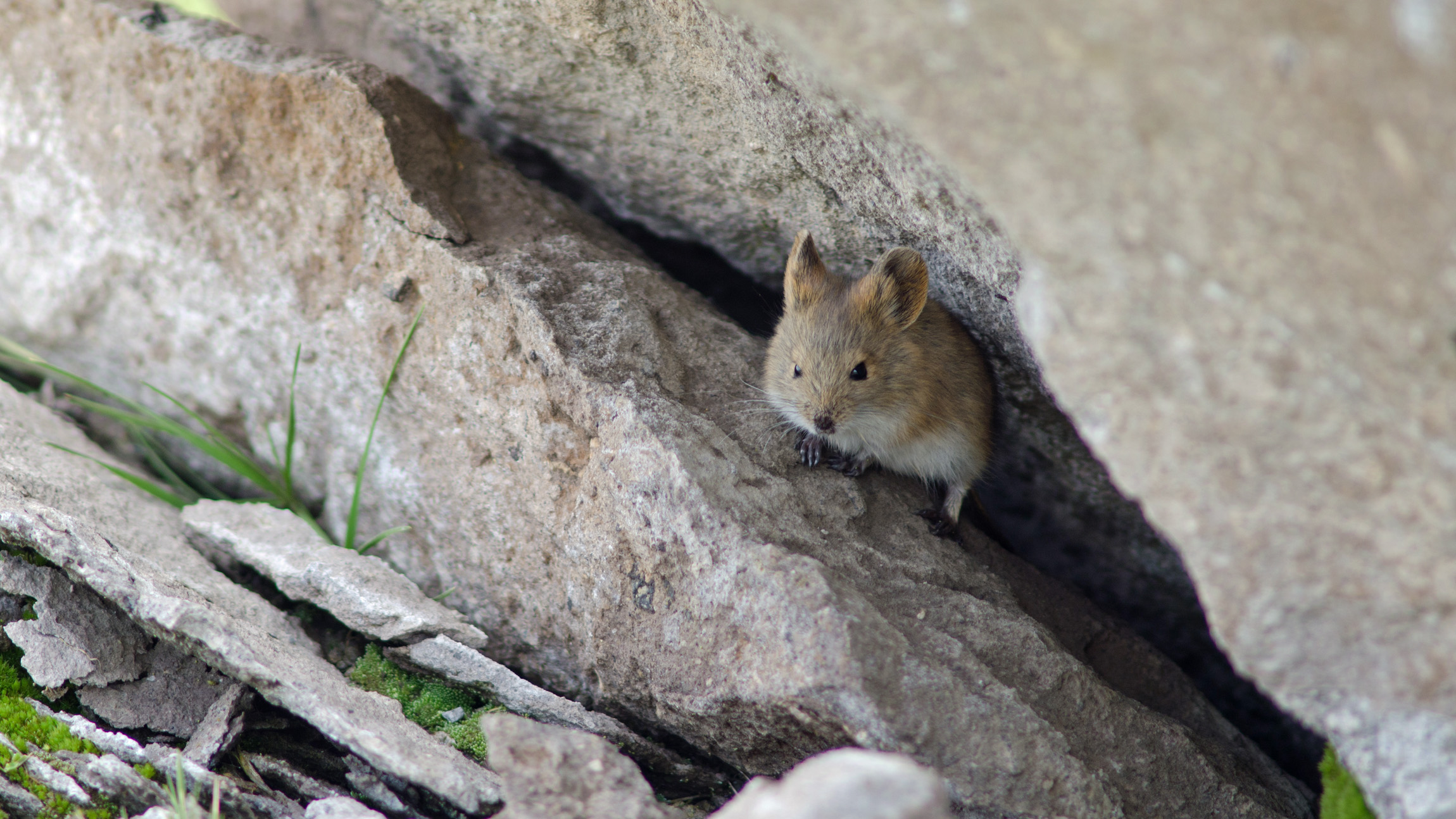
Andean leaf-eared mice, the world’s highest-living mammals, can be found on peaks above 22,000 feet (6,706 meters) – where each breath holds less than half the oxygen of air at sea level.
The discovery changes what it means to survive in harsh places. Biologists have long explained high-altitude life through cold and thin air alone.
These mice carry deep genetic signs of another battle – this one over food. The same biological machinery also governs how human tumors process chemotherapy drugs in oxygen-starved tissue.
Life on the summit
The high-altitude Andean leaf-eared mice are found on the summit of Llullaillaco, a 22,110-foot (6,739 meter) volcano on the border between Chile and Argentina.
The same species also lives at sea level along the Chilean coast, giving it the widest elevation range of any mammal.
Conditions near the top of the volcano rank among the most hostile on the planet. Temperatures almost never climb above freezing, the wind rarely stops, and the air is short on oxygen.
Not much food up there
The animal’s diet has puzzled the scientists behind the discovery for years. Evolutionary biologist Jay F. Storz of the University of Nebraska–Lincoln (UNL) has led expeditions up these peaks since a mouse first turned up on the Llullaillaco summit in 2020.
Storz has felt that hostility himself on the climb to the top. “When you experience these environments directly, as a mountain climber, it is mind-boggling that the animals are able to survive up there long term,” he said in an email to Earth.com.
Green plants give out thousands of feet below the highest summits, so what mice eat at those high altitudes has been hard to pin down.
An earlier analysis of a summit mouse’s gut contents turned up lichens and a scavenged mix of plant material, but no obvious feast.
How the mice stay warm
To learn how the highland mice cope, the researchers raised highland and lowland animals under identical conditions. They then measured how much heat each could produce in air as thin as it is near the volcano’s summit.
The highland mice held their heat output far closer to normal than lowlanders of the same species.
The highland mice pack more mitochondria – the tiny power plants inside cells – into their hindlimbs, and those muscles burn fat rather than sugar to power the shivering that keeps a small body warm.
Heat from fat
They also carry more heat-making capacity in their brown fat, a specialized tissue that warms the body without shivering.
Several enzymes that break down fats run at consistently higher levels in the highland muscle, a pattern the team then traced into the animals’ genomes.
One expected change never appeared. Many high-altitude animals, including other Andean rodents and Tibetan humans, evolve blood that grips oxygen more tightly.
However, these mice showed no such change in their hemoglobin. Instead they seem to guard their oxygen supply through breathing and metabolism, a different route to the same end.
The mice’s toxic diet
The bigger surprise came from the genomes themselves. When the team scanned the DNA of more than 160 mice collected from sea level to the summits, the strongest marks of natural selection fell not on oxygen genes but on genes the liver uses to break down poisons.
The result caught the team off guard. Storz shared with Earth.com that “the discovery that the mice have evolved the ability to feed on toxic desert plants was unanticipated.”
The liver disarms toxins in three stages. First it alters a poison, then clamps a small molecule onto it to make it easier to flush, and finally pumps the waste out of the cell.
Genes from all three stages carried signs of selection, including a cluster tied to glutathione, a molecule that is central to neutralizing plant toxins.
Detoxifying dangerous plants
The mice do eat chemically defended plants, including relatives of amaryllis and mallow that load their tissues with toxic compounds.
In the volcanic soils of the Atacama Desert they face a second hazard, because the ground carries naturally high arsenic, and the same liver machinery helps handle it.
The same genes turn up in other rodents that make a living on poison. Desert woodrats in North America eat juniper and creosote laced with toxins, and rodents on the Tibetan Plateau retune their livers to cope with poisonous plants as well.
What struck the researchers most was where these detox genes lit up. Selection appeared at both the low and high ends of the mouse’s altitudinal range, not only on the summits.
This finding suggests the poisons change as the plants change with elevation. Coping with a toxic diet has been part of this animal’s life at every altitude, not just the extremes.
The cost of survival
Living on poison while starved of oxygen creates a hidden conflict inside the body.
The cellular system that senses low oxygen and the one that responds to toxins share a key protein, so switching on one can interfere with the other.
That overlap forces a trade-off. Gains against thin air can weaken the toxin defenses, and gains against a toxic diet can weaken the response to thin air. Much of the genetic change the team found looks like the body balancing both at once.
The conflict reaches beyond one rodent. Inside human tumors, oxygen runs low, and that shortage changes the same enzymes that break down chemotherapy drugs.
Related work on high-altitude pikas has found these detox pathways ramping up as their diet turns toward toxic plants.
How leaf-eared mice adapt
Before this work, the mouse’s survival at the roof of the mammal world was told almost entirely as a story of cold and thin air. The genomes rewrite that picture, showing that a toxic diet has been just as powerful a force on the species, at every elevation it occupies.
Even the emptiest-looking places, the finding argues, set biological problems that are easy to miss. A summit that looks barren to a human eye was, for these mice, also a hazard at mealtime, and their DNA carries both struggles side by side.
The mice make a broader point about resilience. “Our results show that life always finds a way. Mice have even adapted to live in environments that are not remotely compatible with long-term human survival,” Storz told Earth.com.
For scientists who study how life reaches into extreme places, diet now stands beside oxygen and cold as a force worth tracking.
The same genetic tug-of-war between breathing and detoxifying may also sharpen how doctors think about drugs in the oxygen-starved tissue of human tumors.
The study is published in Science.
—–
Like what you read? Subscribe to our newsletter for engaging articles, exclusive content, and the latest updates.
Check us out on EarthSnap, a free app brought to you by Eric Ralls and Earth.com.
—–