Who would have thought a centuries-old painting could hold a clue to modern scientific research?
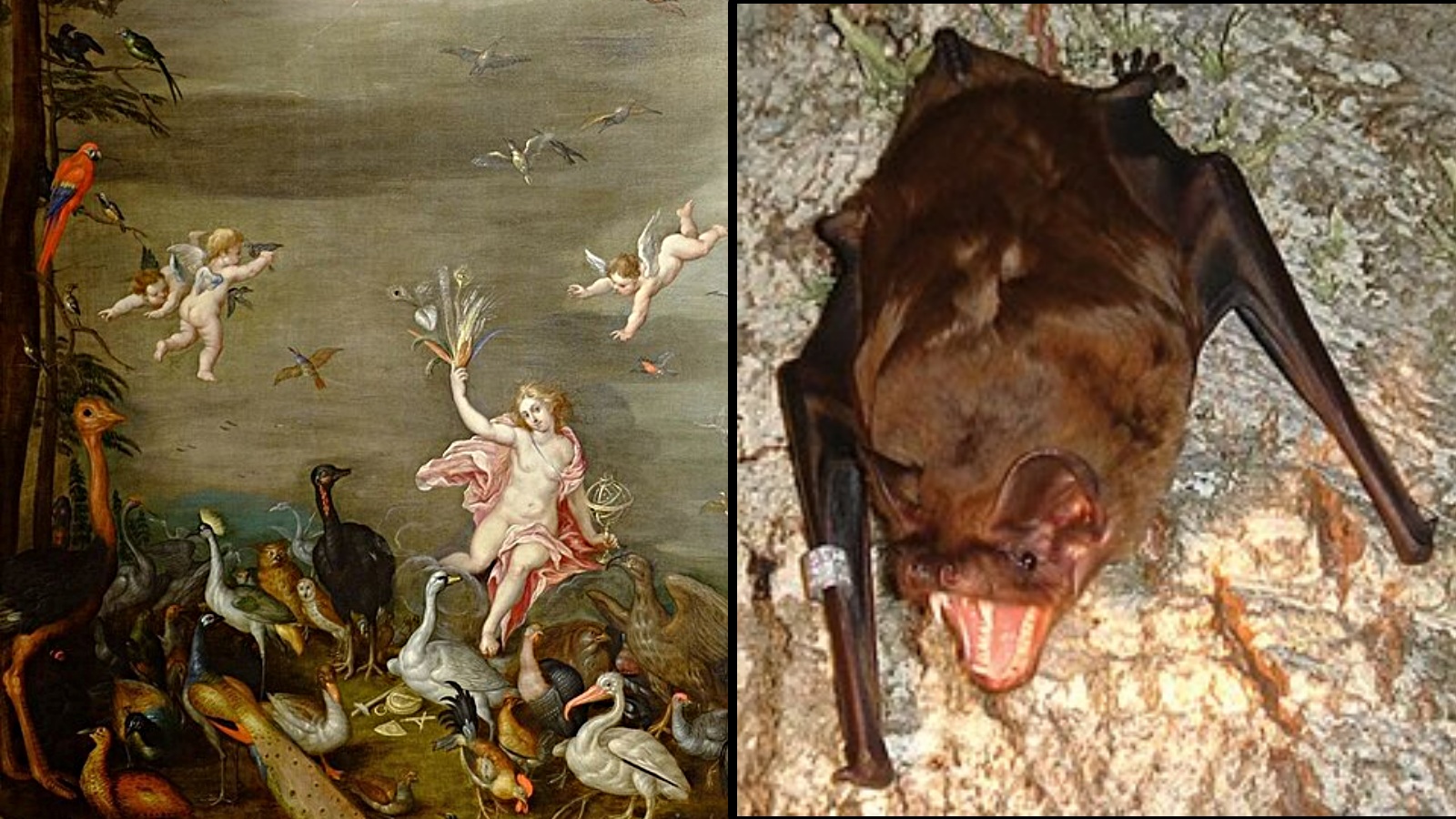
A tiny detail hidden inside “Air”, a 1611 painting by Flemish artist Jan Brueghel the Elder, may have captured a strange animal behaviour more than 400 years before scientists officially confirmed it.
The surprising finding has been published in the journal Proceedings of the National Academy of Sciences.
The animal in question is the Greater noctule bat (Nyctalus lasiopterus) — Europe’s largest bat and one of the few known to hunt birds.
It all started when ecologist Pedro Romero-Vidal, who has been working on a project about identifying animals in historical paintings, spotted something unusual in Brueghel’s artwork.
Who would have thought a centuries-old painting could hold a clue to modern scientific research? But that’s exactly what researchers have found.
A tiny detail hidden inside “Air”, a 1611 painting by Flemish artist Jan Brueghel the Elder, may have captured a strange animal behaviour more than 400 years before scientists officially confirmed it. The surprising finding has been published in the journal Proceedings of the National Academy of Sciences.
The animal in question is the Greater noctule bat (Nyctalus lasiopterus) — Europe’s largest bat and one of the few known to hunt birds.
Scientists only directly documented this behaviour last year. It all started when ecologist Pedro Romero-Vidal, who has been working on a project about identifying animals in historical paintings, spotted something unusual in Brueghel’s artwork.