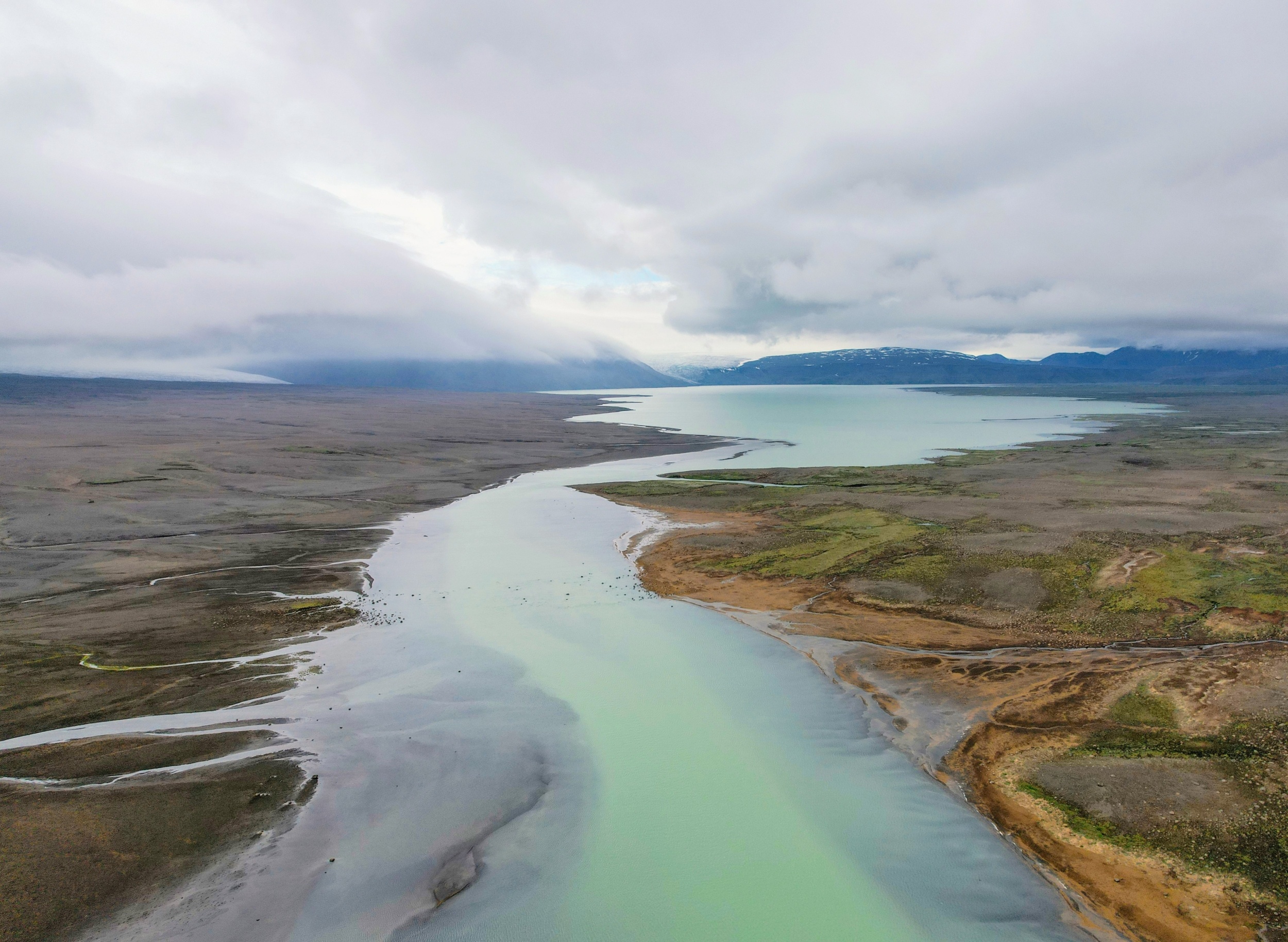
The picture looks simple – frozen soil warms, the ancient carbon it holds breaks loose, and the rivers crossing it carry that carbon into the air as carbon dioxide.
When permafrost thaws, microbes feast on the loosened organic carbon, breaking it down into carbon dioxide.
Every one of the 50 held more than twice the carbon dioxide air alone would leave.
Work across the Arctic had already shown permafrost rivers as carbon sources, and a recent study found those emissions rising as the north warms.
Why carbon models must changeMost climate models still treat thawing permafrost as a one-way carbon source, a producer of greenhouse gases and little else.
Thawing ground has earned a grim reputation in climate science.
The picture looks simple – frozen soil warms, the ancient carbon it holds breaks loose, and the rivers crossing it carry that carbon into the air as carbon dioxide.
That picture may be missing half the story.
A new study of rivers high on a vast Asian plateau finds the very same thaw can hand those rivers a quiet way to pull carbon back out of the air.
Frozen ground holds ancient carbon
The work centers on the Qinghai-Tibet Plateau, a vast expanse in central Asia holding the largest stretch of permafrost – ground frozen year-round – outside the polar regions. Its soils have stored carbon for millennia.
The analysis was led by Liwei Zhang, a biogeochemist at East China Normal University (ECNU), in collaboration with a team from Sweden and China.
Over several field seasons, the experts sampled 50 rivers – returning to many sites repeatedly.
Watching one river change as its permafrost vanishes would take centuries, so the team got creative.
They compared rivers at different stages of thaw and read that lineup as a stand-in for time.
Thawing soil releases carbon
Part of the story is well established. When permafrost thaws, microbes feast on the loosened organic carbon, breaking it down into carbon dioxide.
Rivers carry that gas downstream and vent it to the sky. The chemistry of the water gave them away.
Every one of the 50 held more than twice the carbon dioxide air alone would leave. The gas was old too, over a thousand years out of circulation.
None of that surprised the researchers. Work across the Arctic had already shown permafrost rivers as carbon sources, and a recent study found those emissions rising as the north warms. Familiar territory.
Exposed rock pulls carbon back
The other half had never been measured, until now. As permafrost retreats, it does more than free buried carbon.
It also exposes fresh rock to water and air for the first time in thousands of years.
Where water seeps over those bared minerals, it triggers slow chemical reactions known as rock weathering.
Across most of this plateau, those reactions grab carbon dioxide from the water before it can reach the air. Trapped, not released. The rock becomes a carbon sink.
Water carried the signs, heavy with dissolved minerals like calcium. The team read the cause from that chemistry rather than watching it unfold.
Scientists had suspected thaw speeds weathering up, but no one had measured whether it could cancel what rivers release.
Weathering offsets a third of emissions
Once the team estimated the carbon moving both ways, the picture sharpened. Region-wide, weathering soaked up roughly a third of the carbon dioxide the rivers emitted.
How much depended on how much frozen ground remained. Under continuous permafrost, weathering offset only a small slice, around 15 percent.
Where the ice had broken into patches, it shot past 100 percent – the rock pulling down more than the rivers released. A net sink, not a source.
“We found that river CO2 emissions decline while carbon uptake through rock weathering increases as permafrost cover decreases,” said Zhang.
As the permafrost thinned, the pattern held. In the patchiest landscapes, the geology was winning.
Weathering is no cure
This does not let permafrost off the hook. The researchers are blunt that weathering is no climate cure; the chemistry cuts both ways. Some minerals release carbon dioxide as they break down.
Sulfur-rich minerals such as pyrite are the main culprits. As they break down, they make acid that drives carbon dioxide back out.
Earlier work shows this release can cancel what other rocks store, and on the plateau it added a source.
Even the carbon that weathering captures may not vanish for good. Far downstream in the ocean, some returns to the air over thousands of years.
Life and rock cycles linked
The study exposes how tangled the living and geological carbon cycles have become. Microbes eating old carbon and rocks dissolving in river water belong to one story.
Jan Karlsson is a professor of ecology and geoscience at Umeå University in Sweden, who helped lead the international effort.
“Our findings show that biological and geological carbon cycles are tightly linked,” said Karlsson.
Pull them apart and the math is wrong. Because the two cycles move together, the net effect of a thawing landscape is uncertain.
In some places the rock blunts the carbon soils release. In others, sulfur reactions make warming worse.
Why carbon models must change
Most climate models still treat thawing permafrost as a one-way carbon source, a producer of greenhouse gases and little else.
This study shows that view is incomplete. In much of this region, weathering rock pulls a share of that carbon back.
That changes how the field counts carbon. Permafrost thaw still feeds emissions and pushes warming along, a cycle earlier research has tracked closely.
The net effect now hinges on the rock as much as the soil.
For now, the message from these rivers is clear. Whether a thawing landscape heats the planet or cools its emissions cannot be read from the soil alone.
Tomorrow’s carbon models will have to weigh the rock too, redrawing the outlook for a warming north.
The study is published in the journal Nature.
—–
Like what you read? Subscribe to our newsletter for engaging articles, exclusive content, and the latest updates.
Check us out on EarthSnap, a free app brought to you by Eric Ralls and Earth.com.
—–