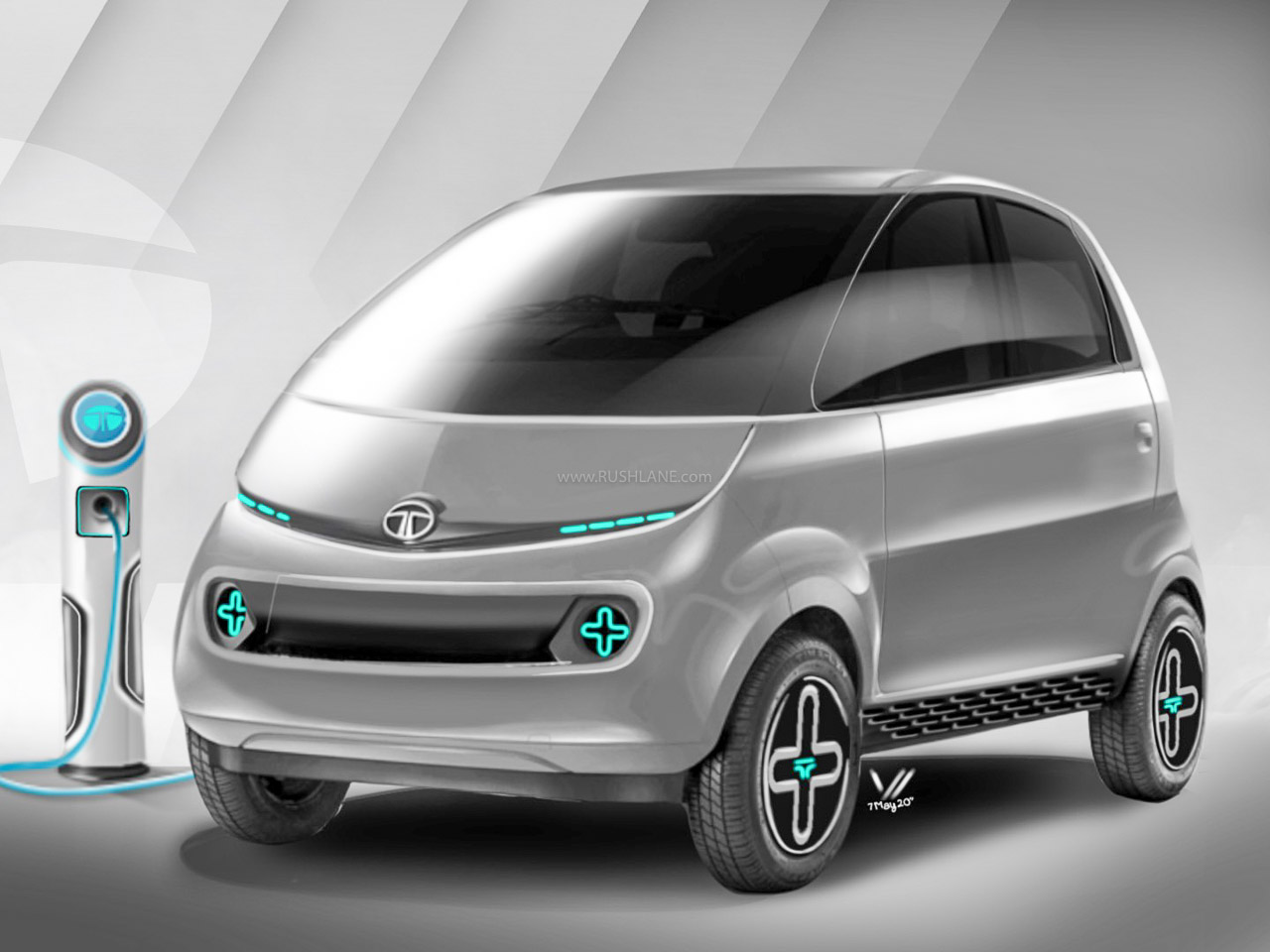
While Tata Motors has never officially announced plans to revive the iconic hatchback, a recent statement from the company’s India Design Head has once again sparked the conversation.
During an interview with ABP Auto Live, Tata Motors India Design Head Ajay Jain was asked whether the Nano could make a comeback.
Why Nano EV Makes More Sense TodayThe original Nano was ahead of its time.
It also makes sense from Tata Motors’ current position in the market.
This leadership has been built on models such as Tiago EV, Punch EV, Nexon EV, Curvv EV, Harrier EV and Sierra EV.
Tata Motors India Design Head says it would be his pleasure to see Nano return “maybe in an electric avatar”, reviving hopes for the iconic city car
Even though Tata Nano went out of production years ago, it continues to enjoy a cult following among Indian automotive enthusiasts. Every few months, AI-generated renders and speculative posts claiming the Nano is making a comeback go viral on social media. While Tata Motors has never officially announced plans to revive the iconic hatchback, a recent statement from the company’s India Design Head has once again sparked the conversation.
During an interview with ABP Auto Live, Tata Motors India Design Head Ajay Jain was asked whether the Nano could make a comeback. Responding with a smile, he first said “Try Karenge” before elaborating on what the Nano means to him and the company.
“I think the Nano is an incredibly innovative car that put India on the map,” he said. “It would be a pleasure for me to sit here with you in a few years and put the Tata Nano on the map again, maybe in an electric avatar, maybe in an avatar that the whole world can see.”
While these comments are not a confirmation that Tata Nano EV is under development, they are among the strongest public remarks yet from a senior Tata Motors executive acknowledging the possibility of bringing the Nano nameplate back in the future.
Why Nano EV Makes More Sense Today
The original Nano was ahead of its time. When it debuted in 2009, the Indian passenger vehicle market was very different. Although it succeeded in making four-wheeler ownership more accessible, the “world’s cheapest car” positioning ended up becoming one of its biggest challenges. Many buyers aspired to own larger hatchbacks instead, limiting the Nano’s long-term success.
Today’s market tells a different story
Compact urban mobility has gained acceptance, electric vehicles have entered the mainstream and buyers are far more open to niche products than they were a decade ago. In that context, an affordable city-focused electric car could find a much stronger audience than the original Nano ever did.
It also makes sense from Tata Motors’ current position in the market. The company is already India’s undisputed leader in electric passenger vehicles. In July 2026, Tata retailed 13,678 electric cars, accounting for 41.54% of the segment. It enjoyed a sizeable lead of nearly 6k units over second-placed Mahindra.
This leadership has been built on models such as Tiago EV, Punch EV, Nexon EV, Curvv EV, Harrier EV and Sierra EV. However, there is still room for an even more affordable electric car positioned below Tiago EV. A Nano EV could attract first-time car buyers, two-wheeler owners looking to upgrade and families seeking a compact second car for city use. Such a product could further strengthen Tata’s EV leadership.
People Still Want Nano Back
Interestingly, Ajay Jain also acknowledged the countless AI-generated Nano concepts that frequently appear online. Instead of dismissing them, he said these images simply reflect people’s emotions. “AI is only representing people’s emotion. AI is not creating emotion out of itself. People are dreaming about a lot of things from Tata,” he said.
That perhaps explains why posts claiming the Nano is returning continue to attract lakhs of views across social media. Whether they’re based on AI renders or unrelated foreign cars, they consistently generate massive engagement because many Indians genuinely want to see the Nano make a comeback.
There was also a real attempt to electrify the Nano in the past. Tata Motors and Coimbatore-based Jayem Automotives had jointly developed the Jayem Neo, an electric version of the Nano for fleet applications. It retained the original Nano’s design while replacing the petrol engine with an electric powertrain, proving that the platform could indeed be adapted for EV use.
What Could A Modern Nano EV Offer?
If Tata Motors ever decides to revive the Nano, it is unlikely to be a simple recreation of the original car. Safety regulations, customer expectations and technology have all evolved significantly over the past decade.
The earlier Jayem Neo featured a 17 kWh battery pack, rear-mounted electric motor and a claimed range of around 130 km. With today’s battery technology and Tata’s growing EV expertise, a modern Nano EV could realistically offer a driving range of around 200 km or more, improved performance, significantly better safety and a much more premium cabin while retaining its compact footprint.
Whether Tata Motors ultimately revives the Nano or not remains to be seen. However, Ajay Jain’s comments make one thing clear—the iconic hatchback continues to occupy a special place not only in the minds of Indian car buyers but also within Tata Motors itself. If the company ever decides to bring it back, an electric avatar arguably makes far more sense today than it ever would have a decade ago.
Update – ABP Auto Live has since removed the report after Tata Motors Passenger Vehicles clarified that Mr. Jain’s remarks were a personal expression and should not be interpreted as an indication of future product plans.
Source