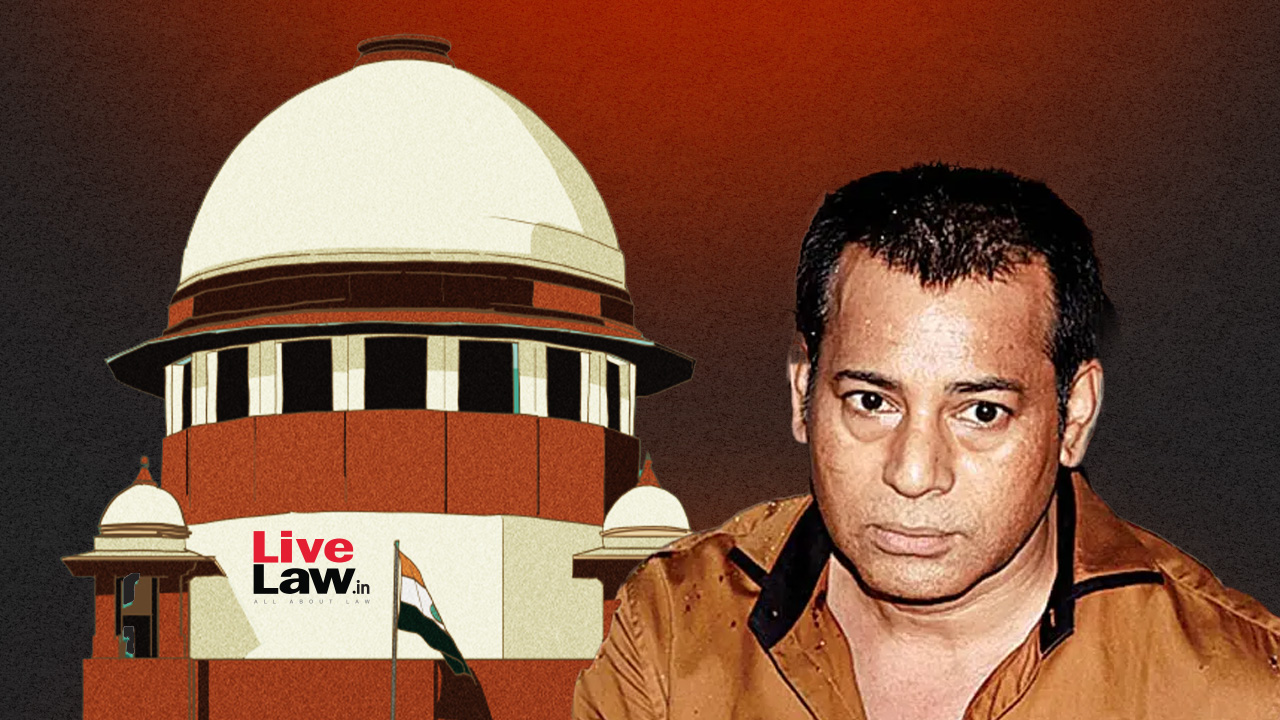
The Court held that Salem continues to serve life imprisonment and the 25-year stipulation flowing from the extradition assurance did not convert his life sentence into a fixed-term sentence.
Malhotra argued that the period spent as an undertrial had to be set off against Salem's sentence, as directed by the TADA Court.
He also contended that earned remission for good conduct had to be counted towards actual imprisonment.
He distinguished such earned remission from statutory remission under Section 432 CrPC, which he said he was not claiming.
BackgroundIn April 2025, the Bombay High Court rejected Abu Salem's plea seeking premature release.
The Supreme Court today dismissed a plea filed by gangster Abu Salem, sentenced to life imprisonment for the 1993 Mumbai serial blasts, seeking premature release
Salem approached the court contending that his earned prison remission and undertrial custody should be counted towards the 25-year imprisonment cap flowing from India's extradition assurances to Portugal.
A bench of Justice Vikram Nath and Justice Sandeep Mehta pronounced the verdict. The Court held that Salem continues to serve life imprisonment and the 25-year stipulation flowing from the extradition assurance did not convert his life sentence into a fixed-term sentence.
On the previous date, after hearing arguments by Senior Advocate Rishi Malhotra for Salem, the Court had indicated that it will dismiss the plea.
Malhotra argued that the period spent as an undertrial had to be set off against Salem's sentence, as directed by the TADA Court. He also contended that earned remission for good conduct had to be counted towards actual imprisonment. He distinguished such earned remission from statutory remission under Section 432 CrPC, which he said he was not claiming.
Referring to Swamy Shraddananda@Murali Monahar vs State Of Karnataka, Malhotra argued that earned remission granted on account of monthly, quarterly or yearly good conduct, or for performing assigned duties, forms part of actual imprisonment.
He submitted that Salem had already earned approximately three years and two months of remission for good conduct and that other convicts had been released after taking such remission into account. According to him, the Bombay High Court had wrongly distinguished Salem's case by holding that the 25-year period under the extradition assurance was not a fixed-term sentence and, therefore, could not be reduced by earned remission.
The Supreme Court held that his jail-earned remission cannot be counted to advance his release from the 25-year imprisonment period arising from the sovereign assurance given by India to Portugal at the time of his extradition.
Background
In April 2025, the Bombay High Court rejected Abu Salem's plea seeking premature release.