The Court clarified that the judgment was applicable to the parties before the Court and that already concluded seniority and promotions would not be reopened.
The application was disposed of with the following observations :(i) The judgment dated 11.03.2026 determines the rights of the parties before this Court.
By the March 11 judgment, the Supreme Court held that salary income alone cannot determine whether a candidate belongs to the OBC creamy layer.
In its present clarification application, the Union Government has said that it is not seeking a review of the March 11 judgment.
It has submitted that such prejudice could not be undone if the clarification application is eventually decided in its favour.
The Supreme Court on Friday (November 6) pronounced judgment on a Miscellaneous Application filed by the Centre seeking clarification of its March 11 judgment holding that the creamy layer status of an Other Backward Class (OBC) candidate cannot be determined solely on the basis of the parents' salary income, and that the category of posts held by them has also to be considered.
The Court clarified that the judgment was applicable to the parties before the Court and that already concluded seniority and promotions would not be reopened. The pending cases will be decided by the courts on their own merits and entitlement. The. judgment cannot be a ground to re-open already concluded selections and appointments.
The Court also held that the Civil Service Exam 2025 selections must be as per the judgment, since the allocation of services has not been completed.
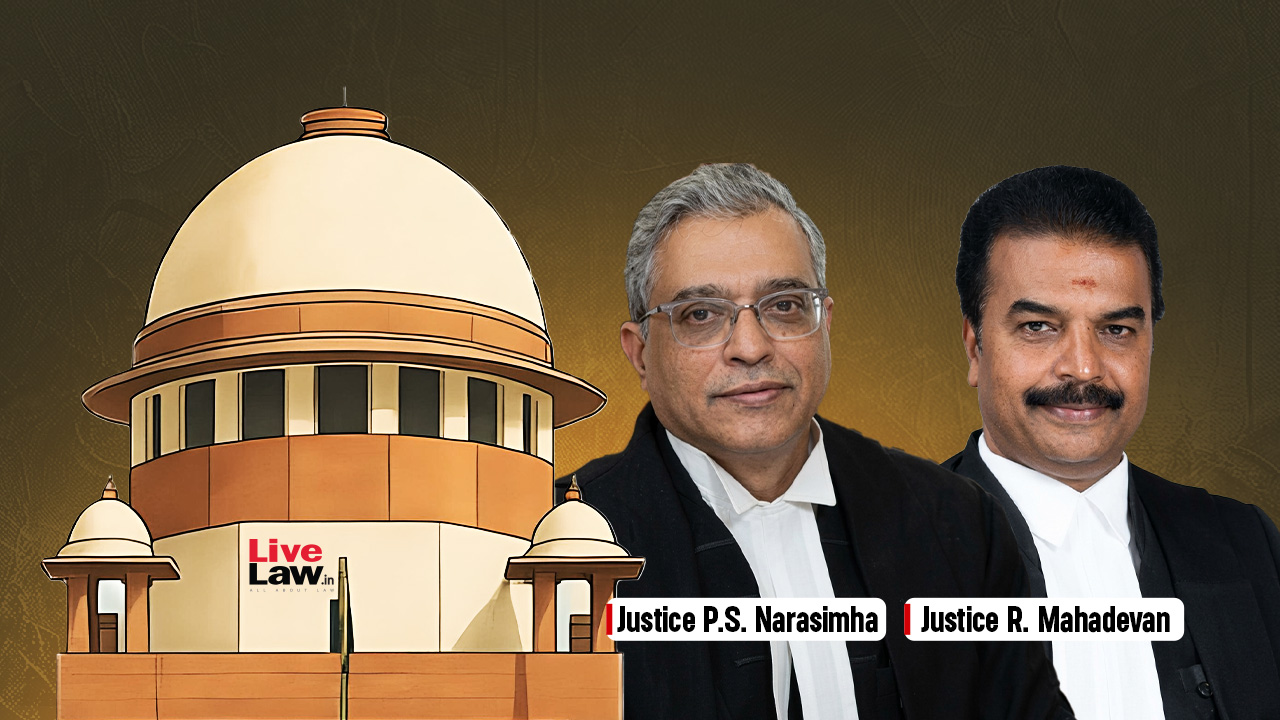
A bench of Justice Pamidighantam Sri Narasimha and Justice R. Mahadevan pronounced the judgment on a Miscellaneous Application filed by the Centre seeking prospective application of the judgment.
The application was disposed of with the following observations :
(i) The judgment dated 11.03.2026 determines the rights of the parties before this Court. It holds that the respondent candidates fall within the non-creamy layer of the OBC category and are entitled to the benefit of reservation together with consequential placement and allotment of posts in the selection processes in which they participated.
(ii) The grant of such benefit shall not, by itself, operate to the detriment of the seniority of any other person or entail the reopening of selections or appointments already concluded. In this regard, it is relevant to note that by its letter dated 20.12.2016, the DoPT had clarified that the selections pursuant to the Civil Services Examination, 2016 were subject to the outcome of the appeals pending before this Court.
(iii) Paragraphs 42 and 43 of the judgment concern the intervenors, while Paragraph 44 sets out the operative directions disposing of the Civil Appeals. These directions are to be construed only in the context of the parties and applications dealt with in the judgment.
(iv) In Paragraph 43, this Court had taken note of the assurance given by the DoPT regarding the creation of supernumerary posts, which is also recorded in the 21st Report of the Parliamentary Committee on the Welfare of Other Backward Classes. The Government may, accordingly, accommodate the parties before this Court who otherwise fulfil the requisite eligibility conditions.
(v) The ratio laid down in the judgment shall not, by itself, furnish a ground for reopening selections or appointments already concluded prior to the judgment dated 11.03.2026. The claims of persons asserting that they are similarly placed, whose cases are pending before any Court, Tribunal or other competent forum or authority, may be considered on their own merits by the concerned adjudicating body or authority. This Court expresses no opinion on the merits of such claims, save to reiterate that the interpretation of the 1993 OM and the 2004 Letter laid down in the judgment may be taken into consideration while adjudicating such claims in accordance with law.
(vi) All selections, appointments and allotments against roster points made subsequent to the judgment dated 11.03.2026, insofar as they concern the implementation of reservation and the exclusion of the creamy layer, shall be governed by the 1993 OM, as interpreted by this Court in the said judgment.
(vii) The Government remains at liberty to formulate its policy concerning reservation and the creamy layer criteria, in accordance with the Constitution and the principles laid down by this Court.
(viii) This Court is not inclined to prescribe any timeline for establishing equivalence between posts or consulting stakeholders in the formulation of the creamy layer policy, as these matters fall within the domain of the executive and the legislature.
(ix) With respect to M.A. Diary No.51879 of 2026, although the result of the Civil Services Examination, 2025 was declared on 06.03.2026, the allocation of services has not yet been finalised. Since the process of allocation remains pending and there is no convincing or reasonable justification for deferring the implementation of the judgment dated 11.03.2026, the creamy layer principle, as interpreted in the said judgment, shall govern the allocation of services to OBC candidates selected through the Civil Services Examination, 2025.
Centre's application
The Centre had raised concerns about the consequences of applying the judgment retrospectively. It has stated that such an interpretation could affect recruitments and admissions already undertaken by the Central Government, 18 States and Union Territories, “Retrospective or belated application of a changed eligibility criterion may unsettle appointments and admissions made under the rules and certificates prevailing at the relevant time and may create uncertainty regarding OBC-NCL status, seniority, service conditions and career progression. It may also affect admissions to Central and State educational institutions, universities and professional institutions. The Applicant therefore respectfully submits that the temporal operation of the Judgment requires clarification so as to avoid unsettling completed selections, appointments and admissions and the consequential rights arising therefrom”, the plea states. The Centre had sought two years to establish equivalence of posts in other organisations with government posts after consultations with the concerned stakeholders and to formulate a uniform mechanism for determining OBC creamy-layer status where equivalence has not been established. The Centre had also sought permission to finalise service allocation for 958 candidates recommended by the Union Public Service Commission (UPSC) in the Civil Services Examination (CSE) 2025, pending a decision on the clarification application. By the March 11 judgment, the Supreme Court held that salary income alone cannot determine whether a candidate belongs to the OBC creamy layer. It said the status and category of the post held by the candidate's parent or parents are also essential factors. The dispute concerned the interpretation of the Office Memorandum dated August 8, 1993 and a clarificatory letter dated October 14, 2004. The 1993 OM does not make a parent's salary the basis for determining creamy-layer status. Depending on the applicable category, the parent's post is relevant. Where the Income/Wealth Test applies, salary and agricultural income are excluded from the income calculation. The 2004 clarification, however, provided for consideration of salary income of parents in cases where equivalence between posts in organisations such as PSUs, banks, universities and private entities with government posts had not been determined. The Supreme Court held that the 2004 clarification could not introduce a substantive condition that was absent from the 1993 policy. It also held that treating children of PSU or private-sector employees differently from similarly placed government employees, by treating their salary income as a basis for exclusion, could amount to hostile discrimination and violate Articles 14 and 16 of the Constitution. In its present clarification application, the Union Government has said that it is not seeking a review of the March 11 judgment. It has instead sought clarification regarding the temporal operation of the judgment and the manner in which its directions are to be implemented. The Government has said that between 2016 and 2025, more than 5.69 lakh reserved vacancies, including 3.70 lakh OBC vacancies, were filled in Ministries and Departments of the Central Government and their attached and subordinate offices. It has said these recruitments were made on the basis of the August 8, 1993 Office Memorandum and subsequent instructions and guidelines. According to the Centre's plea, retrospective implementation could require reconsideration of service allocations made in Civil Services Examinations since 2012. It could also result in reallocation of services and cadres to candidates who have already been appointed and could affect seniority and promotions of officers currently in service. The Centre has argued that retrospective implementation could also affect ongoing examinations and recruitment processes, and lead to increased litigation from candidates who were previously denied OBC-NCL benefits or extra attempts. The Government has referred to recruitments conducted through various examination bodies and departments, including the Railways, banks, Department of Posts and paramilitary organisations. It has said similar issues could arise in recruitments conducted by 18 States and Union Territories that follow the 1993 Office Memorandum. The Government has also raised concerns regarding candidates who may become eligible for technical services years after the relevant examination. It has said some candidates may face difficulties in satisfying the prescribed physical and medical standards due to the passage of time. The application also states that lakhs of admissions have been made in higher educational institutions since 2012 on the basis of the OBC creamy-layer criteria under the 1993 Office Memorandum. It has expressed concern that retrospective changes could affect such admissions, particularly where institutions do not have provisions for supernumerary seats. It has also contended that retrospective implementation would disrupt government functioning and affect persons who were not parties to the original litigation without giving them an opportunity to have their individual circumstances considered. The Centre has therefore sought a clarification that the March 11 judgment should not retrospectively reopen completed selections, appointments, service or cadre allocations, seniority positions or admissions made under the rules and eligibility conditions applicable at the relevant time. It has also sought clarification regarding candidates participating in examinations or recruitment processes that were already underway on March 11, 2026. Separately, the Centre has filed an interim application seeking permission to allocate services to 958 candidates recommended by the UPSC in CSE-2025 in accordance with the existing August 8, 1993 Office Memorandum, pending adjudication of the clarification application. The Government has said that any further delay in service allocation would defer the Foundation Course and the annual training and induction cycle of the 958 candidates. It has submitted that such prejudice could not be undone if the clarification application is eventually decided in its favour. Case no. – Diary No. 51879 and 51897 of 2026 Case Title – Union of India v. Rohith Nathan and Anr.