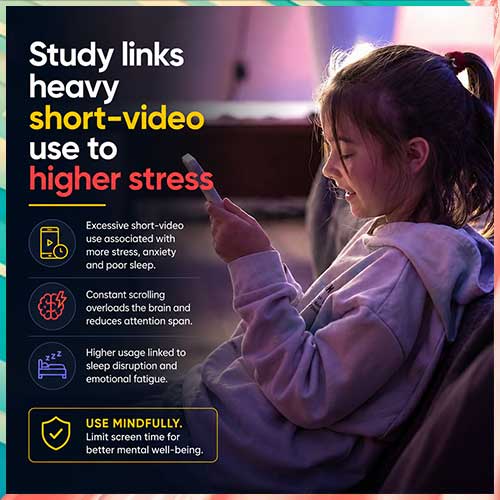
Heavy use of short-form video platforms such as TikTok may contribute to attention problems, higher stress levels and poorer mental health among teenagers and young adults, according to a new study by researchers at the University of Bayreuth in Germany.The study, published in the June edition of the European Child & Adolescent Psychiatry journal, analyzed findings from 42 studies conducted between 2015 and 2025 involving nearly 47,000 participants with an average age of 16.8 years.Researchers examined data from more than 1,500 study groups across homes, schools and other youth settings to assess the potential neurological and behavioral effects of short-video consumption.The analysis found that adolescents who spent four or more hours a day watching short-form videos were more likely to experience slight to moderate increases in inattention and impulsivity, poorer working memory, and higher levels of anxiety, depression and stress.
The study also linked heavy viewing to a greater risk of addictive behaviors.Researchers defined "heavy use" as watching short videos for at least four hours a day, while "unregulated use" referred to unscheduled or random viewing that disrupts sleep and daily routines.To examine the neurological effects, several of the underlying studies used electroencephalography (EEG) and magnetic resonance imaging (MRI) scans to measure brain activity.The researchers identified three characteristics of short-video platforms that contribute to prolonged engagement: rapid content delivery, infinite scrolling and highly personalized recommendation algorithms.According to the study, fast-paced video streams may impair future memory formation, while personalized recommendation feeds increase users' attachment to the content.
Infinite scrolling, meanwhile, encourages longer viewing sessions by removing natural stopping points.The researchers controlled for variables including age, gender, country, cultural background, education level and the platform used to ensure the findings were not driven by demographic differences.While the study identifies an association rather than proving a direct cause-and-effect relationship, the authors recommend preventive measures such as establishing structured schedules for digital media use and creating supportive social environments to reduce potential risks to adolescents' cognitive and neurological development.
Heavy use of short-form video platforms such as TikTok may contribute to attention problems, higher stress levels and poorer mental health among teenagers and young adults, according to a new study by researchers at the University of Bayreuth in Germany.The study, published in the June edition of the European Child & Adolescent Psychiatry journal, analyzed findings from 42 studies conducted between 2015 and 2025 involving nearly 47,000 participants with an average age of 16.8 years.Researchers examined data from more than 1,500 study groups across homes, schools and other youth settings to assess the potential neurological and behavioral effects of short-video consumption.The analysis found that adolescents who spent four or more hours a day watching short-form videos were more likely to experience slight to moderate increases in inattention and impulsivity, poorer working memory, and higher levels of anxiety, depression and stress. The study also linked heavy viewing to a greater risk of addictive behaviors.Researchers defined "heavy use" as watching short videos for at least four hours a day, while "unregulated use" referred to unscheduled or random viewing that disrupts sleep and daily routines.To examine the neurological effects, several of the underlying studies used electroencephalography (EEG) and magnetic resonance imaging (MRI) scans to measure brain activity.The researchers identified three characteristics of short-video platforms that contribute to prolonged engagement: rapid content delivery, infinite scrolling and highly personalized recommendation algorithms.According to the study, fast-paced video streams may impair future memory formation, while personalized recommendation feeds increase users' attachment to the content. Infinite scrolling, meanwhile, encourages longer viewing sessions by removing natural stopping points.The researchers controlled for variables including age, gender, country, cultural background, education level and the platform used to ensure the findings were not driven by demographic differences.While the study identifies an association rather than proving a direct cause-and-effect relationship, the authors recommend preventive measures such as establishing structured schedules for digital media use and creating supportive social environments to reduce potential risks to adolescents' cognitive and neurological development.