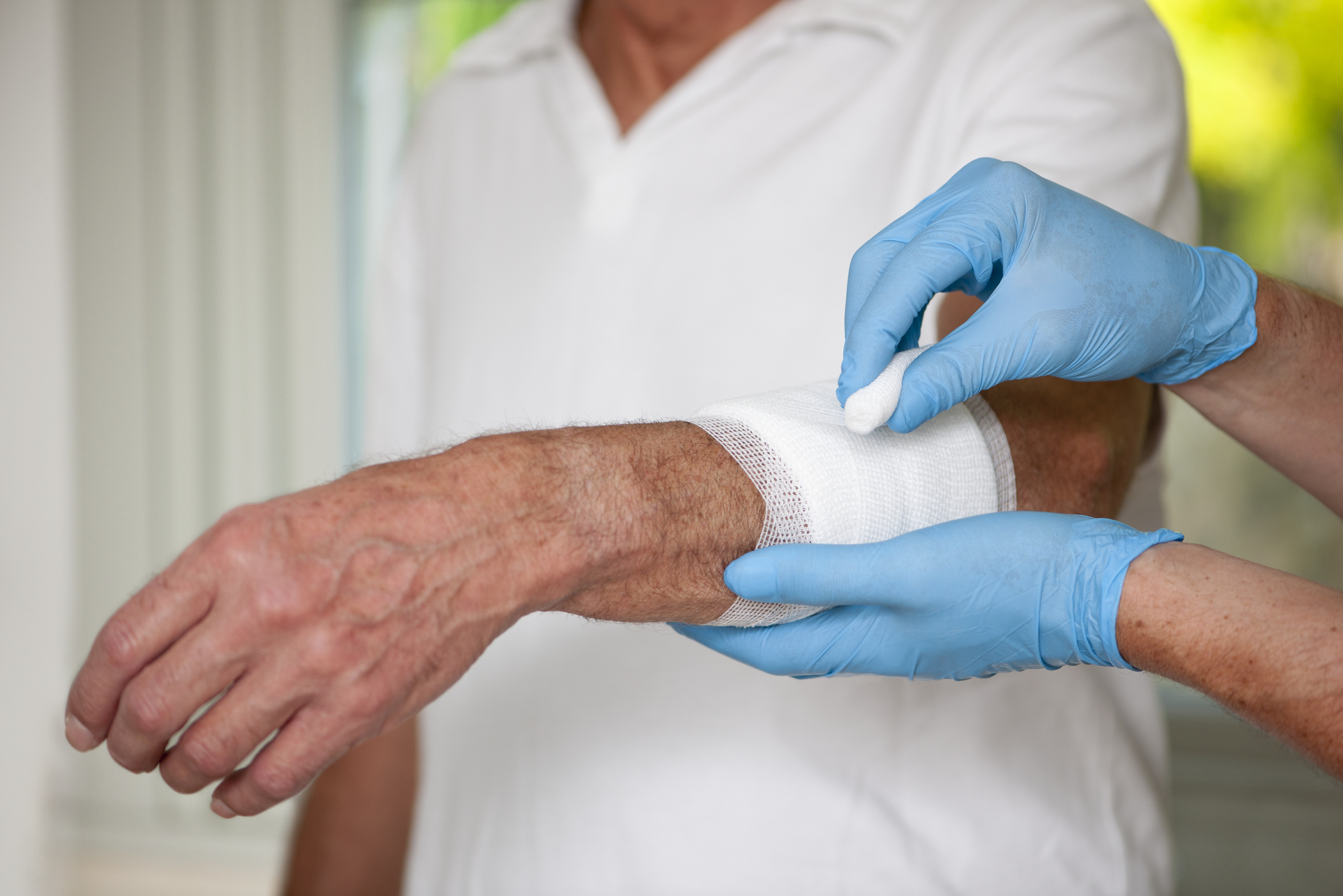
A medical dressing that can harness the body’s own repair system to deliver growth factors could transform wound care, providing faster and more accessible healing.
“What excites me most is that this works in living human skin,” said lead researcher Magdalene Ho, PhD, from Imperial College London.
“We can see repair cells migrating into the wound dressing and confirm the material is engaging with human biology.
The growth factors remain inactive until a traction force on the dressing during wound healing, which enables them to be released and delivered at the optimal time and place.
It also had healing benefits ex vivo in a human skin wound model obtained from women undergoing abdominoplasty.
A medical dressing that can harness the body’s own repair system to deliver growth factors could transform wound care, providing faster and more accessible healing.
The invention shows how high-tech materials can deliver biological substances made by the body according to the needs of injured tissue.
The dressing, outlined in Nature Materials, is an advancement on regular dressings that structurally support the wound but do not offer personalized healing benefits.
It is able to use far lower doses of growth factors than those traditionally found in wound-healing sprays and creams, with the added advantage that these are endogenous and more likely to reach sites where they are most needed.
“What excites me most is that this works in living human skin,” said lead researcher Magdalene Ho, PhD, from Imperial College London.
“We can see repair cells migrating into the wound dressing and confirm the material is engaging with human biology. That result makes me optimistic that this approach has a future in the clinic.”
Wounds typically transition from a damaged, inflamed tissue to a healed state through an efficient sequence of events involving inflammatory cytokines, growth factors and multiple cell types.
However, millions of people each year have acute and chronic wounds that are unable to heal by themselves such as large burn wounds, non-union fractures, and diabetic foot ulcers.
These difficult wounds require extensive clinical interventions, are extremely painful, reduce quality of life, and increase the risk of infection, mortality and permanent disability.
The novel wound dressing uses aptamer constructs attached to biomaterial scaffolds, which promote tissue repair by selectively harvesting, concentrating and reactivating multiple endogenous growth factors according to the needs of cells at injury sites.
The growth factors remain inactive until a traction force on the dressing during wound healing, which enables them to be released and delivered at the optimal time and place.
Tests showed that the dressing promoted vascularization in a rat model of femur injury and reduced wound diameter in mouse skin models. It also had healing benefits ex vivo in a human skin wound model obtained from women undergoing abdominoplasty.
“Overall, this study establishes cellular traction forces as a viable trigger for controlled therapeutic delivery in vitro, in vivo, ex vivo and across species, providing the initial demonstration of this mechanism in complex, repairing tissues,” the researchers reported.
They further noted: “The substantial global aptamer portfolio and knowledge base provides a foundation for the rapid development of cell-responsive biomaterials that can efficiently deliver defined biologic therapies across diverse clinical indications.”