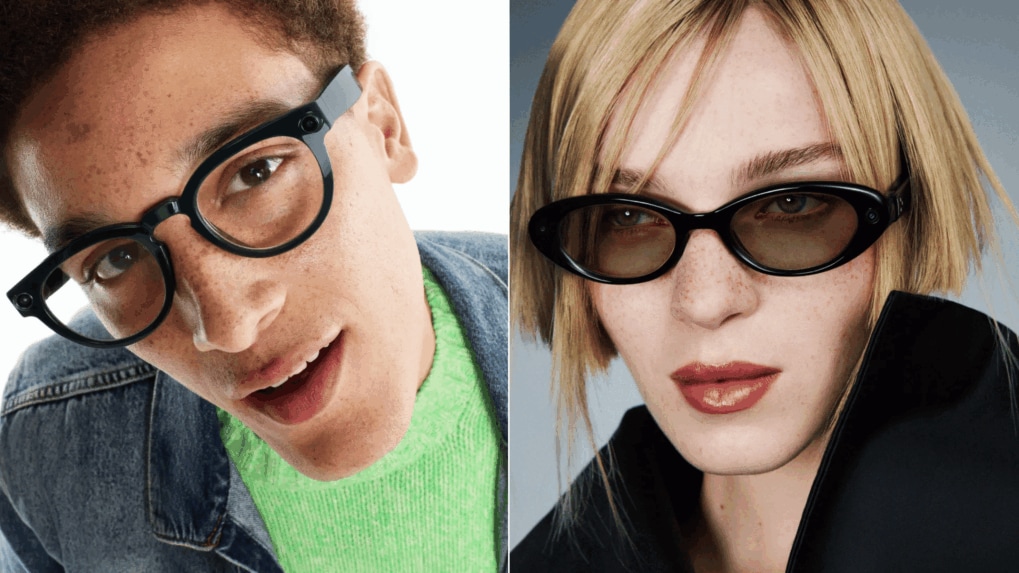
Smart glasses can record video, capture audio, transmit information and connect to the internet, all while looking almost indistinguishable from regular sunglasses.
As tech companies push smart glasses further into the mainstream, the debate will likely intensify.
Meta introduced a new line of AI-powered glasses in June 2026, including the limited edition Meta Glasses by Kylie Jenner, aka the Starfire Kylie Edition.
The old “No Photography” policy might change to include smart eyewear, AI glasses, and other wearable recording technologies.
New releases like Meta’s Kylie Jenner smart glasses are proof of how quickly the tech is moving from niche gadget to fashion statement.
The rapid rise of AI-powered smart glasses is creating new legal and regulatory questions in India, particularly around privacy, surveillance, broadcasting rights and data protection. According to a recent Bar & Bench article, institutions ranging from sports bodies to private businesses are increasingly being forced to decide how these devices should be treated under existing laws.
The debate took a turn when the Board of Control for Cricket in India’s (BCCI) Anti-Corruption and Security Unit reportedly banned the use of smart glasses, including Ray-Ban Meta and Oakley smart glasses, in player and match-official areas during the IPL.
The BCCI labelled these products as communication and audio-video recording devices rather than normal eyewear, as per reports.
The worry is about the capabilities that are built into the devices. Smart glasses can record video, capture audio, transmit information and connect to the internet, all while looking almost indistinguishable from regular sunglasses. These features can pose serious operational and security challenges in environments with stringent anti-corruption protocols and commercially valuable broadcasting agreements.
As tech companies push smart glasses further into the mainstream, the debate will likely intensify. Meta introduced a new line of AI-powered glasses in June 2026, including the limited edition Meta Glasses by Kylie Jenner, aka the Starfire Kylie Edition. The glasses have a built-in camera, open-ear speakers, voice-controlled AI and a version of Meta AI voiced by Jenner herself. Meta has billed the product as a groundbreaking wearable for hands-free photography, video recording and AI assistance.
The launch has sparked fresh online debate about the privacy implications of increasingly unobtrusive recording devices. Digital-rights advocates and technology watchers have cautioned that celebrity-endorsed products could accelerate adoption of wearables that constantly record video from a user’s perspective, blurring the distinction between everyday accessories and surveillance tools.
The article says the central legal issue is one of classification. Eyewear marketed as such may also serve as a communication device, a recording tool and an AI assistant. 2(1)(ha) of the Information Technology Act, 2000, defines 'communication devices' to mean 'apparatus used for transmission of text, audio or images'. Since smart glasses can provide these functions over connected networks, they may be subject to the same regulatory regimes that have traditionally applied to phones and other electronic communications devices.
The emergence of wearable cameras has also added further privacy concerns. The article notes that “street interviews, travel vlogs, food walks and social-media reels have normalised the recording of public spaces.” Smart glasses allow users to record continuously without visibly holding a camera or smartphone, making such recording even less visible.
In the present context, the article refers to the landmark judgement of the Supreme Court in Justice K.S. Puttaswamy v. Union of India, where the right to privacy was declared a fundamental right. The column says that people in public places can reasonably expect to be seen by others, but this does not automatically mean they consent to having their images, conversations or movements through digital platforms recorded, stored or monetised.
The law is clearer where privacy expectations are more elevated. The article points out that recording restrictions have existed for a long time in places like trial rooms, locker rooms, hospital examination rooms, spas and restrooms. It refers to the provisions on voyeurism under the Bharatiya Nyaya Sanhita as existing legal safeguards that could apply whether recording is done through a smartphone, hidden camera or smart glasses.
The column also addresses the implications of the Digital Personal Data Protection Act, 2023 (DPDP Act). Smart glasses footage could be classified as digital personal data, since wearable cameras can take identifiable images of individuals. But the law contains exceptions for activities undertaken for personal or domestic purposes. "The exception would normally be for a person recording a personal holiday or family get-together," the article says.
Questions arise when such recordings are uploaded to monetised social media accounts, to influencer channels or to commercial content platforms. As the article notes, the DPDP Act does not clearly define what constitutes commercial data processing in the case of personal recording, which means there is a lot of space for future interpretation by regulators and courts. It also highlights that the legislation was written with websites, apps and digital platforms in mind and does not specifically address AI-powered wearable cameras that continuously capture visual data.
The limits on smart glasses don’t need to be imposed by government regulation. Corporate offices, clubs, restaurants, educational institutions and wellness centres and private entities can set their own restrictions on recording-capable devices. The old “No Photography” policy might change to include smart eyewear, AI glasses, and other wearable recording technologies.
With the increasing prevalence of wearable AI devices, the legal questions with respect to privacy, consent, confidentiality and data collection are likely to arise in an increasing number of settings. New releases like Meta’s Kylie Jenner smart glasses are proof of how quickly the tech is moving from niche gadget to fashion statement. At the same time, regulators, courts and businesses are still figuring out how existing privacy and data-protection frameworks apply to devices that can seamlessly record, process and share information from a wearer's perspective.
Also read: Meta brings panoramic Instagram Stories and new editing tools to AI glasses users
First Published on July 6, 2026, 09:23:18 IST