Gulf governments are keeping their US relationships while building new defence partnerships, maintaining channels with Iran and pursuing policies that increasingly cut across one another.
On August 25, Trump sent a proposed civilian nuclear cooperation deal with Saudi Arabia to Congress.
Saudi Arabia has maintained its stand that it will recognise Israel only if there is a clear path towards the creation of a Palestinian state.
Trump said on July 23, 2026, that a nuclear deal with Saudi Arabia depends on the kingdom recognizing Israel.
Saudi Arabia has not joined, and Riyadh is holding to its Palestinian-state condition even as the Trump administration presses it to sign up.
Six months of war between the US-Israel and Iran have left the Gulf operating in a security landscape very different from the one that existed before the conflict. The fighting has shown how fast the region can be pulled into a wider conflict, throttled its energy and shipping routes, and forced governments that built their defence on American guarantees to ask how much longer those guarantees will carry them. This undated handout photograph shows a view of an oil facility in Kuwait City. Oil has long been the bedrock for the tiny Gulf state's economy, where more than 90 percent of government revenue and nearly all export earnings rely on reliable crude sales. The country is also home to roughly six percent of total oil reserves globally. (Photo by Kuwait Petroleum Corporation (KPC) / AFP) (AFP) What is emerging is multi-alignment. Gulf governments are keeping their US relationships while building new defence partnerships, maintaining channels with Iran and pursuing policies that increasingly cut across one another. Arab and Western officials say frustration has been growing among Gulf leaders over President Donald Trump’s handling of the war and his ability to bring the conflict to a diplomatic end, The Washington Post reported in August. The result is a Gulf that behaves less like a single US-led bloc and more like a set of states, each running its own calculation. Washington still anchor, but not the only one
US officials are reconsidering rebuilding damaged Gulf bases as large, fixed installations prove vulnerable to Iranian missiles and drones. (AFP)
The US remains embedded in the Gulf’s security architecture. Bahrain hosts the US Navy’s Fifth Fleet, Qatar hosts the Al Udeid air base, and other Gulf states maintain longstanding military relationships with Washington.
The war has sharpened an old contradiction: American protection also turns those who host it into targets. Iran has repeatedly threatened Gulf countries over their links to Washington, and Reuters reported in August that Iranian officials had warned Gulf states that Tehran could strike oil, power, water and other strategic infrastructure if they helped facilitate further US attacks on Iran. That threat has given urgency to a debate that predates the current war: whether the Gulf’s security can continue to revolve so heavily around one power. Washington is asking a similar question. The Financial Times reported in August that US officials are reconsidering whether some damaged Gulf bases should be rebuilt in their previous form, given how exposed large, fixed installations have proved to Iranian missiles and drones. The UAE
Abu Dhabi Skyline, United Arab Emirates, February 28, 2026. (REUTERS)
Abu Dhabi took a key step towards greater autonomy on the energy front, withdrawing from Opec and Opec+ — the global petroleum cartel and its extended alliance of non-member allies, including Russia and Kazakhstan, which coordinate to influence world oil prices. The exit allows the UAE to expand production without the restrictions imposed by Opec quotas. Sultan al-Jaber, chief executive of Adnoc, the Abu Dhabi National Oil Company, said the decision was a sovereign one aimed at serving the UAE’s national interests and was not directed against any country. Reuters reported in August that Adnoc has since adopted a more aggressive and flexible oil-marketing strategy, expanding spot sales and using shuttle systems to move crude amid the disruption around the Strait of Hormuz. Abu Dhabi’s line on Tehran has hardened alongside its energy strategy. The UAE in August cut off trade with Iran to align with US sanctions, a substantial break given that the UAE was for years Iran’s main regional trade partner even while staying close to Washington. Also read: Iran, Oman reach agreement on sharing Strait of Hormuz, its revenue? Here's what we know Saudi Arabia
A billboard displays portraits of Saudi Crown Prince and Prime Minister Mohammed bin Salman, Pakistan's Prime Minister Muhammad Shehbaz Sharif, Pakistan's Chief of Defence Forces (CDF) and Chief of Army Staff, Field Marshal Asim Munir, and Turkish President Recep Tayyip Erdogan, following the signing of the Makkah Joint Defence Agreement, in Karachi, Pakistan, August 9, 2026. (REUTERS)
On August 7, Saudi Arabia signed the Makkah Joint Defence Agreement with Turkiye and Pakistan, committing the three countries to collective defence, with an attack on one to be treated as an attack on all three, they announced. All three signatories have important relationships with Washington, yet the pact creates a security mechanism that does not depend solely on the US. Turkiye has stressed that the agreement is defensive rather than aimed at any particular country. The US-Saudi relationship remains strong in parallel. On August 25, Trump sent a proposed civilian nuclear cooperation deal with Saudi Arabia to Congress. But Trump has also claimed that he has made Riyadh establishing ties with Israel a condition of that deal. Saudi Arabia has maintained its stand that it will recognise Israel only if there is a clear path towards the creation of a Palestinian state. Oman
Vessels near the Strait of Hormuz, as seen from Musandam, Oman, September 2, 2026. (REUTERS)
Oman has long maintained working relationships with both Washington and Tehran, and has brokered between them — a position that matters more than ever because of Hormuz. Reuters reported on August 25 that Iran and Oman had agreed on how to manage the waterway, although the details and the mechanics of implementation remain unclear. The talks followed weeks of effort to secure the safe movement of ships, as the US and Iran continued to disagree over reopening the strait. The Financial Times reported that the two sides were working on a temporary arrangement to create a shipping route and clear the waterway. But this mediation has come at a cost. Trump has threatened Oman against any agreement that could charge a toll for shipping through the Strait of Hormuz. Also read: Six months into US-Iran war: Strait of Hormuz crisis, global economic shock and India’s strategic test The Gulf is not one bloc Saudi Arabia and the UAE are close partners on some files and rivals on others, which is why analysts warn against treating the Gulf states as a single strategic unit. Sudan is one such case. Saudi Arabia is believed to back Sudan’s government and army in the civil war, while the UAE has been accused of supporting the rival Rapid Support Forces (RSF), a powerful paramilitary group fighting the Sudanese army. The UAE denies the allegations. But an analysis published in August by the pan-African news platform African Arguments said the UAE had provided extensive support to the RSF, while Saudi Arabia had offered more limited support to Sudan’s army. The latest US push in August for United Nations sanctions on the groups fighting in Sudan has returned attention to outside involvement, with Washington accusing external powers of helping fuel the war, and the UAE denying supplying weapons to the RSF.
US President Donald Trump and Crown Prince and Prime Minister of the Kingdom of Saudi Arabia Mohammed bin Salman speak with each other as they walk down the Colonnade on the way to the Oval Office of the White House in Washington, DC on November 18, 2025. Trump said on July 23, 2026, that a nuclear deal with Saudi Arabia depends on the kingdom recognizing Israel. Riyadh has long resisted joining the so-called Abraham Accords with Israel. (AFP)
Israel adds a layer. The 2020 Abraham Accords, which established diplomatic ties between Israel and several Arab countries, brought the UAE and Bahrain into formal relations with Israel and created new economic, diplomatic and security links. But they did not produce a single Gulf position. Saudi Arabia has not joined, and Riyadh is holding to its Palestinian-state condition even as the Trump administration presses it to sign up. Gulf states, in other words, are separating the strands of their foreign policies. A country can hold a US security relationship, negotiate with Iran, deepen ties with Turkiye or Pakistan, and still set its own course on Israel and the Palestinian question. And the others
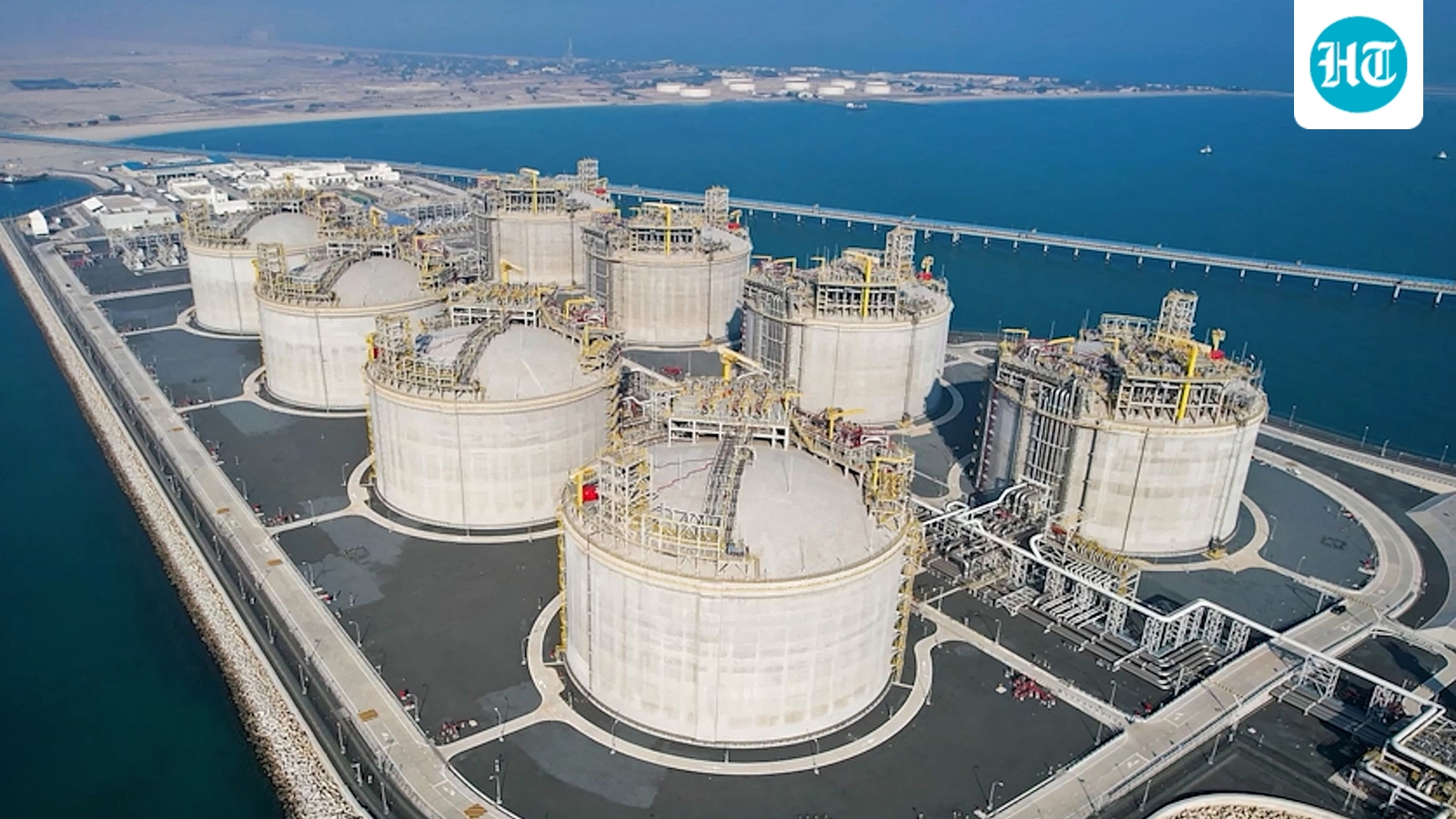
QatarEnergy's liquefied natural gas (LNG) production facilities, amid the US-Israeli conflict with Iran, in Ras Laffan Industrial City, March 2, 2026. (REUTERS)