ETV Bharat / healthScreen Dependence Of Children Is New Worry For Parents And Health ExpertsNew Delhi: Public health officials have raised concerns over India's increasing reliance on digital devices, especially among the youth.
Paediatricians say one of the most common mistakes parents make is using smartphones to distract children during meals or daily routine.
Excessive screen exposure can also contribute to speech and language delays."
Experts note that children learn communication and social skills primarily through interaction with caregivers, something that passive screen viewing cannot replace.
Dr Rakesh Bagdi of AIIMS Delhi emphasised that excessive screen exposure during early childhood can have far-reaching consequences.
ETV Bharat / health
Screen Dependence Of Children Is New Worry For Parents And Health Experts
New Delhi: Public health officials have raised concerns over India's increasing reliance on digital devices, especially among the youth. A study by Ernst & Young (EY) found that Indians spent an estimated 1.1 lakh crore hours using their mobile phones, averaging close to five hours a day in 2024, with roughly 70% of those hours using social media, streaming platforms and playing games. This data shows how integrated screen time is into daily lives.
The trend is particularly prevalent among children and teenagers. This has led to education professionals, healthcare professionals and government officials being increasingly alarmed about potential detrimental outcomes from extended usage of screens on young people’s physical, mental and emotional development.
A nationwide study conducted by the National Council of Central Board of Secondary Education (CBSE) Schools paints a worrying picture of screen habits among school-going children. Based on responses from 6.3 lakh participants, the survey found that 74% of students spend more than two hours daily on screens for non-academic purposes.
Alarmingly, 21% of individuals spend more than four hours daily on entertainment activities. Recent studies show that 69% of teachers and school leaders feel there has been a decrease in concentration and attention span amongst their students that could potentially translate into negative learning conditions.
Karnataka became the first state to introduce a ban on the use of social media by children under 16 years in March this year. Recent research led by All India Institute of Medical Sciences (AIIMS) has found that children less than five years old spend an average of 2.2 hours per day on screens, while children under two years spend an average of 1.2 hours daily using screens, whereas little or no screen exposure is recommended for them.
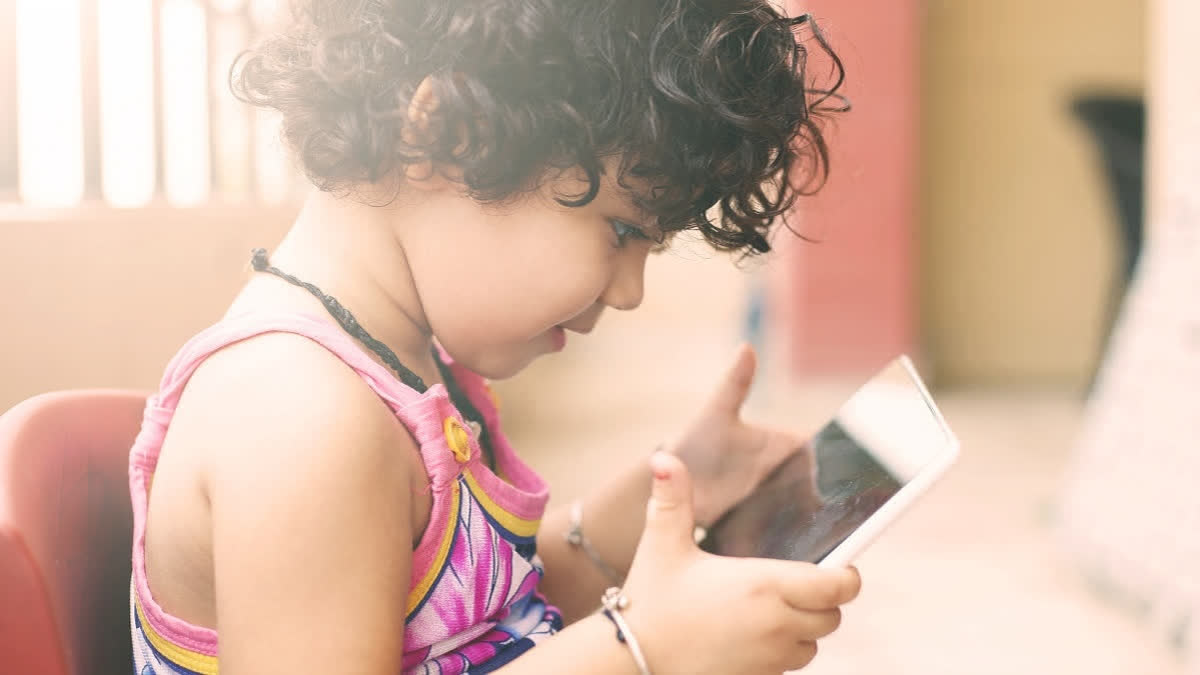
Paediatricians say one of the most common mistakes parents make is using smartphones to distract children during meals or daily routine. Dr Naresh Gupta from Shanti Nursing Home said, "A few years ago, parents would bring children to us for cough, fever or stomach problems. Today, many come asking how to deal with smartphone addiction. We are seeing more children with eye strain, poor concentration and sleep disturbances linked to excessive screen use, making it a growing health concern."
He suggested, "Avoid giving smartphones to children during meals as a distraction tool. Follow age-appropriate screen-time limits. Establish screen-free hours at home, especially during meals and before bedtime. Promote reading, storytelling, drawing, puzzles and outdoor activities. Use parental controls and monitor the type of content children consume online. Encourage face-to-face conversations and family interactions to support language and social development."
Meanwhile, Dr Ganesh Patil from Samarth Balrugnalaya said, "We do see such patients. Especially mothers tend to give cell phones to children while feeding. Excessive screen time in young children reduces parent-child interaction and may lead to sleep disturbances, attention difficulties and poor eating habits. Many children begin refusing food unless a screen is provided. Excessive screen exposure can also contribute to speech and language delays."
Experts note that children learn communication and social skills primarily through interaction with caregivers, something that passive screen viewing cannot replace.
Dr Rakesh Bagdi of AIIMS Delhi emphasised that excessive screen exposure during early childhood can have far-reaching consequences. "According to the Indian Academy of Paediatrics guidelines, children between two and five years should ideally limit screen time to less than one hour per day. Parents should focus on limiting overall exposure and encouraging high-quality educational content," he told ETV Bharat while adding that rapid technological adoption has transformed childhood experiences in recent years.