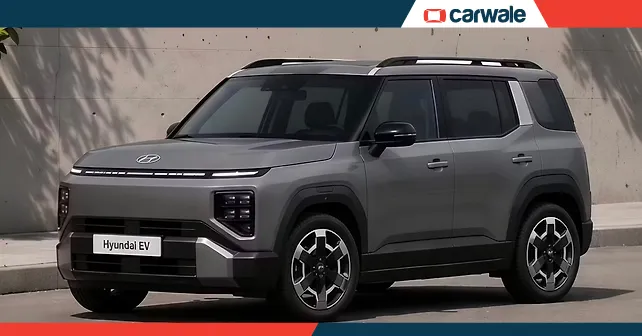
The last time we saw spy photos of the sub-compact EV SUV, we sighted an ADAS module, which Hyundai also officially confirmed in an investor day presentation, and a Pleos Connect centre screen.
Although the intake capacity was not known, the sub-compact EV SUV could likely support more than 60kW DC.
Mechanically, the Hyundai sub-compact EV could borrow its powertrain options from the Kia Syros EV.
Whether or not this SUV will get mid-nickel NMC (higher density) or conventional NMC, is yet to be known.
Given that the Kia Syros EV gets a lifetime warranty for the battery pack, the Hyundai EV should carry over the same.
Coming in January next year
Could borrow powertrains from the Syros EV
Hyundai’s upcoming sub-four-metre electric SUV is part of the carmaker’s 26-model launch plan by 2030. This SUV will be heavily localised, and from what we have seen with the spy shots, it appears to have a different design altogether. We have now learnt that this SUV will come to India in January 2027.
The last time we saw spy photos of the sub-compact EV SUV, we sighted an ADAS module, which Hyundai also officially confirmed in an investor day presentation, and a Pleos Connect centre screen. Different headlight housings could either indicate prototyping or different design adaptations in its variant hierarchy. The test mule was also spotted near a 120kW DC fast charger. Although the intake capacity was not known, the sub-compact EV SUV could likely support more than 60kW DC.
Mechanically, the Hyundai sub-compact EV could borrow its powertrain options from the Kia Syros EV. This means 42kWh (135bhp/255Nm) and 51kWh (170bhp/255Nm) NMC battery packs. Whether or not this SUV will get mid-nickel NMC (higher density) or conventional NMC, is yet to be known. Given that the Kia Syros EV gets a lifetime warranty for the battery pack, the Hyundai EV should carry over the same. Features could include a panoramic glass roof, seat ventilation, and ample space, given that this will be a ground-up EV, not an ICE-converted unit.