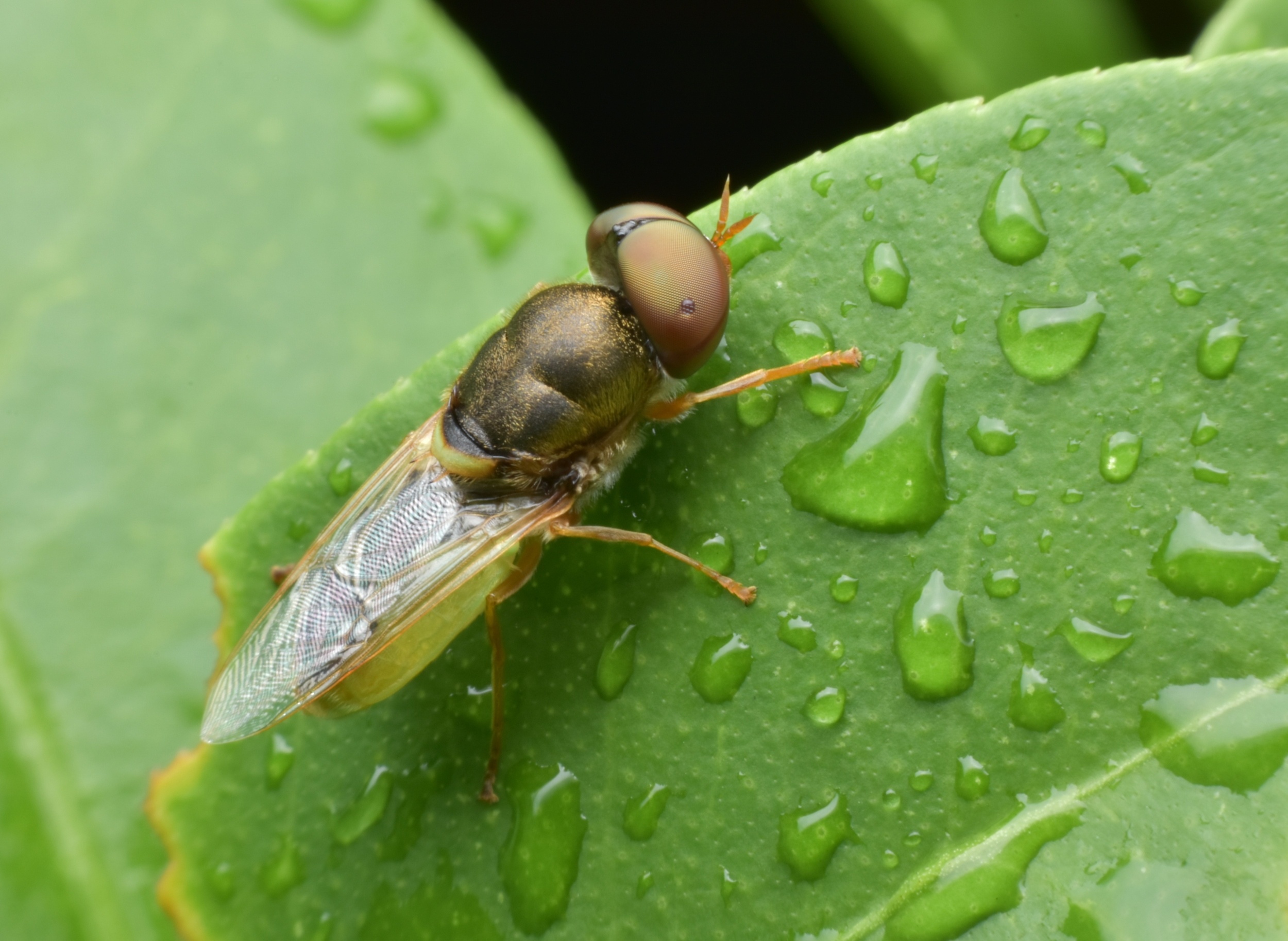
A new study suggests that some insects track the daily rise and fall of humidity, using moisture in the air to keep time even when other cues stay the same.
Building a humidity clockTo isolate humidity, the team needed an environment where nothing else moved.
They built a sealed, climate-controlled chamber in a small backup room and cycled the insects through 12 hours of dry air, then 12 hours of muggy air.
Knowing humidity can drive an insect’s daily clock gives researchers a new way to predict behavior.
Benoit’s team suspects this moisture clock runs quietly in countless land insects, still waiting to be mapped.
Most animals keep time using familiar cues. Light tells them when day begins and ends. Temperature helps signal the changing seasons. Together, those rhythms shape when creatures eat, sleep, hunt, and move.
Scientists have now found evidence of another clock hiding in plain sight.
A new study suggests that some insects track the daily rise and fall of humidity, using moisture in the air to keep time even when other cues stay the same.
The finding points to a biological timekeeper that no one had previously demonstrated in animals, one that may help tiny creatures anticipate dry conditions before they arrive.
A clock hidden in humidity
That timekeeper turned up in insects. Working at the University of Cincinnati (UC), a team led by researcher Shyh-Chi Chen found that several species keep a daily clock tuned to humidity, just as they do for light and warmth.
Chen led the work in the lab of UC biologist Joshua B. Benoit. The team studies circadian rhythms – the internal cycles that run on a 24-hour loop and tell an animal when to eat, move, and rest.
For an insect the size of a sesame seed, a dry spell is dangerous. Small bodies lose water fast, so reading the swing between dry and damp can be a matter of survival.
Temperature already made that list, as earlier research confirmed.
Building a humidity clock
To isolate humidity, the team needed an environment where nothing else moved. They built a sealed, climate-controlled chamber in a small backup room and cycled the insects through 12 hours of dry air, then 12 hours of muggy air.
In the dry stretch, the air felt parched; in the wet stretch, it turned tropical, with the moisture climbing past 85 percent.
Light, temperature, and air pressure never budged, so the only thing changing was how much water hung in the air.
The insects sorted into patterns at once. Blood-feeding kissing bugs, spider beetles, and two kinds of mosquito grew busiest in the dry hours, stirring within an hour of the air drying. One species did the opposite, peaking as dry gave way to damp.
When humidity disappeared
Responding to the air is one thing. Keeping time without it is another. So the team changed the test, freezing the humidity and holding it steady after several days on the wet-dry cycle.
With no wet-dry swing left to follow, most of the insects kept right on schedule. The spider beetles and several others stayed rhythmic, busy, and quiet at the same hours. The schedule was now coming from inside them.
“They take humidity cues as a biological clock,” said Benoit. No one had shown that in an animal before. That staying power is the mark of a true clock, not a reflex.
A reflex stops when its trigger vanishes; a clock keeps ticking, and the insects ran on for days.
Fruit flies reveal the clock
For the close-up work, the team turned to fruit flies, the workhorses of biology labs. When they pushed the humidity schedule forward by 6 hours, the flies needed only 3 days to lock onto the new timing.
The most telling detail came just before each change in the air. Healthy flies revved up ahead of the dry-to-damp turn, moving before the moisture arrived. It wasn’t a reaction but a prediction – exactly what a working biological clock gives an animal.
To find what powered the rhythm, the team tested flies with broken clock genes and others whose humidity sensors were switched off. Both groups faltered.
Without the cue, far more drifted into aimless activity than normal flies. Genes and sensors both seem necessary. Lose either, and the rhythm struggles.
Mosquitoes break the pattern
One group refused to play along. Mosquitoes barely held a rhythm once the humidity stopped cycling, even though they sit close to fruit flies on the family tree.
For them, damp air signals something else. To a mosquito, a plume of moisture usually means a warm body nearby – the breath and sweat of something worth biting.
A separate study found that dried-out mosquitoes grow more active and bite more readily.
Because that moisture rides on whether a host is nearby, it turns up at random, not on a daily schedule.
A cue that arrives unpredictably can’t anchor a clock. Mosquitoes seem to read it as an alert, not a way to tell time.
Rethinking biological clocks
Before this work, the picture was thin. The only firm case of a moisture-run clock came from a paper on a plant, and a 2021 attempt to find one in fly hatching had failed.
Now it holds for animals too. Humidity is a real clock-setting cue for most insects, mosquitoes aside.
Knowing humidity can drive an insect’s daily clock gives researchers a new way to predict behavior.
Many of the species tested spread disease or damage crops and feed on a daily schedule. Map that timing, and their movements become easier to forecast.
Benoit’s team suspects this moisture clock runs quietly in countless land insects, still waiting to be mapped. The next task is to learn how it works with light and temperature, and whether the cues cooperate or clash.
The findings crack open a question about people. Our clocks lean heavily on light, so any pull from humidity would be faint, though Chen says it can’t be ruled out. Faint or not, the air may keep more of our time than we knew.
The study is published in the journal npj Biological Timing and Sleep.
—–
Like what you read? Subscribe to our newsletter for engaging articles, exclusive content, and the latest updates.
Check us out on EarthSnap, a free app brought to you by Eric Ralls and Earth.com.
—–