CINCINNATI — Doctors at Christ Hospital in Cincinnati are using artificial intelligence and robotic technology to help find and diagnose lung cancer, including hard-to-reach spots in the lungs that previously were more difficult to test.
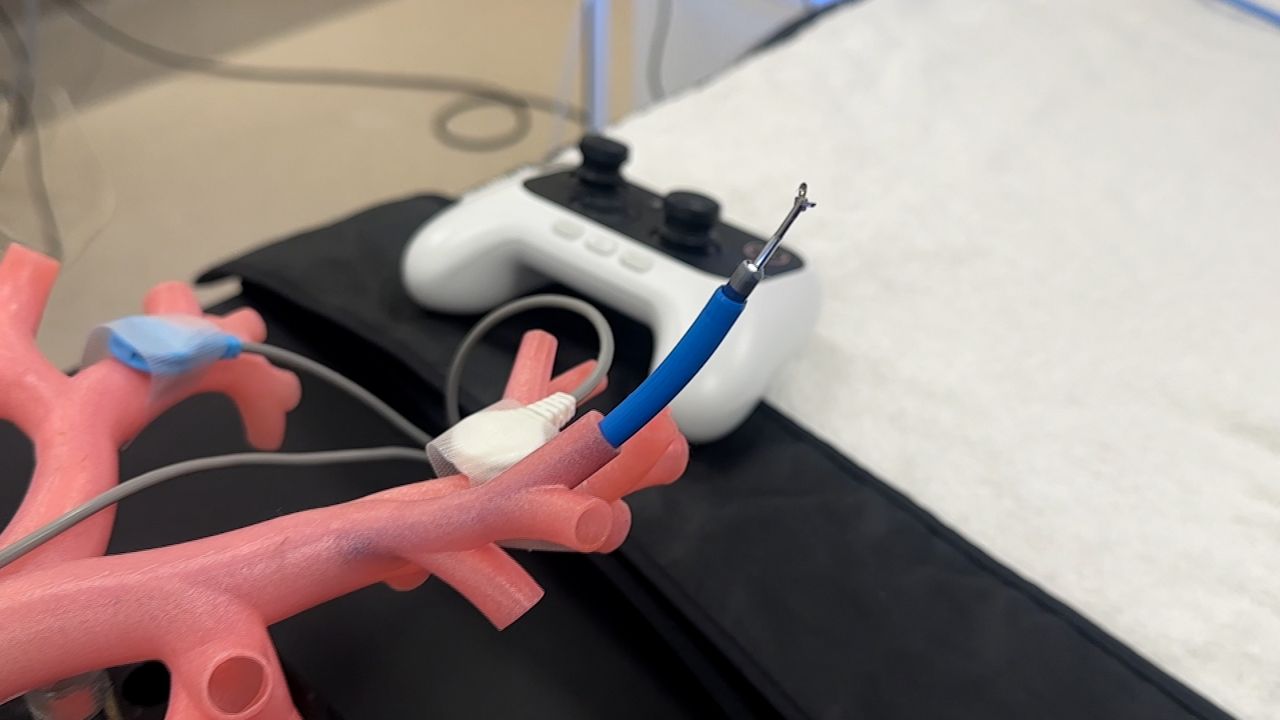
At Christ Hospital, pulmonologists are using a robot called the Monarch to help biopsy lung nodules and determine whether they are cancerous.
“I wanted to have some answers.”Matey said he learned about the robotic procedure after finding a doctor at Christ Hospital.
He said the technology is helping doctors detect lung cancer sooner and give patients more definitive answers.
We’ve given people peace of mind because it found that it was an infection or inflammatory nodule rather than cancer.”In Matey’s case, the spot on his lungs was not lung cancer.
CINCINNATI — Doctors at Christ Hospital in Cincinnati are using artificial intelligence and robotic technology to help find and diagnose lung cancer, including hard-to-reach spots in the lungs that previously were more difficult to test.
National research shows that more than 70% of hospitals are using AI. At Christ Hospital, pulmonologists are using a robot called the Monarch to help biopsy lung nodules and determine whether they are cancerous.
Chris Matey, 78, said he began searching online after doctors found a spot, or nodule, on his lungs while he was already battling prostate cancer.
“You consult Dr. Google and you see all sorts of horrible things,” Matey said. “I wanted to have some answers.”
Matey said he learned about the robotic procedure after finding a doctor at Christ Hospital.
“I thought, ‘Oh my gosh, I don’t know if I want robotic surgery,’” Matey said. “But it was too late by then.”
Dr. Vishal Jivan, a pulmonologist at Christ Hospital, said the robot travels through a breathing tube and into the patient’s lungs. He uses a controller to guide the device and take a tissue sample for testing.
“It’s a smaller scope, so we can reach out further to the edge of the lung, which we could never do before,” Jivan said. “So there’s nodules that we can go after that we couldn’t.”
The hospital has performed the procedure 500 times over the last five years, Jivan said. He said the technology is helping doctors detect lung cancer sooner and give patients more definitive answers.
“It’s been a game changer,” Jivan said. “We’ve been able to be more aggressive with nodules. We’ve given people peace of mind because it found that it was an infection or inflammatory nodule rather than cancer.”
In Matey’s case, the spot on his lungs was not lung cancer. Doctors found it was a prostate cancer that had begun to spread, allowing them to catch and treat it earlier. Matey said he had no major side effects after the procedure.
“The next day, I got up, felt pretty good, and after one o’clock, I went on a 24-mile bike ride,” Matey said. “So not only were there no adverse side effects, it was almost like it didn’t happen.”
Doctors at Christ Hospital said they expect AI technology to play a larger role in patient care as it continues to advance.
“So far, so good,” Matey said.