Image source: University of Texas MD Anderson Cancer CenterA new study led by researchers at The University of Texas MD Anderson Cancer Center has identified a way to reshape the gut microbiome that can enhance the delivery of certain chemotherapies to tumors, offering a potential strategy to make nanoparticle-based cancer drugs more effective.
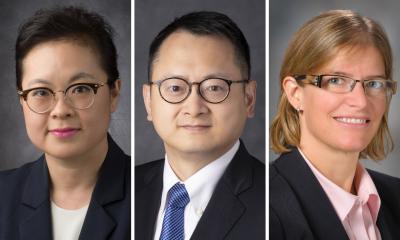
The study, published in Nature Materials, was led by Betty Kim, M.D., Ph.D., professor of Neurosurgery, Wen Jiang, M.D., Ph.D., associate professor of Radiation Oncology, and Jennifer Wargo, M.D., professor of Surgical Oncology and Genomic Medicine.
Both Kim and Wargo are core members of the James P. Allison Institute, and this research was a collaborative project through the Platform for Innovative Microbiome and Translational Research (PRIME-TR).
In preclinical models, reshaping gut bacteria with a short course of antibiotics roughly doubled how long nanoparticle-based chemotherapy remained in circulation, increased drug accumulation in tumors and improved survival across multiple cancer types.
Notably, the effect was driven by the microbiome itself rather than the immune system, suggesting that microbiome-directed approaches could one day be leveraged to enhance delivery for this class of chemotherapy.
Image source: University of Texas MD Anderson Cancer Center
A new study led by researchers at The University of Texas MD Anderson Cancer Center has identified a way to reshape the gut microbiome that can enhance the delivery of certain chemotherapies to tumors, offering a potential strategy to make nanoparticle-based cancer drugs more effective.
The study, published in Nature Materials, was led by Betty Kim, M.D., Ph.D., professor of Neurosurgery, Wen Jiang, M.D., Ph.D., associate professor of Radiation Oncology, and Jennifer Wargo, M.D., professor of Surgical Oncology and Genomic Medicine. Both Kim and Wargo are core members of the James P. Allison Institute, and this research was a collaborative project through the Platform for Innovative Microbiome and Translational Research (PRIME-TR).
In preclinical models, reshaping gut bacteria with a short course of antibiotics roughly doubled how long nanoparticle-based chemotherapy remained in circulation, increased drug accumulation in tumors and improved survival across multiple cancer types. Notably, the effect was driven by the microbiome itself rather than the immune system, suggesting that microbiome-directed approaches could one day be leveraged to enhance delivery for this class of chemotherapy.