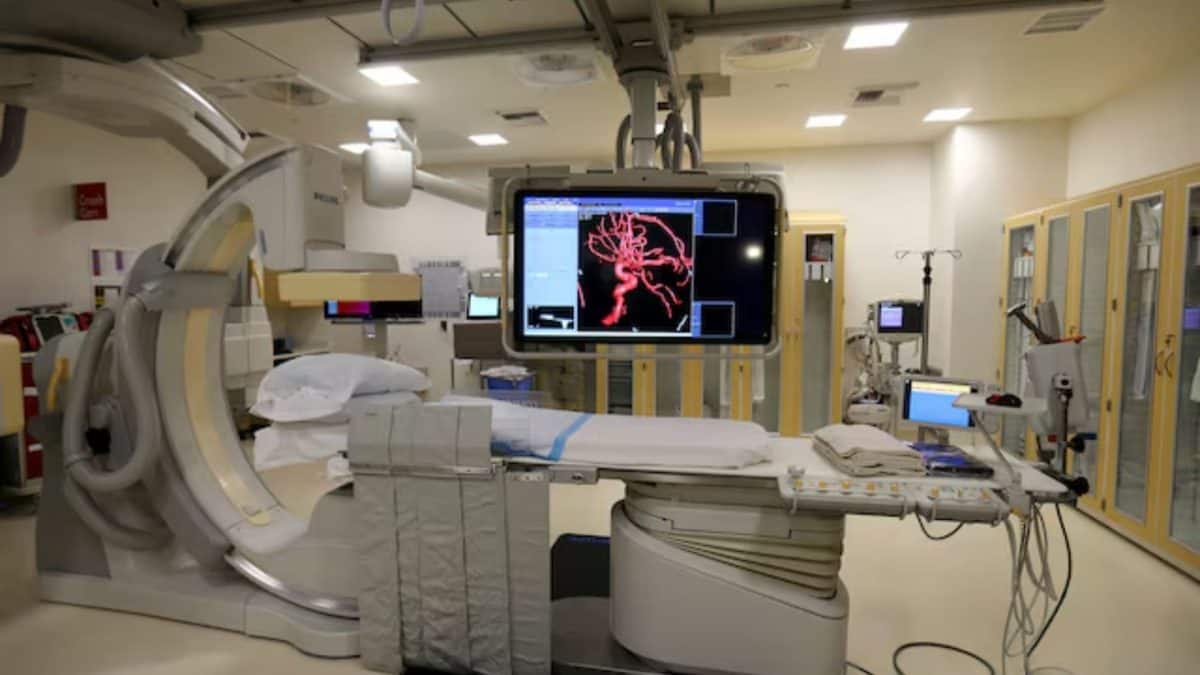
Cancer treatment is entering an era in which radiotherapy is no longer necessarily a fixed plan delivered in the same way over multiple sessions.
Image-guided radiotherapy, adaptive treatment planning, and advanced radiation delivery help clinicians target tumours more accurately while protecting surrounding healthy tissue.
AdvertisementAI could make precision radiotherapy more scalableIf adaptive radiotherapy is to expand, another challenge emerges: time and manpower.
Dr Choudhary also emphasised the need to bring innovation, affordability and access together so that smarter cancer treatment reaches more patients.
Dr Hasib Abdul Gaffor warned that India must ensure smarter radiotherapy does not widen existing disparities in cancer care.
AI, adaptive radiotherapy and MR-Linac technology are making cancer treatment more precise, but experts say India must expand infrastructure, skills and affordability to ensure innovation does not widen the access gap.
Cancer treatment is entering an era in which radiotherapy is no longer necessarily a fixed plan delivered in the same way over multiple sessions. Increasingly, treatment can respond to changes in a tumour, surrounding organs and a patient's anatomy from one day to the next.
Technologies such as image-guided radiotherapy (IGRT), intensity-modulated radiotherapy (IMRT), adaptive radiotherapy and MRI-guided linear accelerators, or MR-Linacs, are making radiotherapy more precise and responsive to changes in a patient’s anatomy, while artificial intelligence (AI) is opening new possibilities in imaging, treatment planning and quality assurance.
For India, however, the bigger question may not be how advanced radiotherapy can become, but how many patients will actually be able to access it.
Advertisement
With the country's cancer burden continuing to pose a major healthcare challenge, experts say the next phase of radiotherapy must combine technological sophistication with wider and more equitable access.
Radiotherapy is becoming more adaptive
Conventional radiotherapy relies on a treatment plan developed using imaging before therapy begins. But the human body is not static. Tumours can change in size, organs can shift and the anatomy around the treatment area can vary during a course of radiation.
That is where adaptive radiotherapy is gaining importance.
More from Health More from Health
“The future of radiotherapy will lie in the transition from being primarily a fixed form of treatment to becoming a treatment that can adapt to daily changes in the patient’s internal environment,” said Dr Hasib Abdul Gaffor, Senior Consultant, SPARSH Hospital, Hennur Road, Bangalore.
The principle is relatively straightforward: assess what has changed, determine whether it affects the planned radiation dose and, where necessary, modify the treatment plan.
A 2026 critical review described adaptive radiotherapy as a shift from static treatment plans to a monitored, feedback-driven approach that responds to anatomical and biological changes. It found the strongest evidence for dosimetric recovery, organ-at-risk sparing and workflow feasibility, while evidence of survival benefits remains limited and heterogeneous.
Advertisement
Dr Vineeta Goel, Senior Director & HOD, Radiation Oncology, Fortis Shalimar Bagh (New Delhi) said radiotherapy has evolved significantly, with advances making cancer treatment increasingly precise, personalised and responsive. Image-guided radiotherapy, adaptive treatment planning, and advanced radiation delivery help clinicians target tumours more accurately while protecting surrounding healthy tissue.
“These developments have the potential to improve treatment outcomes and patient experience further,” she said.
Dr Vikas Choudhary, HOD and Consultant, Radiation Oncology, Manipal Hospital (New Delhi) said India’s rising cancer burden has created a growing need for radiotherapy that is both advanced and accessible.
Radiotherapy, he explained, is used at different stages of cancer care — with curative intent, to shrink tumours before surgery, to eliminate residual cancer cells after surgery, and in advanced cancers to control symptoms and improve quality of life.
“The way radiation is planned and delivered is increasingly tailored to the location, size and biology of the tumour, as well as the patient’s overall condition,” he said.
Why MR-Linac is attracting attention
One of the most sophisticated examples of adaptive radiotherapy is the MR-Linac, which combines magnetic resonance imaging with a linear accelerator.
Unlike conventional treatment systems where imaging and radiation delivery are more separated, an MR-Linac allows clinicians to visualise soft tissues while the patient is positioned for treatment. This can be particularly valuable when a tumour is close to sensitive organs or when anatomy changes significantly between treatment sessions.
Dr Choudhary said technologies such as MR-Linac are enabling greater precision by allowing doctors to visualise tumours and surrounding healthy tissues more accurately during treatment.
"The importance of MR-Linac is not simply that it offers better imaging. Its ability to facilitate on-table visualisation and, when appropriate, modification of the treatment plan can help clinicians respond to anatomical changes on the day of treatment" Dr Gaffor said .
Research has similarly highlighted the potential of MR-guided radiotherapy to visualise tumours and surrounding organs more clearly and adapt treatment to a patient's anatomy at the time of radiation delivery.
But Dr Gaffor cautioned against viewing MR-Linac or any emerging technology as universally superior. “It is not correct to assume that all new technologies are necessarily better than all other options in treating cancers,” he said.
The appropriate technology depends on the tumour, its location, treatment objective, patient anatomy, available expertise and the evidence supporting its use.
Advertisement
AI could make precision radiotherapy more scalable
If adaptive radiotherapy is to expand, another challenge emerges: time and manpower.
Adapting a treatment plan can involve imaging, contouring tumours and organs, registering images, calculating doses, checking the plan and ensuring that treatment can be delivered safely. Repeating these processes can place considerable demands on radiation oncologists, medical physicists and therapists.
This is where AI could become an important enabling technology.
AI is already being studied and implemented for auto-contouring, treatment planning, image registration, workflow assistance and quality assurance. A 2025 review of MR-Linac technology noted that AI and automation could reduce labour-intensive processes and potentially make MR-guided adaptive workflows more efficient.
“AI could help reduce repetitive processes as well as streamline complicated adaptive processes when applied responsibly,” Dr Gaffor said.
Dr Choudhary said AI is expected to further support imaging, treatment planning, contouring and quality assurance. However, he stressed that technology will complement rather than replace clinical expertise.
Recent research also points to the need for clinical validation, quality controls and human oversight before AI-driven systems are routinely relied upon for treatment decisions.
The biggest hurdle may be outside the machine room
For India, the challenge is therefore not simply whether hospitals can acquire the newest radiotherapy machines.
“The problem is not merely about the presence of advanced equipment but patient access to it,” said Dr Pravesh Kumar, Associate Consultant, Radiation Oncology, Regency Hospital (Gorakhpur).
Advanced facilities are concentrated disproportionately in major urban and tertiary healthcare centres, leaving patients from smaller cities and rural areas potentially facing long-distance travel, treatment delays and additional financial burdens.
Dr Kumar said India needs dependable radiotherapy facilities beyond large urban hubs, stronger referral systems, improved public-sector access and coverage, and a larger pool of trained radiation oncologists, medical physicists and radiation therapists.
“Precision will never mean anything if it is restricted to a handful of urban centres,” he said.
Advertisement
Dr Goel said India is well positioned to embrace the next phase of cancer care, with growing adoption of advanced technologies and continued investment in modern oncology infrastructure. But she said the opportunity now is to make smarter radiotherapy a meaningful part of routine cancer care through greater awareness, evidence-based technology adoption and specialised expertise across oncology centres.
She also called for greater collaboration between clinicians, technology providers and healthcare institutions to accelerate the integration of innovations into clinical practice.
India may need a two-track strategy
Dr Gaffor believes India needs a staged approach — expanding access to high-quality conventional and image-guided radiotherapy while developing specialised technologies such as advanced adaptive radiotherapy and MR-guided treatment at appropriate referral centres.
Advanced systems do not simply require purchasing a machine. They demand substantial investment in infrastructure, maintenance, software, quality assurance and trained multidisciplinary teams.
“Affordability and staffing capacity will be key for India when it comes to determining whether this paradigm shift in technology is truly transformational,” Dr Gaffor said.
Dr Goel similarly said the future is not simply about having more advanced machines, but about using technology intelligently to personalise treatment, improve precision and support better outcomes.
For patients, she said, this represents an important step towards a more sophisticated, targeted and patient-centric approach to cancer care.
Dr Choudhary also emphasised the need to bring innovation, affordability and access together so that smarter cancer treatment reaches more patients.
Technology must not create a new cancer-care divide
There is another misconception that doctors want patients to understand: radiotherapy does not automatically mean severe side effects, nor does external-beam radiation make a patient radioactive.
Dr Kumar said fears that radiation necessarily “burns” the body or leaves patients radioactive can discourage people from undergoing treatment. Modern radiotherapy uses carefully planned ionising radiation to target cancer cells while limiting exposure to surrounding healthy tissue. Side effects depend on the treatment site, radiation dose, technique and individual patient characteristics, and some can be temporary.
Advertisement
That same emphasis on precision is central to the evolution of the technology. Dr Vineeta Goel said the future is not simply about having more advanced machines, but about integrating technology with clinical expertise to deliver more precise and individualised treatment plans.
But technological progress also raises the question of who gets access to these advances. Dr Hasib Abdul Gaffor warned that India must ensure smarter radiotherapy does not widen existing disparities in cancer care. “India needs to ensure that smart radiotherapy enhances precision and does not widen the current disparity in access to advanced cancer care among patients,” he said.
With India's cancer burden continuing to rise, experts belived that making radiotherapy smarter is therefore only half the challenge. The bigger test may be making that precision affordable, geographically accessible and available to the patients who need it.