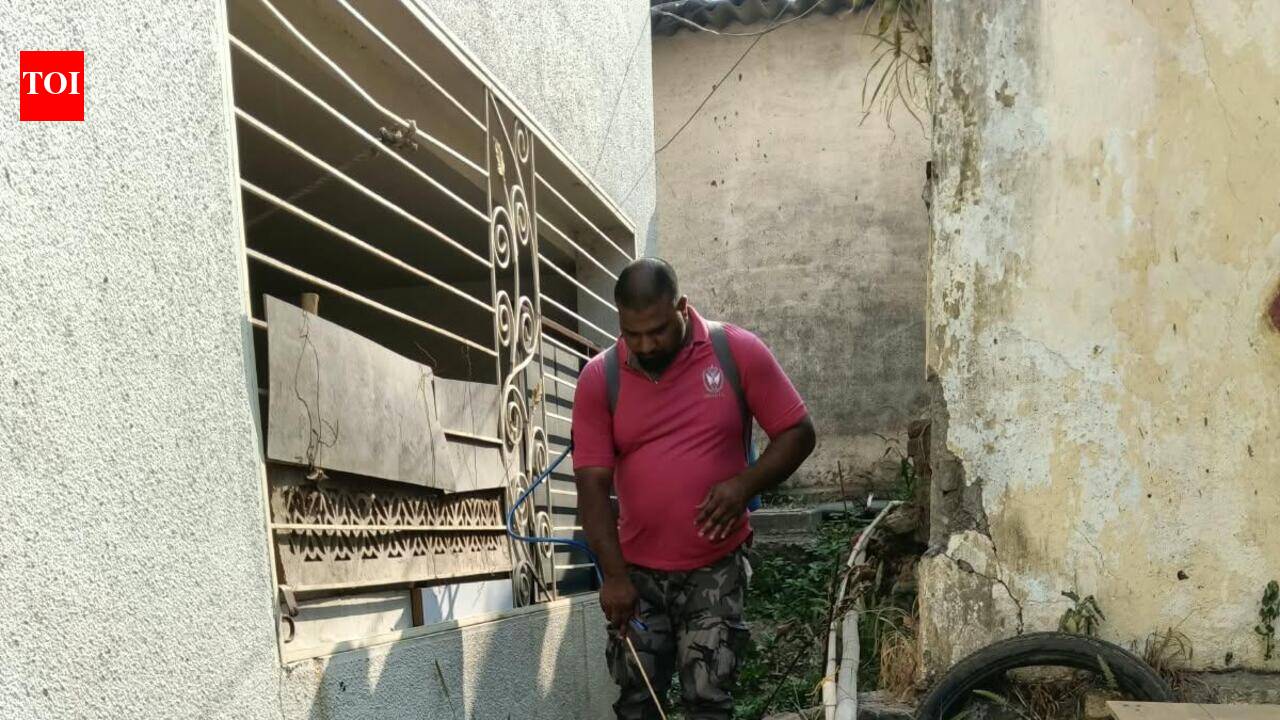
A PMC worker sprays insecticide and larvicide near a patient's housePune:TOI.
Maharashtra recorded 13,955 dengue cases between Jan 1 and Oct 21, 2026, against 10,924 during the corresponding period last year.Malaria cases rose 13% to 21,371 from 18,921, while malaria deaths fell from 15 to 10.Mumbai reported the highest caseload among civic bodies, with 4,180 dengue and 11,749 malaria cases, and five dengue deaths.
Pune recorded 3,154 dengue cases, followed by Thane (946), Panvel (402) and Pimpri Chinchwad (212).
Gadchiroli, which records the highest malaria caseload, has reported fewer cases than last year.
“Warm weather after rain due to delayed winters, construction-site puddles and uncovered water tanks allow mosquitoes to breed long after monsoon season.
A PMC worker sprays insecticide and larvicide near a patient's house
Pune:
TOI.
(With inputs from Alim Shaikh)
With dengue cases in Maharashtra rising nearly 28% and deaths climbing from two to 11 this year, Pune municipal commissioner Naval Kishore Ram met private hospital representatives on Monday to review the situation and ensure patients receive timely treatment.Ram urged hospitals not to deny admission to dengue patients due to a shortage of beds and asked them to register suspected and confirmed cases on govt’s Integrated Health Information Platform (IHIP) portal. He also called for awareness campaigns in outpatient and inpatient departments and among patients’ relatives.“Hospitals must inform patients about the urban poor scheme and the other relevant govt schemes so that no patient delays seeking treatment because of financial reasons,” Ram said.PMC data shows Aundh-Baner reported the highest number of dengue cases among the city’s administrative wards, at 280, followed by Kothrud (271), Nagar Road-Wagholi (267), Yerawada-Wadgaonsheri (201) and Kondhwa-Undri (121).The review comes amid a rising statewide burden of vector-borne infections. Maharashtra recorded 13,955 dengue cases between Jan 1 and Oct 21, 2026, against 10,924 during the corresponding period last year.Malaria cases rose 13% to 21,371 from 18,921, while malaria deaths fell from 15 to 10.Mumbai reported the highest caseload among civic bodies, with 4,180 dengue and 11,749 malaria cases, and five dengue deaths. Pune recorded 3,154 dengue cases, followed by Thane (946), Panvel (402) and Pimpri Chinchwad (212). Among districts, Palghar led the dengue tally with 314 cases, while Gadchiroli recorded the highest malaria burden, with 4,068 cases and six deaths.PCMC recorded 90 cases just in Oct. “The cases are likely to come down ... the situation remains under control, with no major critical cases or suspected deaths reported so far,” PCMC medical health officer Laxman Gophane toldState entomologist Mahendra Jagtap said civic bodies accounted for 66% of reported cases, attributing this partly to infrastructure shortages. “We have directed municipal corporations and zilla parishads to survey 200 homes in urban areas and 100 in rural areas around each positive case, inspect the patient’s workplace and undertake fogging.” However, he said, these measures were not being implemented effectively in cities.Jagtap also warned that patients who fail to complete the prescribed 14-day malaria treatment risk a relapse, as the parasite can remain dormant. Gadchiroli, which records the highest malaria caseload, has reported fewer cases than last year. “Effective implementation does help control infection,” he said.Intermittent rainfall and changing weather are creating favourable mosquito-breeding conditions. A Sept 2026 study by Indian Institute of Tropical Meteorology, Pune, published in GeoHealth, found a strong link between El Nino conditions and heightened dengue risk in India.Amita Kaul of Surya Mother and Child Super Specialty Hospital said the hospital recorded nearly 50% more dengue cases this year. “Warm weather after rain due to delayed winters, construction-site puddles and uncovered water tanks allow mosquitoes to breed long after monsoon season. El Nino can influence these conditions but cannot be termed solely responsible without further study,” she said.She urged people with unexplained high fever to seek testing and warned that severe abdominal pain, persistent vomiting, bleeding and extreme lethargy require prompt medical attention.