News world ‘People Are Hungry’: 6 Months Into US-Israel-Iran War, Iranians Are Losing Hope As Economy Crumbles‘People Are Hungry’: 6 Months Into US-Israel-Iran War, Iranians Are Losing Hope As Economy CrumblesPublished By :,Last Updated: August 29, 2026, 16:56 ISTIran’s worsening economic situation has also fuelled expectations of another round of protests as the conflict with US hits dead end.
(Photo: AFP)Six months after the United States and Israel began their war against Iran, the initial sense of hope among some Iranians has largely disappeared.
From Hope To SurvivalWhen the US and Israel launched missiles and bombs at Iran six months ago, some Iranians saw the destruction through a complicated mix of emotions.
Negar, a 35-year-old lawyer, said she did not feel sadness when the war began.
The US-Israel-Iran war began on February 28, but six months on, there has been no concrete outcome.
News world ‘People Are Hungry’: 6 Months Into US-Israel-Iran War, Iranians Are Losing Hope As Economy Crumbles
‘People Are Hungry’: 6 Months Into US-Israel-Iran War, Iranians Are Losing Hope As Economy Crumbles
Published By :
,
Last Updated: August 29, 2026, 16:56 IST
Iran’s worsening economic situation has also fuelled expectations of another round of protests as the conflict with US hits dead end.
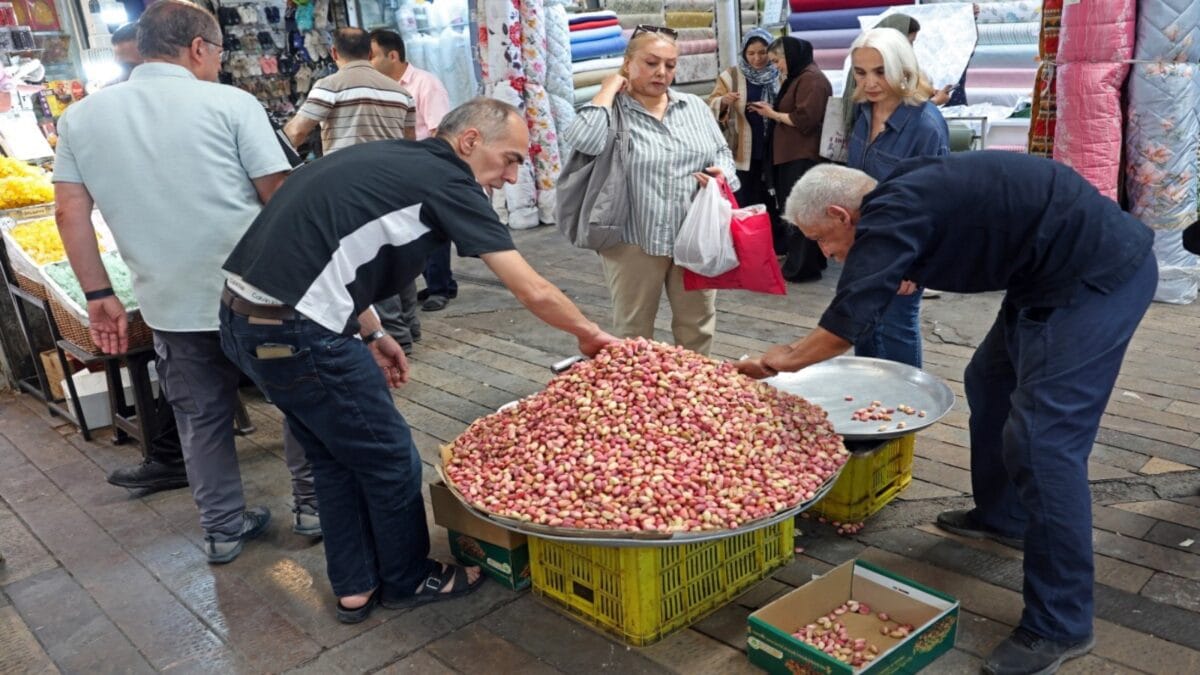
People shop for produce at the historic Tajrish bazaar in northern Tehran, on August 25. (Photo: AFP)
Six months after the United States and Israel began their war against Iran, the initial sense of hope among some Iranians has largely disappeared. What began for some as a moment that could bring political change has instead left many worried about their future and struggling with a worsening economy. Inflation has reached 84 per cent, the rial has fallen to a record low and food prices are rising. Many Iranians who once expected the government to collapse now say they are focused simply on surviving. At the same time, the government has become more authoritarian and pressure on dissent has increased.
From Hope To Survival
When the US and Israel launched missiles and bombs at Iran six months ago, some Iranians saw the destruction through a complicated mix of emotions.
Negar, a 35-year-old lawyer, said she did not feel sadness when the war began. There was anxiety and worry, she said, but no grief.
Six months later, that sense of possibility has largely disappeared. Some Iranians initially welcomed the US-Israel military campaign, others supported the government or opposed the idea that military force could bring political change. But many, according to the New York Times report, now say they no longer expect the government to collapse. Their attention has shifted towards surviving an economic crisis that the conflict has made worse.
“I can’t even begin to describe the level of anxiety we have about the future," Negar said as quoted by New York Times. Those interviewed spoke without giving their surnames because of fears of government retribution.
Fahimeh, 43, a former model in Tehran, said she had stopped waiting for change. “I’ve stopped trying to move forward and have switched to simply trying to survive," she said.
Trump’s Policies Add To Confusion
For some Iranians, President Donald Trump’s policies have changed how they view the United States.
The US failed to achieve its stated goals, including preventing Iran from obtaining a nuclear weapon, changing the government and destroying its missile programme.
Trump later threatened to wipe out Iranian civilisation, strike infrastructure and send Iran “back to the Stone Ages".
US and Israeli strikes also hit or damaged places important to civilians, including steel plants, petrochemical facilities, bridges and historic cultural sites.
Some Iranians now see the US as self-interested, but also inconsistent and incompetent.
NYT quoted Mostafa, a technology worker in Gilan Province, who said he had not expected such contradictory positions from Trump and his administration.
Iran’s Government Has Held On
American and Israeli pressure has not forced Iran’s leaders to back down.
The United States is now relying on increased economic pressure to push Tehran towards curbing its nuclear programme or fully reopening the Strait of Hormuz, a key shipping route for Middle Eastern oil that Iran has effectively blockaded since the war began.
The campaign included the killing of Ayatollah Ali Khamenei, Iran’s supreme leader, at the start of the war. However, the government survived and, according to the New York Times, became more authoritarian.
Many Iranians celebrated Khamenei’s death, but his son, Mojtaba, replaced him as supreme leader.
Authorities have shown less tolerance for dissent, executing dozens of political prisoners and pursuing critics.
Behzad, 44, a public relations executive in Tehran, said the Islamic Republic believed it had defeated the world and that people were afraid of it.
Ali, 42, an engineer in Mazandaran Province, said he now had much less hope that the Islamic Republic would fall.
Inflation Hits 84 Per Cent
For many Iranians, the immediate concern is no longer political change but the cost of daily life.
The central bank said this week that inflation had risen to 84 per cent. Food prices are increasing every week, with even eggs becoming unaffordable for many middle- and working-class families.
The rial has also fallen sharply, reaching a record low of roughly two million to the dollar in recent days. This has pushed up the cost of imported goods.
Fears of an increase in the price of heavily subsidised petrol have also led to long queues at petrol stations as people try to fill their tanks.
Marzieh, 44, a teacher in Bandar Abbas, said people were rushing to buy and store food, particularly Pakistani rice.
The southern part of Iran has been more heavily affected by the war, as the United States carried out airstrikes this summer aimed at dislodging Iran’s control over the Strait of Hormuz.
Chickpeas and beans have also become more expensive, Marzieh said. She has stopped going to cafes and hosting people at home.
“What’s frightening is that our salaries are already running out before the new month even begins," she said.
Fears Of Another Protest Wave
Iran’s worsening economic situation has also fuelled expectations of another round of protests.
Several Iranians said they expected demonstrations to return despite the government’s use of lethal force to suppress nationwide protests in January. Those protests began in late December after the rial plunged, and the currency has since fallen further.
Iranian officials have continued to assure the public that they can manage the situation.
Mojtaba Khamenei, in a statement published by Iranian state outlets on Friday, acknowledged the country’s economic difficulties. He called on President Masoud Pezeshkian’s administration to address inflation, unemployment, prices and the markets for goods and services.
The statement said increasing domestic production was the “main key" to resolving these problems. Any reduction in access to subsidised fuel could create further pressure. A petrol price increase in 2019 triggered major demonstrations.
Esmaeil, 37, an artist in Tehran, said an economic uprising could not be stopped by war or violence. For now, many Iranians are focused on getting through each day.
Esmaeil described the situation as a “black hole". “People are hungry, confused and unable to find a way out," he said. “We are alone in a catastrophic situation of chaos and abandonment."
The US-Israel-Iran war began on February 28, but six months on, there has been no concrete outcome. The conflict appears to have reached a dead end: Trump has not won the war, and Iran has not lost the conflict.
News18 Newsletter Handpicked stories, in your inbox A newsletter with the best of our journalism submit
About the Author Shuddhanta Patra Senior Sub-Editor Shuddhanta Patra is an Indian journalist with about nine years of experience in covering national politics, geopolitics, defence, diplomacy and international affairs. Her reporting focuses on South As... Read More
Location : Iran
First Published: August 29, 2026, 16:56 IST
Disclaimer: Comments reflect users’ views, not News18’s. Please keep discussions respectful and constructive. Abusive, defamatory, or illegal comments will be removed. News18 may disable any comment at its discretion. By posting, you agree to our Terms of Use and Privacy Policy Loading comments...