That proposition is particularly relevant in women’s health, an area long shaped by research gaps, underdiagnosis, and a lack of personalized data.
“We literally have a full science team that is developing new algorithms and studying the science specifically dedicated to women’s health,” says Inessa Lurye, VP of Product, Women’s Health at Oura.
Despite affecting roughly half the population, menopause remains one of the least researched and least understood stages of women’s health.
THE RISE OF MIDLIFE HEALTHThe growing popularity of GLP-1 medications is creating a new focus area for women’s health technology companies.
By combining insights related to menopause and metabolic health, the company is working toward a more integrated view of women’s health in midlife.
At 3 AM, a woman wakes up drenched in sweat.
For most of history, she would have had little way of knowing whether it was stress, illness, disrupted sleep, or the beginning of a hormonal transition. She might have mentioned it to a friend, searched online for her symptoms, or waited until her next doctor’s appointment. Today, she may look at data instead.
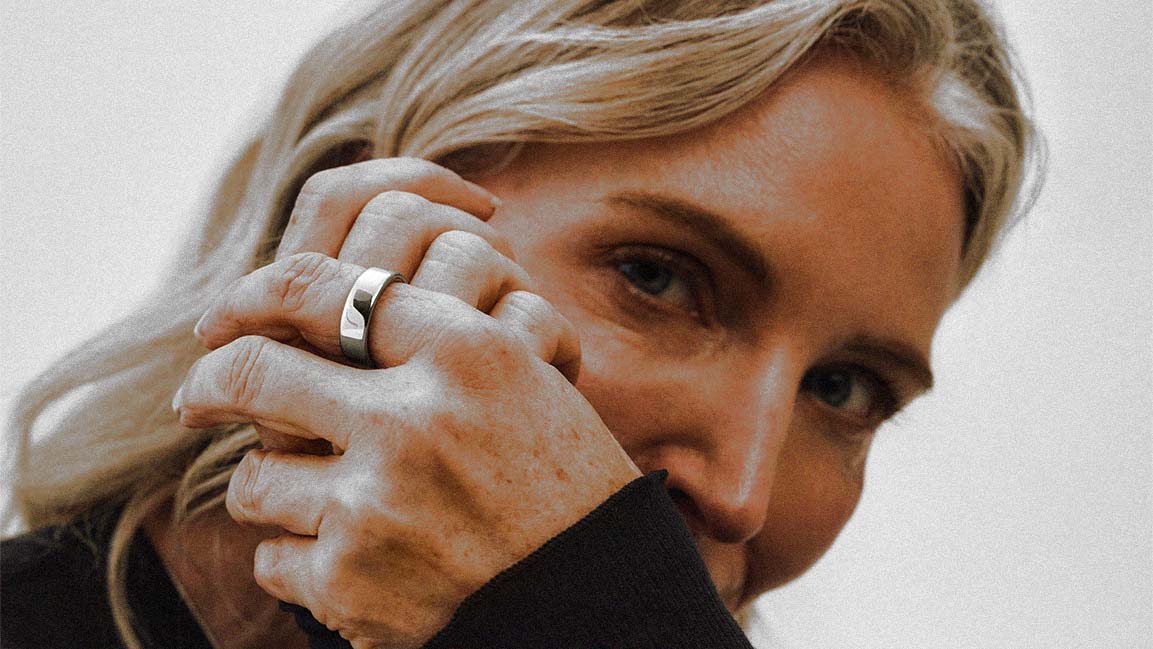
On her finger sits a ring that has been quietly tracking her temperature, heart rate, sleep quality, and other physiological signals for months. Viewed individually, none of those changes means much. Viewed together, they can reveal a pattern. She may be entering perimenopause.
The moment captures a broader shift underway in healthcare. For decades, medicine has largely relied on snapshots, annual checkups, lab tests, and occasional consultations. Wearable devices promise something different: a continuous record of how the body changes over time.
That proposition is particularly relevant in women’s health, an area long shaped by research gaps, underdiagnosis, and a lack of personalized data. As advances in sensors, artificial intelligence, and digital health converge, companies are increasingly focused on using everyday devices to help women better understand everything from menstrual cycles and fertility to pregnancy, menopause, and metabolic health.
Among them is Oura, the Finnish-founded, San Francisco-based wearable technology company known for its smart ring. While sleep and recovery remain central to its business, the company is increasingly investing in women’s health as it looks to expand the role wearable technology plays in preventive care and long-term health monitoring.
“We literally have a full science team that is developing new algorithms and studying the science specifically dedicated to women’s health,” says Inessa Lurye, VP of Product, Women’s Health at Oura. “The commitment to women’s health is not just lip service. It goes directly to understanding women’s biology and, in places where we don’t understand that biology, helping develop the research and data that don’t yet exist.”
The opportunity extends beyond any single device. It reflects a larger question facing healthcare: what becomes possible when millions of people generate a continuous stream of health data, and when some of medicine’s biggest blind spots can finally be studied in real time?
THE BIGGER PICTURE
Unlike a blood test, which offers a snapshot of a specific moment, wearable devices are designed to build a longer-term picture of health. The Oura Ring does not directly measure hormones such as estrogen, luteinizing hormone (LH), or follicle-stimulating hormone (FSH). Instead, it tracks physiological signals including body temperature trends, heart rate, heart rate variability, sleep quality, and recovery patterns.
On their own, those metrics may reveal little. Over weeks, months, and years, however, they can begin to highlight changes that might otherwise go unnoticed. “What we’re looking at is trends and transitions over a span of your life,” says Lurye. “Someone wears an Oura Ring an average of 23 and a half hours a day. Over time, you can see how your biology changes across cycles, through pregnancy and postpartum, or as you enter perimenopause.”
The broader value lies in context. Healthcare systems have traditionally relied on periodic appointments and isolated data points, making it difficult to capture how health evolves between visits. Continuous monitoring offers a different perspective, allowing users to track patterns as they emerge rather than trying to reconstruct them after the fact.
Sleep disruptions, rising temperatures, recovery changes, and cardiovascular shifts become part of a larger picture rather than disconnected events. “We’re providing data points that help fill out the picture,” says Lurye. “You can understand your cycle regularity, ovulation patterns, or symptom trends and bring that information into conversations with healthcare providers.”
BEYOND THE 28-DAY CYCLE
One of the longstanding criticisms of women’s health research is that it has often been built around averages that fail to reflect the complexity of women’s lives. Many products and studies have historically focused on a healthy woman with a predictable 28-day menstrual cycle, even though relatively few people fit that model consistently.
In reality, physiology is shaped by a range of factors. Cycles vary. Hormonal contraception alters biological patterns. Pregnancy and postpartum recovery trigger significant changes across multiple body systems. Perimenopause can begin years before menopause itself, often bringing symptoms that are difficult to recognize and even harder to attribute to a single cause.
Lurye says Oura’s approach has been to account for those differences rather than treat them as outliers. “It’s not just studying what a cycle looks like for someone with a regular 28-day cycle,” she says. “We’re studying women going through perimenopause, women on hormonal birth control, women who are pregnant or postpartum. We customize our algorithms across these unique populations.”
The challenge is significant because hormonal fluctuations influence far more than reproductive health. Changes in estrogen and progesterone can affect sleep, recovery, body temperature, mood, cardiovascular health, and energy levels. As a result, advice that works at one stage of life may be far less relevant at another. The goal, Lurye says, is to create systems that adapt to those biological shifts rather than assume every user experiences health in the same way.
FOCUSING ON MENOPAUSE
Menopause has emerged as one of the company’s biggest areas of focus, reflecting a broader shift taking place across healthcare and consumer technology. Despite affecting roughly half the population, menopause remains one of the least researched and least understood stages of women’s health. Many women spend years searching for explanations for symptoms ranging from disrupted sleep and hot flashes to mood changes, brain fog, and fatigue.
Lurye says Oura’s research team found that some of the most widely used menopause assessment tools were developed decades ago and validated using relatively small study populations. The company saw an opportunity to build a framework that better reflects how women experience the transition today.
As part of that effort, Oura developed a menopause impact assessment that was tested with more than 3,000 women before being validated against existing clinical standards. Rather than focusing solely on symptom severity, the assessment looks at how symptoms affect day-to-day life.
“We ask women how symptoms impact their lives,” says Lurye. “It’s not an arbitrary severity scale. It’s about quality of life.”
The framework also incorporates areas that have historically received less attention in menopause research, including body image and sexual health. Combined with biometric data collected by the ring, such as sleep quality, resting heart rate, heart rate variability, and other physiological signals, the goal is to provide a more comprehensive picture of how menopause influences overall well-being.
FILLING THE CONTRACEPTION KNOWLEDGE GAP
Hormonal contraception presents another challenge for digital health platforms. Millions of women rely on contraceptive pills, injections, implants, patches, hormonal IUDs, and other methods, yet many health-tracking tools have historically been designed around users who are not using hormonal birth control.
According to Lurye, this has contributed to a significant information gap. “What we’ve seen is a huge education gap,” she says. “Many women don’t fully understand how their contraception affects their cycles, symptoms, or physiology.”
As a result, Oura has expanded its contraception-related features to support more than 20 different methods. The aim is to help users better understand how different forms of contraception may influence physiological signals, symptom patterns, and day-to-day wellbeing. Women can track changes when switching methods, learn what effects may be expected, and view those experiences alongside broader health metrics collected by the ring.
The broader objective, Lurye says, is not to guide personal decisions about contraception but to provide greater visibility into how those choices may affect the body over time.
THE RISE OF MIDLIFE HEALTH
The growing popularity of GLP-1 medications is creating a new focus area for women’s health technology companies. Drugs such as semaglutide and tirzepatide have reshaped conversations around weight management and metabolic health, particularly among women in midlife, many of whom are navigating menopause and perimenopause at the same time.
“We know that a majority of people taking GLP-1 medications are women,” says Lurye. “There’s a strong overlap with women going through menopause and perimenopause.”
That overlap raises new questions about how hormonal changes, metabolic health, sleep, recovery, and medication use interact. Oura’s recently introduced GLP-1-related features are designed to help users track changes across areas such as sleep quality, heart rate variability, recovery, and overall well-being, providing a broader view of how these treatments may affect day-to-day health.
For Oura, the larger opportunity lies in addressing a life stage that has historically received limited attention from both healthcare systems and consumer technology. By combining insights related to menopause and metabolic health, the company is working toward a more integrated view of women’s health in midlife.
“If I think about creating a home for women in midlife,” says Lurye, “it’s about having a digital experience that reflects and guides them through this challenging hormonal and metabolic transition.”
THE FUTURE OF WOMEN’S HEALTH
The broader vision extends beyond any single feature or life stage. Oura sees wearable technology as part of a longer-term shift toward continuous health monitoring, where understanding how the body changes over time becomes as important as measuring its function at a single moment.
That approach is particularly relevant in women’s health, where major transitions such as pregnancy, postpartum recovery, perimenopause, and menopause can unfold over months or years. Rather than focusing on individual conditions, the company is building around the idea that long-term physiological data can help provide a more complete picture of those changes.
“I hope women see this as their health companion that helps improve the quality of their healthy years,” says Lurye. “Something that feels deeply personal, that understands them, sees them, recognizes their unique biology, and helps them live not just longer, but healthier.”
The concept reflects a broader evolution taking place across healthcare. As sensors become more sophisticated and artificial intelligence becomes better at identifying patterns, the emphasis is shifting from occasional measurements to continuous observation. The promise is not necessarily more data, but more context, allowing individuals to better understand how sleep, hormones, metabolism, recovery, and other factors interact over time.
For companies operating in this space, the opportunity is larger than wearable devices themselves. It is about building tools to address longstanding gaps in how health is measured, understood, and managed. Whether that vision ultimately delivers on its promise remains to be seen. But it reflects a growing belief that the future of healthcare may be built less around isolated appointments and more around an ongoing understanding of how the body evolves throughout life.