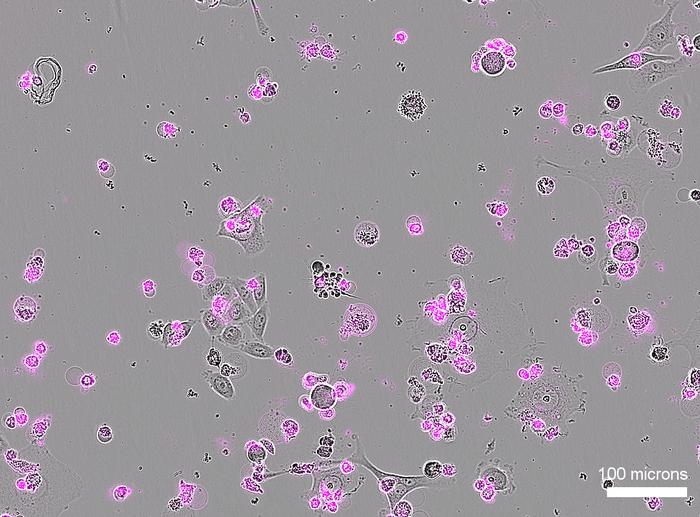
Researchers have made many modifications to the CRISPR system since it was first developed.
CRISPR is a DNA-editing tool that usually uses an enzyme known as Cas9, which can cut genomic DNA.
Cas12 is one such enzyme, and it was integrated into a novel CRISPR system several years ago.
When it is directed to kill cells that are infected with a virus, or that have become cancerous, Cas12a2 can destroy these pathogenic cells and leave healthy cells unscathed.
While more research will be needed, it could also be used to target cells that are infected by viruses, such as HIV, the study authors suggested.
Researchers have made many modifications to the CRISPR system since it was first developed. CRISPR is a DNA-editing tool that usually uses an enzyme known as Cas9, which can cut genomic DNA. This Cas9 enzyme is directed to a target location in the genome with an additional molecule known as a guide RNA. But there are other Cas enzymes that can be used in this system. Cas12 is one such enzyme, and it was integrated into a novel CRISPR system several years ago.
Now scientists have engineered a new CRISPR tool known as Cas12a2, which can rip genomic DNA to shreds. When it is directed to kill cells that are infected with a virus, or that have become cancerous, Cas12a2 can destroy these pathogenic cells and leave healthy cells unscathed. While more work will be needed to prove this method is safe and effective as a treatment, it may one day be possible to use this technology to treat some types of cancer or viral infections. It can also be a very useful tool in research, like other CRISPR systems. The work has been reported in Nature.
“Its goal is not to correct anything. Instead, it’s to destroy anything it sees,” said senior study author Yang Liu, PhD, an assistant professor in biochemistry at University of Utah Health.
Cas12a2 can also be directed to a specific sequence of RNA, unlike CRISPR/Cas9 that targets genomic DNA. When Cas12a2 identifies its target, it cuts DNA, continuously. This massive DNA damage triggers affected cells to intimate self-destruction pathways. As such, the this enzyme is activated by target RNA sequences that are found in pathogenic cells, or those infected by viruses.
For example, in this work the researchers directed Cas12a2 to target cells that carried a cancer-linked mutation in a gene known as KRAS.
The growth of a human lung cancer cell line was reduced by 50% when Cas12a2 was applied, so it worked about as well as cancer treatments like cisplatin. But unlike those typical treatments, Cas12a2 doesn’t disrupt healthy cells.
“The enzyme that we’re working with is extremely specific,” said Liu. “It does not touch the healthy cells. So if we’re thinking about a cancer therapy, you’re treating cancer with no side effects. That was striking to us. We did not know that was possible.”
This approach also reduced the growth of cells that were infected with human papillomavirus (HPV) by 90%, and reduced tumor growth in a mouse model.
While more research will be needed, it could also be used to target cells that are infected by viruses, such as HIV, the study authors suggested.
Scientists still need to find out if it is safe to use in people, and what type of delivery system might be used to target cells effectively and safely.
Sources: University of Utah Health, Nature