Lechki and Benson checked that against adult weights for 4,062 mammal species and 9,385 bird species.
Even when they used the values most likely to favor big bodies, the model put the best dinosaur size at 6.6 pounds (3 kilograms).
Below that weight, no dinosaur fossil has ever come out of either site.
The pair argue that those mammals may have already been using the food a small dinosaur needed.
The young of larger dinosaur species would have been competing for it too, at each size they passed through as they grew.
No dinosaur ever grew up smaller than a pet rabbit. Not one, anywhere in the fossil record.
Today’s smallest bird, the bee hummingbird, weighs less than a penny. The lightest adult dinosaur ever found came in around 14 ounces (400 grams). Nothing lighter has turned up in 180 million years of rock.
One formula predicts what size most species in an animal group will be. It fits mammals, birds, and turtles. For dinosaurs, it fails.
Stephanie Lechki works at Princeton University and the University of Oxford. With Roger Benson at the American Museum of Natural History, she ran that formula 24 different ways.
No new fossils were excavated for the study. The work compares adult body weights already published for six animal groups.
Model that fits mammals and birds
The formula rests on a simple trade-off. A small animal turns food into offspring efficiently but gathers food poorly. A big animal gathers plenty and converts it badly.
One size in between does both jobs best, and most species in a group should be near it.
Lechki and Benson checked that against adult weights for 4,062 mammal species and 9,385 bird species. The optimal mammal size came out at 3.5 ounces (100 grams). Most mammal species really are about that heavy.
Turtles fit as well, across 260 species. Lizards, snakes, and crocodiles did not. Living crocodiles average around 650 pounds (295 kilograms), and the formula puts their best size under 4 pounds (1.6 kilograms).
Dinosaurs the model cannot explain
Adult weights for 515 dinosaur species came next, none of them birds. No one can measure the physiology of an extinct animal. So the pair tried every combination of values found in living groups.
Even when they used the values most likely to favor big bodies, the model put the best dinosaur size at 6.6 pounds (3 kilograms). Every version of the model predicted dinosaurs under 11 ounces (300 grams). Not one animal that light has ever been dug up.
Benson had hoped the models would find something in dinosaur biology that ruled small bodies out.
“We were very excited by the idea there could be something about the biology of dinosaurs that prevented them from being small,” he told Earth.com. “So it was surprising that basically all our models rejected this hypothesis.”
Long-necked sauropodomorphs miss the prediction by the widest margin. Theropods, the group birds came from, miss it by the least.
Fossil beds still lack tiny dinosaurs
Small skeletons break down faster than big ones. The fossil record therefore undercounts little animals almost everywhere.
Lechki and Benson sorted species into sites using the Paleobiology Database and published fossil lists. Then they picked two sites where that bias is weakest.
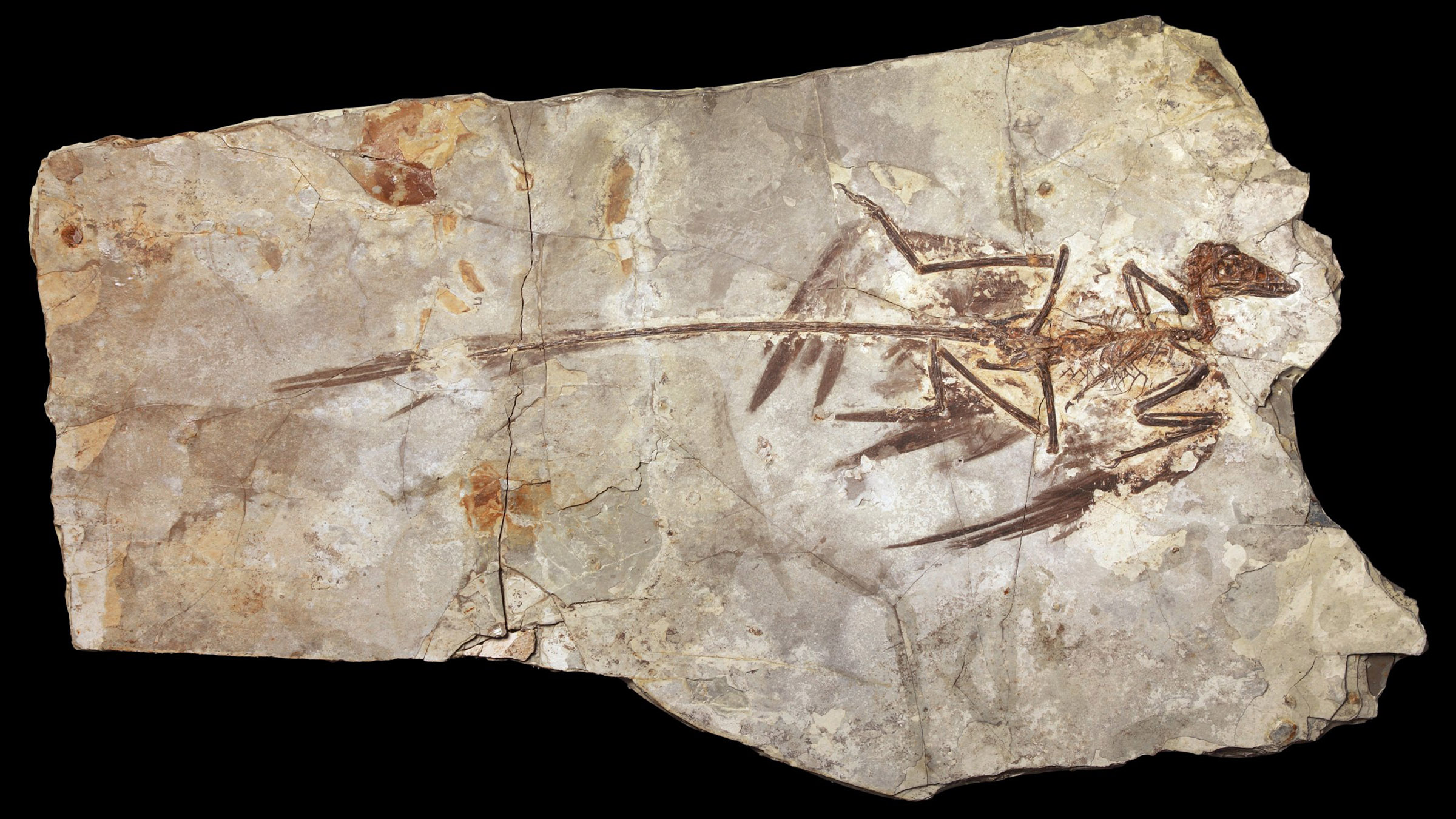
The Jehol Group in northeastern China and the Djadokhta Formation in Mongolia both preserve whole skeletons of small mammals, lizards and birds. If mouse-sized dinosaurs existed, these are the rocks where they would turn up.
Both sites do preserve small dinosaurs. The most common dinosaur weight in the Djadokhta is 1.7 pounds (0.76 kilograms), close to what the formula predicts.
Below that weight, no dinosaur fossil has ever come out of either site. Fossils of mammals and lizards in that same weight range come out of the same rock.
Small mammals may have filled the gap
Dinosaur bodies do not explain the gap. Lechki and Benson instead look at the mammals that lived alongside dinosaurs.
Mammals living during the dinosaur age were small and had high metabolic rates, as dinosaurs did. The pair argue that those mammals may have already been using the food a small dinosaur needed.
The young of larger dinosaur species would have been competing for it too, at each size they passed through as they grew.
Paleontologists have long held that dinosaurs are what kept mammals small for the whole age of dinosaurs. Benson likes the reverse idea as well.
“I really like the symmetry of the idea that early mammals, in turn, restricted dinosaurs to large sizes,” he said.
Flight allowed birds to become tiny
Birds are dinosaurs, and birds broke the pattern. The most common bird weight today is 1.2 ounces (33 grams), roughly 200 times lighter than the smallest dinosaur that was not a bird.
Early Cretaceous birds got small fast, right as proper flight appeared.
“Considering birds are dinosaurs, and the model worked for birds, it was quite surprising to find that it did not work for all other dinosaurs,” Lechki said. “To us, this really highlights the importance of flight in influencing the body sizes of living birds.”
Flightless birds show a similar effect of mammals. On continents, the lightest flightless bird weighs 15 ounces (423 grams), close to the smallest dinosaur weight.
On islands, mammal predators and competitors are scarce. There, flightless birds get down near the size the formula predicts.
One fossil could test the mammal theory
The competition idea remains a hypothesis. No one can watch a Jurassic mammal and a Jurassic dinosaur divide a meal. A species that never fossilized cannot be counted either.
The formula also implies a crowd of dinosaur species at the size the models favor. Nobody has sampled one yet.
Asked by Earth.com what would overturn the finding, Benson named a specific fossil.
“The most exciting thing would be to find a sparrow- or mouse-sized adult dinosaur in a fossil assemblage that totally lacked mammals,” he said. “That would be evidence that dinosaurs could only evolve to be tiny in the absence of mammals.”
The full study was published in the journal Evolution.
Photo credit: Mick Ellison / (c)AMNH
—–
Like what you read? Subscribe to our newsletter for engaging articles, exclusive content, and the latest updates.
Check us out on EarthSnap, a free app brought to you by Eric Ralls and Earth.com.
—–