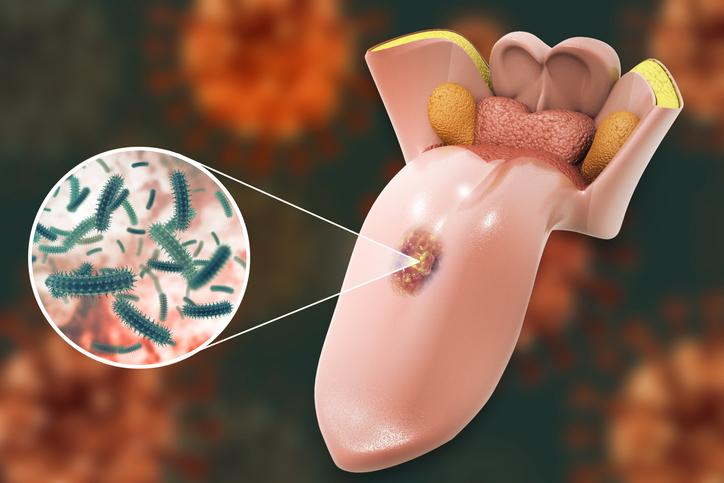
In the largest of its kind, involving over 1000 samples from 545 patients, a non-invasive, brush biopsy test detected oral cancer within one hour in a validation test.
According to Global Burden of Disease data, lip and oral cancer is among the world’s most rapidly increasing causes of early death.
Over ten thousand people in the U.K. were diagnosed with oral cancer last year, according to the charity Mouth Cancer, and 3637 people lost their lives.
A scalpel oral biopsy can be extremely painful—especially the tongue (the most common cancer site)—essentially because part of the tongue is removed.
This study aimed to find out if a successful microbiopsy-based multigene assay (qMIDS-V2) could be adapted into a rapid, non-invasive brush biopsy test (qMIDS-V3) for accurate OSCC detection.
In the largest of its kind, involving over 1000 samples from 545 patients, a non-invasive, brush biopsy test detected oral cancer within one hour in a validation test. It is hoped the test will greatly advance oral cancer detection and prevent perhaps over 90% of unnecessary harmful scalpel biopsy procedures, which can be difficult to carry out and may damage underlying tooth and bone structure.
“We were genuinely astonished by the fact that the brush swab test performance is comparable to a microbiopsy,” said lead author Muy-Teck Teh, PhD. “It suggests that the biological signal captured by these four genes is sufficiently strong and consistent that it can be detected even from the superficial exfoliated cells collected by a brush biopsy.”
The work was published in the Nature journal Biomarker Research by a cross-University team led by Queen Mary University of London researchers. Teh is a professor of molecular oral oncology at Queen Mary of The Centre for Oral Immunobiology & Regenerative Medicine, Institute of Dentistry, Barts and The London School of Medicine and Dentistry, Queen Mary University of London.
Oral cancer is a growing global killer. According to Global Burden of Disease data, lip and oral cancer is among the world’s most rapidly increasing causes of early death. Over ten thousand people in the U.K. were diagnosed with oral cancer last year, according to the charity Mouth Cancer, and 3637 people lost their lives. Almost 650,000 people in America are estimated to get the disease each year and more than 13,000 die from it. Worldwide, it affects 650,000 a year. Risk factors include tobacco use/smoking, alcohol, infection with the HPV virus, and sun damage. Unfortunately, more than half (53%) of all mouth cancers are diagnosed in stage IV, where the cancer is at its most advanced.
Cases Human of Papillomavirus (HPV)—specifically HPV type 16 is thought to cause a large proportion of this disease. While the HPV vaccine is having tremendous effect protecting young girls and women from HPV-related cervical cancer, there has been less pick-up of the vaccine among boys.
Oral squamous cell carcinoma (OSCCs) are usually diagnosed early using scalpel biopsies. Early diagnosis is critical for the greatest chance of survival, yet most oral potentially malignant disorders (OPMDs) are benign, and patients frequently undergo unnecessary invasive scalpel biopsies, creating diagnostic delays and harms. A scalpel oral biopsy can be extremely painful—especially the tongue (the most common cancer site)—essentially because part of the tongue is removed. But the overwhelming likelihood is that the growth is benign.”
These circumstances discourage both patients and clinicians from doing biopsies repeatedly and in a timely fashion. This study aimed to find out if a successful microbiopsy-based multigene assay (qMIDS-V2) could be adapted into a rapid, non-invasive brush biopsy test (qMIDS-V3) for accurate OSCC detection. This new test could potentially spare over 90% of low-risk OPMD patients from unnecessary invasive tissue biopsies.
The prospective diagnostic case-control study validated a multigene mRNA test (qMIDSV3) for OSCC detection using 1090 oral brush biopsies from 545 patients. Each patient provided paired brush biopsies from oral lesion and contralateral non-lesion mucosa, including OSCC (n = 443), oral leukoplakia (OL; n = 63), and oral lichen planus (OLP; n = 39). qPCR quantified mRNA levels of four genes (INHBA, S100A16, YAP1, POLR2A) from each brush biopsy, and an algorithm generated a malignancy index for cancer risk stratification.
qMIDSV3 distinguished OSCC from OL and OLP with AUC 0.975, sensitivity 95.7%, specificity 95.1%, and overall accuracy 95.5%. False-positive and false-negative rates were 4.9% and 4.3%, showing the test has high specificity for detecting malignant cells rather than premalignant or inflammatory lesions.
The test could thus give clinicians a rapid, accurate, and non-invasive way to triage patients. It can also be repeatedly administered. “That means doctors can now monitor patients with persistent pre-malignant lesions regularly and systematically—and pick up cancers much earlier than we would have been able to before,” said Teh.
Overtesting is also a problem. In the U.K., a current 10 year audit reported a 450% rise in two week wait referrals alongside a 50% drop in cancer detection rate. Subsequent audits showed that 92.5–99.5% of referred patients were cancer free, with most (96–98%) remaining cancer free at 5-year follow up. This latest study builds on substantial of prior clinical validation.
The team included researchers from Queen Mary University of London’s Centre for Oral Immunobiology & Regenerative Medicine, King George’s Medical University in India, Modern Dental College & Research Centre in India, and the All India Institute of Medical Sciences.