Researchers have now developed a strategy called stimulated protein degradation (SPD), which activates the cell's natural protein-clearance system to accelerate the breakdown of multiple proteins.
Existing drug development approaches, including targeted protein degradation (TPD) and proteolysis-targeting chimeras (PROTACs), use this system to eliminate specific disease-associated proteins.
When electron transport chain activity declines, ROS levels decrease, triggering CUL2FEM1B to degrade proteins that could obstruct mitochondrial protein import.
This activity improved mitochondrial protein import and electron transport chain function.
The approach also raises questions about selectivity and safety, as activating the degradation of multiple proteins could affect other cellular processes.
Precision Medicine
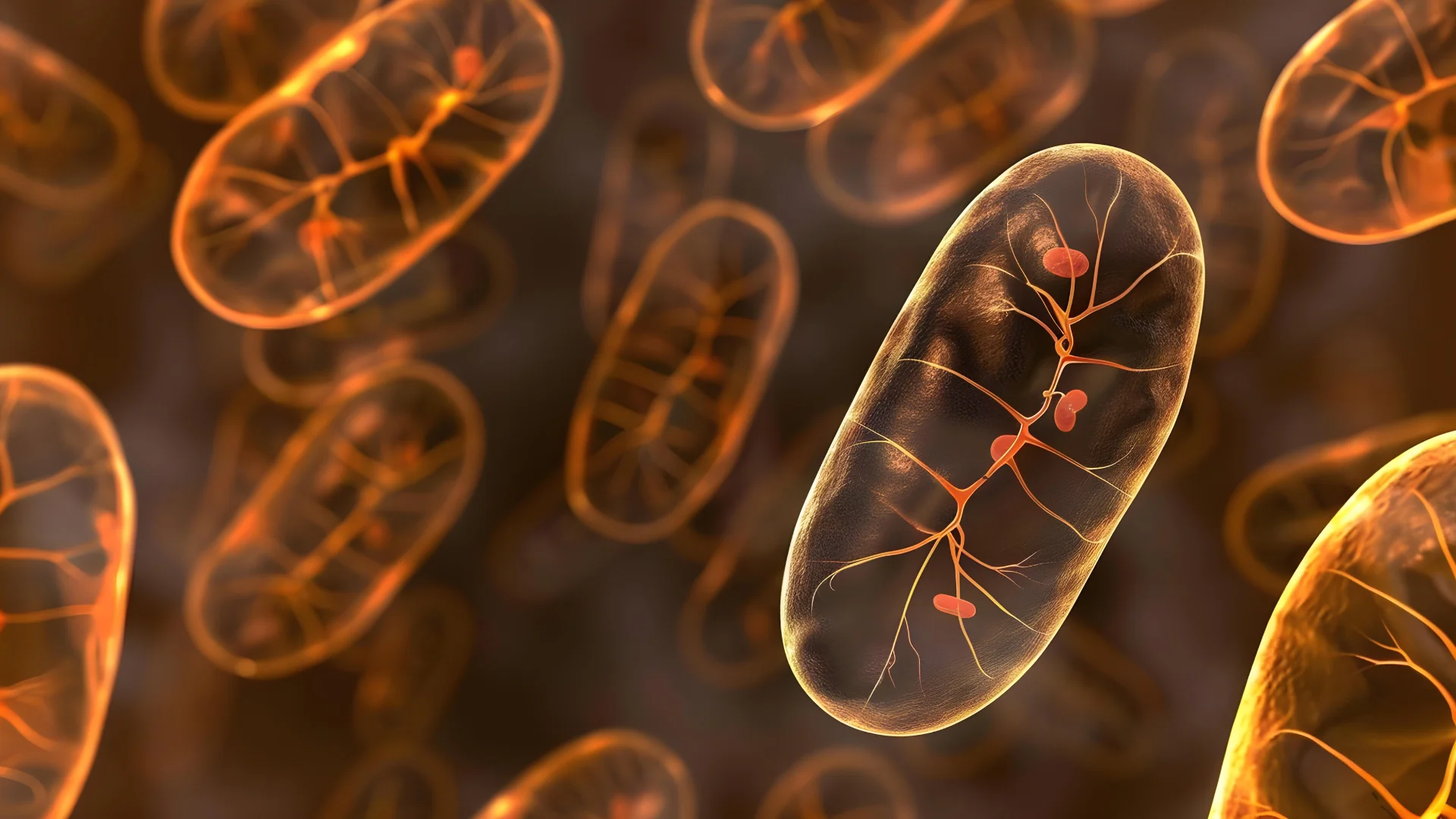
The experimental approach activates the cell's natural protein-clearance machinery to remove multiple dysfunctional proteins, improving mitochondrial activity and neuronal survival in cellular models.
Most medicines are designed to inhibit individual proteins or alter their activity. However, diseases involving widespread cellular dysfunction may require approaches that address multiple abnormal proteins and pathways simultaneously. Researchers have now developed a strategy called stimulated protein degradation (SPD), which activates the cell's natural protein-clearance system to accelerate the breakdown of multiple proteins. In cellular models of mitochondrial disorders, the approach improved mitochondrial function and supported neuronal survival, offering a potential new direction for treating conditions associated with complex cellular dysfunction.
The findings, published in Science, describe how SPD works by activating cellular enzymes known as E3 ubiquitin ligases. These enzymes attach a molecular tag called ubiquitin to proteins, marking them for destruction by the cell's protein-degradation machinery. Existing drug development approaches, including targeted protein degradation (TPD) and proteolysis-targeting chimeras (PROTACs), use this system to eliminate specific disease-associated proteins. SPD differs by stimulating the degradation of multiple pathological proteins rather than focusing on a single target.
“SPD activates the native protective function of quality control E3 ligases to promote degradation of multiple pathological factors. It therefore stimulates a native protective activity and allows us to degrade many proteins at a time,” said Michael Rapé, Professor of Molecular Therapeutics at UC Berkeley Research and senior author of the study.
The researchers focused on an E3 ligase complex called CUL2FEM1B, which regulates protein transport into mitochondria and contributes to cellular stress responses. Its activity is influenced by reactive oxygen species (ROS), molecules generated during mitochondrial energy production that also function as cellular signals. When electron transport chain activity declines, ROS levels decrease, triggering CUL2FEM1B to degrade proteins that could obstruct mitochondrial protein import. This helps maintain the transport pathway required for mitochondrial function.
Under normal conditions, proteins belonging to the BEX (brain-expressed X-linked) family inhibit CUL2FEM1B by occupying its substrate-binding pocket without themselves undergoing ubiquitination. To overcome this inhibition, the researchers screened approximately 120,000 compounds to identify molecules capable of displacing BEX proteins while preserving substrate recognition. This process led to the identification of an initial compound, BD1 (BEX displacer 1), followed by the development of a cell-active analogue, BD2.
Upcoming Conferences and Events
FNIP1 (Folliculin-Interacting Protein 1) and COA4 (Cytochrome c Oxidase Assembly Factor 4). This activity improved mitochondrial protein import and electron transport chain function.
The team evaluated SPD in cellular models of cytochrome c oxidase (COX) deficiency syndrome, a group of disorders associated with defects in the electron transport chain. In neurons derived from induced pluripotent stem cells (iPSCs), these defects reduced the levels of complex IV, a key component of the electron transport chain, and increased cell death. Treatment with BD2 restored complex IV subunit levels and improved neuronal survival.
The compound also demonstrated beneficial effects in cellular models of other mitochondrial disorders, including Friedreich's ataxia, an inherited condition associated with a deficiency of the protein frataxin. In the experimental model, BD2 produced effects comparable to those observed with optimal concentrations of omaveloxolone, an approved treatment for Friedreich's ataxia. However, the approach did not correct every mitochondrial defect tested. It failed to reverse certain abnormalities involving other electron transport chain complexes, indicating that CUL2FEM1B activation may be effective only in conditions involving biological pathways regulated by this complex. “We see this limitation as a hallmark of specificity, though,” said Rapé.
The researchers are now working to improve BD2's potency, stability and ability to cross into the brain, according to Rapé. These developments will be important in assessing whether the compound can advance beyond cellular experiments towards potential therapeutic applications.
The approach also raises questions about selectivity and safety, as activating the degradation of multiple proteins could affect other cellular processes. Further research will need to establish the full range of proteins affected by BD2, assess the consequences of their degradation and determine how treatment effects vary with dosage and duration.
The findings provide an early proof of concept for a different approach to drug discovery, in which activating the natural protective functions of E3 ligases could help address multiple disease-associated proteins at once. Researchers will need to determine whether the strategy can be applied to other conditions, including heart disease and neurodegeneration, and whether its benefits can be reproduced safely in more complex disease models.
Discover the By releasing CUL2FEM1B from its inhibitors, BD2 increased the degradation of several natural substrates, includingand. This activity improved mitochondrial protein import and electron transport chain function.The team evaluated SPD in cellular models of, a group of disorders associated with defects in the electron transport chain. In neurons derived from induced pluripotent stem cells (iPSCs), these defects reduced the levels of complex IV, a key component of the electron transport chain, and increased cell death. Treatment with BD2 restored complex IV subunit levels and improved neuronal survival.The compound also demonstrated beneficial effects in cellular models of other mitochondrial disorders, including, an inherited condition associated with a deficiency of the protein frataxin. In the experimental model, BD2 produced effects comparable to those observed with optimal concentrations of, an approved treatment for Friedreich's ataxia. However, the approach did not correct every mitochondrial defect tested. It failed to reverse certain abnormalities involving other electron transport chain complexes, indicating that CUL2FEM1B activation may be effective only in conditions involving biological pathways regulated by this complex. “We see this limitation as a hallmark of specificity, though,” said Rapé.The researchers are now working to improve BD2's potency, stability and ability to cross into the brain, according to Rapé. These developments will be important in assessing whether the compound can advance beyond cellular experiments towards potential therapeutic applications.The approach also raises questions about selectivity and safety, as activating the degradation of multiple proteins could affect other cellular processes. Further research will need to establish the full range of proteins affected by BD2, assess the consequences of their degradation and determine how treatment effects vary with dosage and duration.The findings provide an early proof of concept for a different approach to drug discovery, in which activating the natural protective functions of E3 ligases could help address multiple disease-associated proteins at once. Researchers will need to determine whether the strategy can be applied to other conditions, including heart disease and neurodegeneration, and whether its benefits can be reproduced safely in more complex disease models.Discover the latest health news and emerging precision medicine news shaping the future of healthcare.