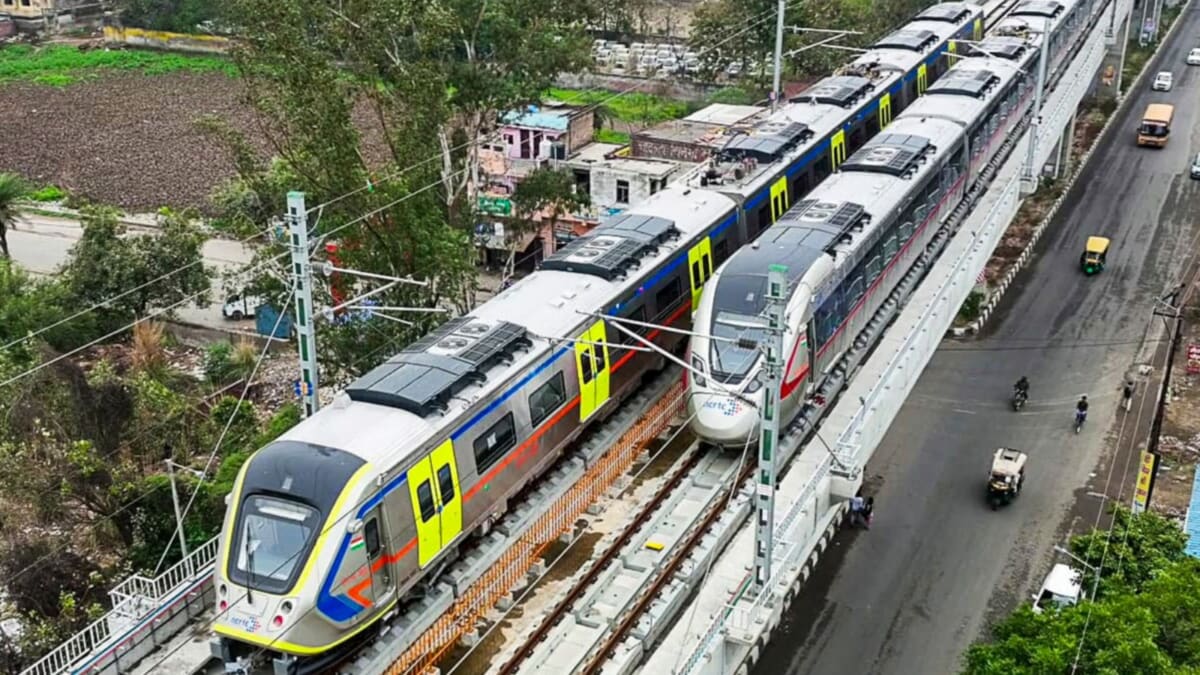
Last Updated: September 15, 2026, 14:44 IST1 / 7 Namo Bharat News: The success of the Delhi-Meerut Namo Bharat corridor is paving the way for the next phase of rapid rail expansion across the National Capital Region.
ADVERTISEMENT3 / 7 Delhi-Karnal Namo Bharat Corridor: The proposed Delhi-Karnal corridor is expected to provide a direct high-speed connection between the national capital and one of Haryana’s major education and industrial clusters.
The proposed Namo Bharat service is expected to bring that journey down to approximately 90 minutes, potentially making daily commuting significantly easier.
ADVERTISEMENT5 / 7 Delhi-Gurugram-Bawal Namo Bharat Route: The second proposed corridor will run towards Bawal through Gurugram, linking Delhi with one of southern Haryana's most important automobile and manufacturing belts.
The corridor is expected to bring Indira Gandhi International Airport into the Namo Bharat network, while also strengthening direct rail connectivity to Gurugram and Manesar.
Last Updated: September 15, 2026, 14:44 IST
1 / 7 Namo Bharat News: The success of the Delhi-Meerut Namo Bharat corridor is paving the way for the next phase of rapid rail expansion across the National Capital Region. Two more corridors are now moving towards implementation, with the proposed Delhi-Karnal and Delhi-Gurugram-Bawal routes set to bring faster connectivity to some of Haryana’s biggest industrial, commercial and educational hubs.
2 / 7 The National Capital Region Transport Corporation (NCRTC) is in the final stages of securing formal Cabinet approval from the Centre for the two corridors. Work has already started on the ground in some areas, including utility mapping and the shifting of pipelines and power lines, even as the projects await the final clearance. Once operational, the corridors are expected to significantly reduce travel times between Delhi and the key Haryana destinations. The journey from Delhi to Karnal could take around 90 minutes, while the Delhi-Bawal trip is expected to be completed in roughly 65 to 67 minutes.
ADVERTISEMENT
3 / 7 Delhi-Karnal Namo Bharat Corridor: The proposed Delhi-Karnal corridor is expected to provide a direct high-speed connection between the national capital and one of Haryana’s major education and industrial clusters. The route will also bring improved connectivity to Kundli in Sonipat, including its education-focused developments and large residential areas. This could make daily travel easier for students, employees and residents travelling between Delhi and the Sonipat-Kundli belt.
4 / 7 Further along the corridor, passengers will gain faster access to Panipat, known for its textile industry, as well as the region's major industrial facilities, including the country's largest refinery. The improved connection is also expected to benefit workers and businesses operating in the industrial zones along the route. At present, travelling from Delhi to Karnal by road can take around three hours, depending on traffic. The proposed Namo Bharat service is expected to bring that journey down to approximately 90 minutes, potentially making daily commuting significantly easier.
ADVERTISEMENT
5 / 7 Delhi-Gurugram-Bawal Namo Bharat Route: The second proposed corridor will run towards Bawal through Gurugram, linking Delhi with one of southern Haryana's most important automobile and manufacturing belts. The corridor is expected to bring Indira Gandhi International Airport into the Namo Bharat network, while also strengthening direct rail connectivity to Gurugram and Manesar. Gurugram's IT and commercial centres, along with Manesar's automobile and manufacturing clusters, are expected to benefit from the faster connection with Delhi.
6 / 7 The route will also serve the Manesar-Bawal Investment Region, regarded as a major industrial development belt in southern Haryana. Better high-speed connectivity could make it easier for employees, businesses and investors to move between Delhi and the industrial centres along the corridor. The Delhi-Bawal journey, which can currently take around three hours by road, is expected to be reduced to about 67 minutes once the corridor becomes operational. For people travelling regularly to Delhi for employment, business or education, the reduction could save several hours of commuting time each day.
ADVERTISEMENT