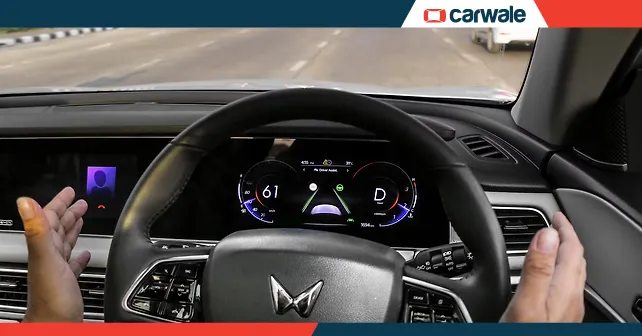
Auto Emergency Braking to become mandatory on new car models from October 2030Draft also covers steering and lane-keeping normsThe Ministry of Road Transport and Highways (MoRTH) has issued a draft notification that would make Advanced Emergency Braking System (AEBS) standard on every new passenger car sold in India.
Under the proposal, all new models launched from 1 October, 2030 will need to carry the system.
This means cars already fitted with AEBS will need to meet one common standard even before the fitment becomes mandatory.
From 1 October, 2029, both ACSF and ELKS will become mandatory on M1 vehicles registered as transport vehicles, which mainly means taxis.
Earlier this year, the ministry also proposed making Vehicle-to-Vehicle (V2V) communication systems mandatory on all new vehicles from 1 October, 2028.
Auto Emergency Braking to become mandatory on new car models from October 2030
Draft also covers steering and lane-keeping norms
The Ministry of Road Transport and Highways (MoRTH) has issued a draft notification that would make Advanced Emergency Braking System (AEBS) standard on every new passenger car sold in India. Under the proposal, all new models launched from 1 October, 2030 will need to carry the system. Models already in production before that date get two more years, with the requirement applying to them from 1 October, 2032.
AEBS applies the brakes automatically when the driver fails to react to an emergency, either to avoid a collision or to reduce its severity. The draft covers the M1 category, which includes passenger vehicles with up to eight seats besides the driver, so it takes in most cars and SUVs on sale today.
There is also an earlier checkpoint. From 1 October, 2028, M1 vehicles and N1 vehicles (goods vehicles up to 3.5 tonnes) that are offered with AEBS will have to comply with AIS-185, the Automotive Industry Standard for the system. This means cars already fitted with AEBS will need to meet one common standard even before the fitment becomes mandatory.
However, the proposed draft goes beyond braking. From 1 October, 2027, steering effort on all motor vehicles will have to conform to AIS-193, with motorcycles and three-wheelers without a steering wheel exempted. Cars offered with Automatic Command Steering Functionalities (ACSF) will need to meet the same standard, while those with an Emergency Lane Keeping System (ELKS), commonly known as Lane Keeping Assist will have to comply with AIS-191 (Part 1).
From 1 October, 2029, both ACSF and ELKS will become mandatory on M1 vehicles registered as transport vehicles, which mainly means taxis. Reports also suggest taxis will need drowsiness and attention-warning systems.
MoRTH will take objections and suggestions for 30 days before deciding on the final rules. Earlier this year, the ministry also proposed making Vehicle-to-Vehicle (V2V) communication systems mandatory on all new vehicles from 1 October, 2028.