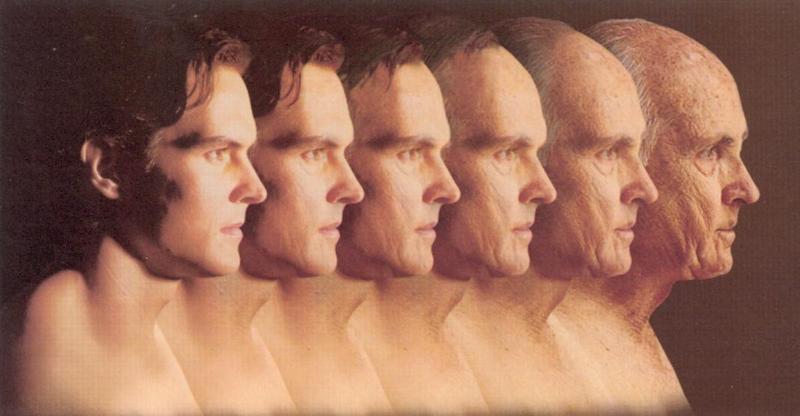
Living long does not necessarily mean that you live well.
That is, if you are living long (and many of us are), you are likely living in poor health.
For instance, a US male citizen lives up to about 77 years but spends the last 14 years of his life living in poor health.
An adult Indian male, on average, lives up to about 71 years and, here too, women live longer than men by three to four years.
Several states also take care of their growing old population.
Living long does not necessarily mean that you live well. If anything, the relationship between the two is inverse. That is, if you are living long (and many of us are), you are likely living in poor health.
It is mostly true at an individual level as well as at the level of a country. For instance, a US male citizen lives up to about 77 years but spends the last 14 years of his life living in poor health. This is true for most developed countries, whether it be Australia or Canada.
The diseases the so-called old man usually suffers from include mental health (Alzheimer’s, for instance), some musculoskeletal disorder, hearing loss, falls and other unintentional injuries.
Women, in most parts of the world, outlive men. In US, they do so by almost five years, but even there they spend the last 12-15 years of their debilitating life in poor length.
India has shown remarkable improvement in life expectancy among both men and women. In 1947, the life expectancy at birth hovered around 32 years. In 70 odd years, this has more than doubled. An adult Indian male, on average, lives up to about 71 years and, here too, women live longer than men by three to four years.
Interestingly, for the first two decades immediately after independence or thereabouts, men outlived women by one year. By 1970, this equation changed because of multiple factors (vaccination being one of them) and India’s demographic trajectory began to mimic other developed or developing countries.
Although this is not explicitly stated, it is safe to assume that the health ecosystem in several part of the world (including India) is moving in phases. The first phase, was making sure that both men and women were able-bodied and and lived much longer so as to be productive and adding to the nation’s capital.
The second phase appears to be making sure that old people live a healthy life. Countries are responding to this phenomenon in different ways, depending on their economic status and level of development.
India is preparing itself for the surge of old people that is beginning to emerge but would swell in the next 20 years or so. The state of Kerala is perhaps the first to be off the block. It has already established an Elderly Commission, an independent Senior Citizens’ Welfare Department, a palliative Care Network for bedridden old persons, and earmarked 19 percent of its budget outlay for senior welfare initiatives.
Himachal Pradesh too takes care of its elderly population through a mix of monthly financial aid, dedicated health initiatives, and specialized infrastructure. Several states also take care of their growing old population.
The union government through its Ministry of Social Justice and Empowerment is also paying attention to the well-being and welfare of its old-age citizens. This is not only evident in the policies, programs and schemes it has formulated for the elderly population but also its attempt to gather data about the percentage of people who live 60 years and beyond.
The NFHS 2023-24 fact sheets for the first time have begun to gather data on the percentage of ‘population age 60 years and above’. The data shows two remarkable facts. One, the population of old age people is slowly growing — it was about 13 crores in 2023-24 and, two, there are more older people living in rural India than urban India.