Lisuan LX 7G100: A Milestone GPU for China’s Domestic MarketFor a Chinese startup launching its first consumer product under export controls that restrict access to advanced Western chip technology, that milestone is genuinely significant.
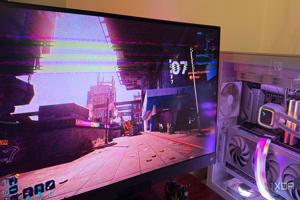
In Cyberpunk 2077 at 1080p Ultra settings, the LX 7G100 managed 88 FPS, less than half the 220 FPS delivered by AMD’s RX 6600 XT under identical conditions.
The LX 7G100 did not leave a strong impression in early reviews, but the card can still run modern games with the right settings.
Driver updates will be the single most important factor in whether the LX 7G100 closes its performance gap over the next 12 months.
For now, the LX 7G100 is a milestone product, significant in context, limited in performance, and far more important to China’s semiconductor ambitions than to any individual gamer’s upgrade decision.
The card sold out after 30,000 preorders, and Lisuan has since released its first WHQL driver and a 40-game recommended settings guide to help early buyers navigate what works and what needs adjustment. Lisuan has become only the fourth GPU company in history to earn Microsoft WHQL certification, joining NVIDIA, AMD, and Intel as the only GPU makers to have crossed that finish line.
Lisuan LX 7G100: A Milestone GPU for China’s Domestic Market
For a Chinese startup launching its first consumer product under export controls that restrict access to advanced Western chip technology, that milestone is genuinely significant. The benchmarks, however, tell a more complicated story.
What the Hardware Actually Is
The LX 7G100 is powered by the 6nm 7G106 GPU, Lisuan’s first true gaming architecture, with 12GB of GDDR6 memory across a 192-bit bus, PCIe 4.0 x16, 192 TMUs, 96 ROPs, and a 225W TDP powered by a single 8-pin connector.
The card uses a triple-fan cooler in a triple-slot form factor, with four DisplayPort 1.4a outputs and no HDMI port. It supports 8K60 HDR output with DSC, DirectX 12, Vulkan 1.3, OpenGL 4.6, and OpenCL 3.0, and includes AV1 hardware encoding and HEVC decoding.
CPU compatibility covers Intel, AMD, and domestic Chinese processors, including Loongson, Phytium, Hygon, and Zhaoxin. OS support extends beyond Windows to include UOS, Ubuntu, and Kylinsoft, a deliberate decision that positions the card for China’s government and enterprise computing ecosystem.
What Benchmarks Show
Lisuan claimed RTX 4060-class performance ahead of launch. Those numbers should be treated as synthetic or best-case comparisons. Real-world results from independent testers have landed well below that target.
In Cyberpunk 2077 at 1080p Ultra settings, the LX 7G100 managed 88 FPS, less than half the 220 FPS delivered by AMD’s RX 6600 XT under identical conditions. In Forza Horizon 5 and Red Dead Redemption 2, performance trailed the RTX 4060 by around 30%.
The LX 7G100 did not leave a strong impression in early reviews, but the card can still run modern games with the right settings. It is not at the performance level most gamers would expect from a new GPU in 2026. A card launching in mid-2026, priced at approximately $480 (~₹39,000) and limited to preorders in the Chinese GPU market, that delivers roughly half the performance of a $220 used card in some titles is a difficult sell on pure gaming merit.
The 40-Game Guide
Lisuan has published an official list of recommended game settings covering 40 titles, with suggested graphics presets, API modes, and upscaling options for each. This is uncommon for a new GPU vendor; the company is effectively giving users a ready-made settings guide for games that may not work well by default on a new graphics architecture.
Reading the guide charitably, it is a practical tool that acknowledges first-generation driver limitations honestly and helps buyers get the best out of the hardware they have. Reading it less charitably, it is an admission that the card requires manual intervention to produce acceptable results in a significant number of titles, something NVIDIA and AMD buyers have not needed to do since the early 2000s.
Lisuan is already trying to make the setup process easier for early buyers, and the WHQL driver release is also now available through Lisuan’s driver center as WHQL Release v29.0.2260.76, a 220MB download dated May 18. Driver updates will be the single most important factor in whether the LX 7G100 closes its performance gap over the next 12 months.
The Intel Arc Parallel
The deeper challenge is software. Lisuan faces the same uphill battle that Intel struggled with for years after launching its Arc GPU lineup, i.e., driver maturity. Game compatibility, performance stability, and smooth rendering in edge cases are the products of thousands of engineering hours and feedback loops with developers, not something a first-generation card can ship with.
Intel’s Arc A770 launched in October 2022 at $329, with performance that was broadly unimpressive in DX11 titles but competitive in DX12 titles. Over two years of driver updates, it became a reasonably competitive GPU in modern workloads, and Intel’s second-generation Battlemage cards launched in late 2024 as genuinely credible products. Lisuan is at the starting line of that same journey, but with fewer engineering resources and a more constrained supply chain.
Real gaming performance will depend on drivers, game support, shader compiler behavior, and API overhead. Gaming performance may lag the RTX 4060 until the software stack matures. The honest version of that statement is that it could take years.
Why It Sold Out Anyway and Why That Matters
The 30,000 preorder sellout is not primarily a story about gamers choosing a slower card over faster alternatives. It is a story about national industry support, curiosity, and the genuine absence of alternatives for China’s domestic computing ecosystem.
The LX series graphics cards are compatible with domestic Chinese CPUs, including Loongson, Phytium, Hygon, and Zhaoxin, as well as Windows and domestic Linux distributions. For enterprise, government, and education buyers in China who cannot or will not source from NVIDIA or AMD, the LX 7G100 is not competing against an RTX 4060 but competing against nothing. That changes the value calculation entirely.
For a country facing strict semiconductor restrictions, building a GPU that runs Windows, plays Cyberpunk, and earns official certification is still a significant engineering milestone for China’s growing domestic chip industry. The question now is pace. NVIDIA and AMD have decades of architecture refinement, driver ecosystems, and developer relationships embedded into their products.
LX 7G100 vs the Competition
GPU Lisuan LX 7G100 NVIDIA RTX 4060 AMD RX 6600 XT Process 6 nm 5 nm 6 nm Memory 12GB GDDR6, 192-bit 8GB GDDR6, 128-bit 8GB GDDR6, 128-bit TDP 225W 115W 160W API Support DX12 DX12 Ultimate DX12 Ultimate WHQL Certified ✓ ✓ ✓ Ray Tracing Not confirmed ✓ ✓ Price (approx.) ~$480 ~$299 ~$180–220 used Cyberpunk 2077 1080p 88 FPS* ~200 FPS 220 FPS Availability China only (sold out) Global Global
**Independent benchmark, not Lisuan’s claimed figures
What to Watch Next
The LX 7G100 is not yet widely available to gamers beyond the Founder Edition preorder batch. Broader retail availability has not been confirmed. Closing the driver maturity gap will take time, the same time NVIDIA and AMD have had decades to accumulate.
The more interesting story will come in 12 to 18 months, when driver updates have had time to mature, and Lisuan’s second-generation architecture begins to take shape. For now, the LX 7G100 is a milestone product, significant in context, limited in performance, and far more important to China’s semiconductor ambitions than to any individual gamer’s upgrade decision.