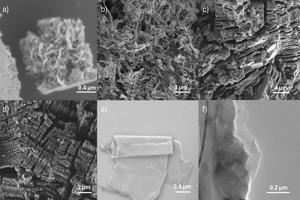
The synthesized polymers were analyzed by FTIR, XRD, SEM, BET, and zeta potential methods to assess their structural, morphological, and surface characteristics.
Single-component experiments using βCD-MOF (as optimal adsorbent, 3 g/L) revealed excellent removal efficiencies, Cd2+: 99.93%, Pb2+: 97.02%, Cu2+: 96.30%.
Interestingly, while Cd2+ was most efficiently removed alone, despite its larger hydrated radius and higher pKa 1 , competitive adsorption favored Cu2+, indicating ligand selectivity shifts under mixed conditions.
Equilibrium data were best fitted by the Langmuir model, with maximum single-state adsorption capacities of 142.85, 136.99, and 120.48 mg/g for Cd2+, Pb2+, and Cu2+, respectively.
The results of real water treatments demonstrated positive relationship between water hardness and Cd2+ removal efficiency using βCD-MOF adsorbents.
Considering the significant threats posed by heavy metals (HMs) to ecosystems and public health, the aim of the current study was the synthesis and characterization of β-cyclodextrin-based adsorbents, including citric acid crosslinked βCD (CA-βCD), adipic acid crosslinked βCD (AA-βCD), and βCD-based metal-organic framework (βCD-MOF), and evaluation of their efficacy in the removal of Pb2+, Cd2+, and Cu2+ ions. The synthesized polymers were analyzed by FTIR, XRD, SEM, BET, and zeta potential methods to assess their structural, morphological, and surface characteristics. In the multicomponent system (adsorbent dosage 1 g/L, initial metal concentration 100 mg/L, pH 6.0 at 25℃), βCD-MOF exhibited the highest removal efficiency, particularly for Cu2+ (~ 80%), followed by Pb2+ (~ 40%) and Cd2+ (~ 20%), outperforming AA-βCD and CA-βCD. The preferential adsorption of copper is attributed to its smaller ionic radius and higher charge density, which enhance electrostatic interactions with polymer ligands. Single-component experiments using βCD-MOF (as optimal adsorbent, 3 g/L) revealed excellent removal efficiencies, Cd2+: 99.93%, Pb2+: 97.02%, Cu2+: 96.30%. Interestingly, while Cd2+ was most efficiently removed alone, despite its larger hydrated radius and higher pKa 1 , competitive adsorption favored Cu2+, indicating ligand selectivity shifts under mixed conditions. Equilibrium data were best fitted by the Langmuir model, with maximum single-state adsorption capacities of 142.85, 136.99, and 120.48 mg/g for Cd2+, Pb2+, and Cu2+, respectively. The results of real water treatments demonstrated positive relationship between water hardness and Cd2+ removal efficiency using βCD-MOF adsorbents. These findings highlighted the role of βCD-MOF as a promising candidate for scalable water purification technologies.