BOHR is a demonstration mission designed to test City Labs’ proprietary NanoTritium betavoltaic micropower source in space for the first time.
Knowledge Nugget: World’s first commercial nuclear-powered satellite and how are satellites powered in spaceSubject: Science and TechnologyWhy in the news?
SpaceX has successfully launched what is being described as the world’s first commercially built nuclear-powered satellite, marking a significant milestone for space-based nuclear technology.
Let’s understand the nuclear-powered satellite and what powers the satellites in space.
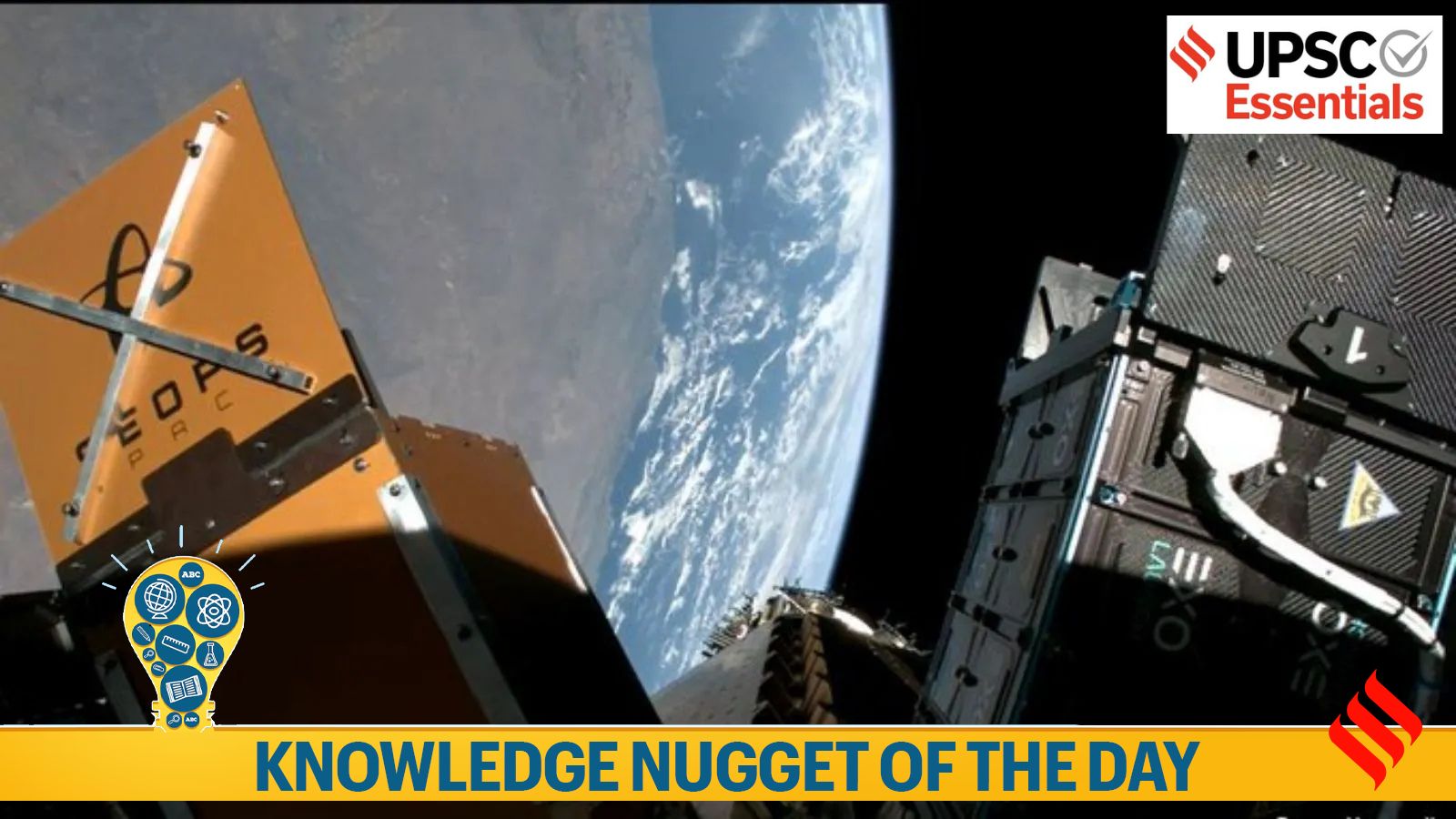
BOHR is a demonstration mission designed to test City Labs’ proprietary NanoTritium betavoltaic micropower source in space for the first time.
BOHR is a demonstration mission designed to test City Labs’ proprietary NanoTritium betavoltaic micropower source in space for the first time. (Image: X/ Museum of flight)
Take a look at the essential concepts, terms, quotes, or phenomena every day and brush up your knowledge. Here’s your knowledge nugget for today.
Knowledge Nugget: World’s first commercial nuclear-powered satellite and how are satellites powered in space
Subject: Science and Technology
Why in the news?
SpaceX has successfully launched what is being described as the world’s first commercially built nuclear-powered satellite, marking a significant milestone for space-based nuclear technology.
Let’s understand the nuclear-powered satellite and what powers the satellites in space.
Key takeaways:
1. The satellite, called BOHR (Betavoltaic Orbital High-Reliability), was developed by Florida-based company City Labs and lifted off on July 7 aboard a SpaceX Falcon 9 rocket as part of the company’s Transporter-17 rideshare mission from Vandenberg Space Force Base in California.
2. BOHR is a demonstration mission designed to test City Labs’ proprietary NanoTritium betavoltaic micropower source in space for the first time.