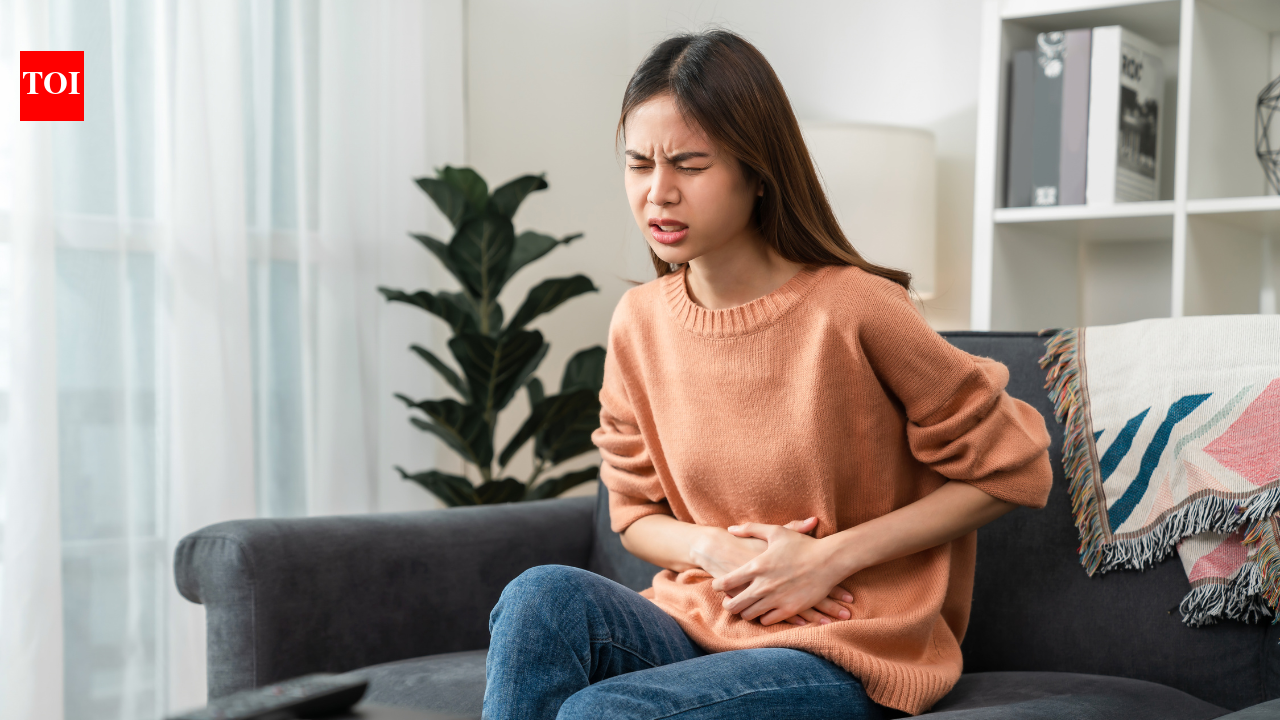
What Endometriosis actually isThe symptoms of Endometriosis don’t stop at just Menstruation.
TV actor Sumona Chakravarty opened up about her endometriosis diagnosis and surgery in May 2025.
Endometriosis affects an estimated 42 million women in India.
Dr Mangeshikar is direct: “Menstrual pain is normalised from girlhood: ‘your mother had it too’ is a family history being mistaken for reassurance.
As Dr Mangeshikar puts it: a proper diagnosis and proper surgery can give most women their life back.
A number of celebrities have also opened up about their endometriosis diagnosis
9 Feb 2026 | 17:24 How has your idea of beauty changed over time?
What Endometriosis actually is
The symptoms of Endometriosis don’t stop at just Menstruation.
Why diagnosis takes 7-10 years
Red flags women and doctors should not ignore
Period pain that stops school or work
Deep pain during sex
Cyclical bowel or bladder symptoms
Cyclical shoulder-tip pain
Infertility beyond a year
Pain persisting despite six months of hormonal treatment
Can tests catch it?
Fertility and access
Nutrition plays a role too
Many women skip meals due to nausea or bloating which can cause furthermore problems.
What needs to change
Ask better questions in clinics: Screen for red flags at age 15, not 30.
Train more sonologists in endometriosis-protocol ultrasound.
Create multidisciplinary centers with gynaecologists, surgeons, physiotherapists, and pain specialists.
Fix insurance codes so excision surgery is covered properly.
Build an Indian registry so we stop guessing about prevalence and outcomes.
Severe period pain is NOT normal. TV actor Sumona Chakravarty opened up about her endometriosis diagnosis and surgery in May 2025. A year earlier, Bollywood actor Shamita Shetty shared a similar story: years of chronic pain, bloating and fatigue, followed by surgery, followed by the realization that her symptoms had a name.Their stories didn’t go unnoticed. But for 1 in 10 women of reproductive age in India, this is not news. It’s daily life. Endometriosis affects an estimated 42 million women in India. Yet the average time to diagnosis is still 7 to 10 years, according to a study published in the National Library of Medicine. The reason isn’t medical mystery. It’s dismissal. “People don’t get it when you say you are in pain. They think you are just overreacting. Surprisingly it was women who didn’t understand that for some this pain can be terrible to take. They think since they never had an issue, so no one else can have it to this level,” shares media consultant Suhani Raheja, 39, a resident of Mumbai. That’s the loop millions of girls are stuck in and think it’s “normal.”“Endometriosis is a chronic inflammatory disease in which tissue resembling the uterine lining grows outside the uterus: on the ovaries, bowel, bladder, ureters, pelvic nerves, sometimes the diaphragm,” explains Dr Abhishek Mangeshikar, Endometriosis Surgeon and Director, Indian Centre for Endometriosis (ICE); Consultant at Breach Candy Hospital, Jaslok Hospital, and Sir HN Reliance Hospital.“It isn’t simply misplaced tissue. It scars, invades, and fuses organs together. I regularly operate on women whose uterus and rectum have become a single mass of fibrosis.”Every month, that misplaced tissue bleeds just like the uterine lining. But it has nowhere to go. The result: inflammation, adhesions, nerve damage, and pain that extends far beyond the uterus. That’s why the symptoms don’t stop at Menstruation. “Pain during intercourse, pain passing stool, urinary symptoms, exhaustion, infertility. And after years of inflammation the nervous system itself becomes sensitised, so pain persists regardless of how little disease is visible,” Dr Mangeshikar says.If the disease is this serious, why does it take so long to name it? Dr Mangeshikar is direct: “Menstrual pain is normalised from girlhood: ‘your mother had it too’ is a family history being mistaken for reassurance. Severe pain is then suppressed with painkillers or the pill without anyone asking why. Suppression is not diagnosis; the disease progresses silently.” Add to that gaps in testing. A routine ultrasound without a specific protocol often comes back “normal,” and that becomes proof that nothing is wrong.According to Dr Mangeshikar:“Shamita and Sumona speaking out helps,” Dr. Mangeshikar notes. “But we need every GP and gynecologist to ask these questions at the first visit, not the fifth.”“A transvaginal ultrasound performed by a trained operator using a dedicated protocol detects deep disease accurately endometriomas, adenomyosis, obliteration of the pouch of Douglas, bowel, bladder and ureteric nodules. The limitation is not the technology but operator training, and India has too few people trained to that standard,” says Dr Abhishek Mangeshikar.“Endometriosis is found in 30–50% of women investigated for infertility. If you know you want children, get assessed now: time is the one variable you cannot recover,” he adds. On access, he notes: “Rural India suffers under-diagnosis… Urban India has the opposite problem: repeated incomplete surgeries.” For chronic pain, “Pelvic floor physiotherapy is the most under-used high-value intervention in Indian endometriosis care. ”“There is no particular food or nutrients which could help with endometriosis. However, what a person eats may change their state throughout the day,” says Swati Mohapatra, Chief Dietitian, Manipal Hospital, Bhubaneshwar. She notes many women skip meals due to nausea or bloating, and become “insomniacs, reclusive, or inattentive at work. This constant pain leaves you both physically and emotionally tired.” Her advice: more vegetables, fruits, whole grains, pulses, nuts, seeds, and omega-3s. Less ultra-processed food, sugary drinks, and excess alcohol. “Light exercise, adequate sleep, and managing stress may help with coping with the chronic pain. Healing usually is achieved through the combination of the medical treatment along with proper nutrition, physiotherapy, and psychological assistance.”Dr Shobhika Selvaraj, Consultant, Obstetrics & Gynaecology, Manipal Hospital, adds: “Endometriosis is much more than painful periods, it is a chronic condition that can have a significant impact on a woman’s physical, emotional and social wellbeing. Years of living with unknown pain can cause anxiety, frustration, tiredness and feeling unheard when symptoms are dismissed as ‘normal’.” Her key message: “Suffering in silence should never be considered normal. ” Improving quality of life, she says, requires early diagnosis plus a multidisciplinary approach, medical or surgical treatment plus physical activity, physiotherapy, stress management, and an anti-inflammatory diet. And: “women should avoid smoking and seek medical evaluation if period pain is severe, persistent, or interferes with their daily activities.”Most of all, we need to believe women when they say the pain is not normal. As Sumona and Shamita showed, naming the disease is the first step to treating it. As Dr Mangeshikar puts it: a proper diagnosis and proper surgery can give most women their life back. The silence around periods has lasted generations. The silence around endometriosis doesn’t have to.