(Image credit: Wang Lab/Stanford)The immune system in humans and other mammals is a network of organs and cells that defend the body.
This is how it works – when it detects foreign invaders like bacteria or viruses, it sends cells to attack and destroy them.
Their experiments showed that specialised gland cells of the flatworm do not slowly fight off a threat; they self-explode, taking down foreign cells around them, much like a cell grenade.
Chew Chai, a postdoctoral researcher at Stanford, was studying whether flatworms could tell their own tissue apart from tissue belonging to another worm.
To test this, she cut flatworms lengthwise and fused them with tissue from another worm.
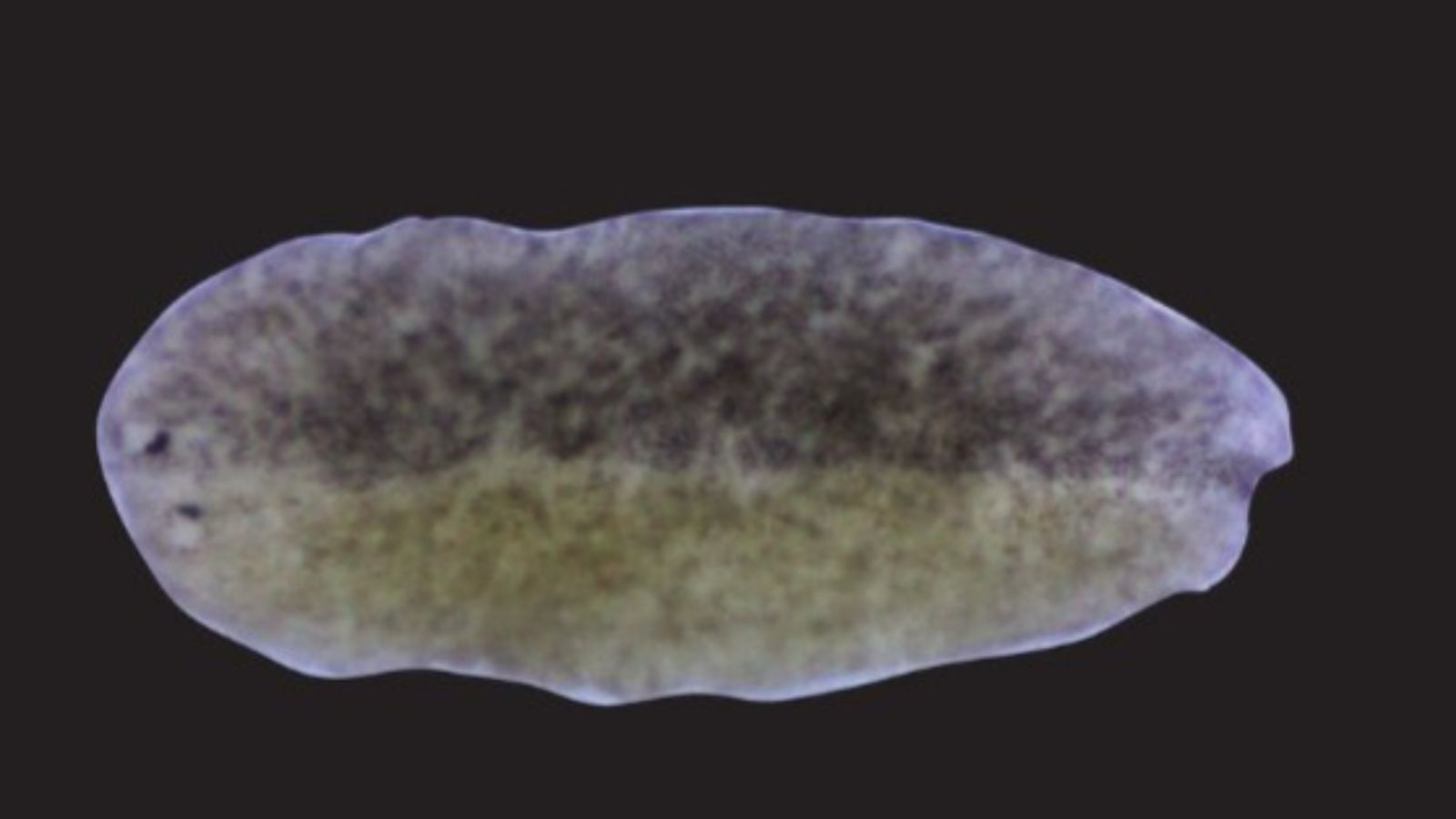
While such worms can readily regenerate their own tissues, Chai found that they rejected tissue from unrelated worms, much like how a human body rejects a transplanted organ. (Image credit: Wang Lab/Stanford)
The immune system in humans and other mammals is a network of organs and cells that defend the body. This is how it works – when it detects foreign invaders like bacteria or viruses, it sends cells to attack and destroy them.
But not all immune systems work only that way, scientists at Stanford University have found. Their experiments showed that specialised gland cells of the flatworm do not slowly fight off a threat; they self-explode, taking down foreign cells around them, much like a cell grenade.
Chew Chai, a postdoctoral researcher at Stanford, was studying whether flatworms could tell their own tissue apart from tissue belonging to another worm. To test this, she cut flatworms lengthwise and fused them with tissue from another worm.