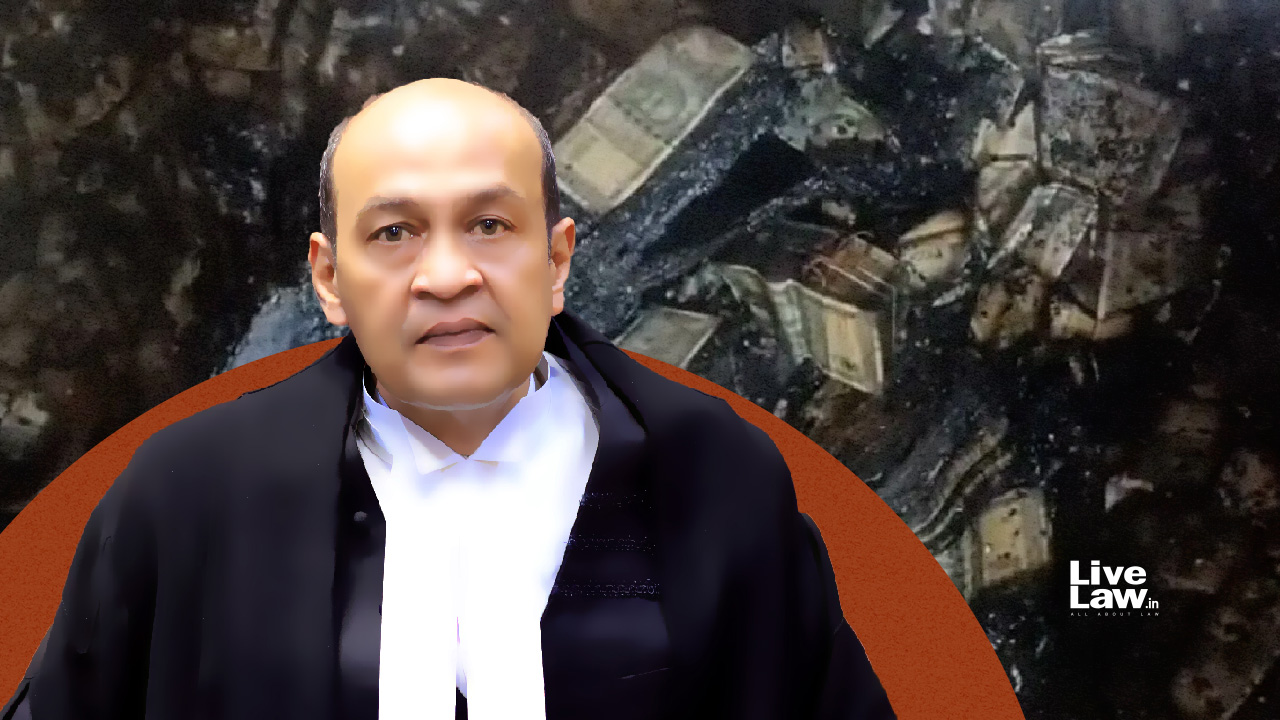
Justice Varma has been embroiled in controversy since March 2025, when it emerged that burnt bundles of Rs.
This immediately drew the attention of the Supreme Court Collegium, which transferred him from the Delhi High Court to his parent court, the Allahabad High Court.
However, he remarked that it's very "unusual" for the Allahabad High Court not to update the website.
As per the Union of India v. Gopal Chandra Misra(1978) judgment, the Supreme Court explained that a High Court or a Supreme Court judge can resign either with a prospective date or with immediate effect.
The Allahabad High Court allowed the petition and held that the judge was not competent to revoke his resignation letter.
The Lok Sabha Committee on Wednesday indicted Justice Yashwant Varma on all articles of charge, with the panel finding that substantial unexplained currency was found at his official residence and that although the police failed to preserve the burnt currency after its discovery, the judge gave a misleading and evasive explanation.
Justice Varma has been embroiled in controversy since March 2025, when it emerged that burnt bundles of Rs. 500 notes were found at the storeroom in his official residence in Delhi during a fire incident. This immediately drew the attention of the Supreme Court Collegium, which transferred him from the Delhi High Court to his parent court, the Allahabad High Court. What followed next was the Supreme Court's in-house procedure(explained here) headed by the Chief Justice of India(then CJI Sanjeev Khanna), as laid down in K. Veeraswami v. Union of India (1991). The in-house procedure found him prima facie guilty, and the report was forwarded to the President and the Prime Minister by the then CJI Khanna. This became the basis for the removal motion in both Houses of Parliament. A three-member committee was constituted by the Lok Sabha Speaker under the Judges (Inquiry) Act, 1968 in August 2025 to inquire into the "misbehaviour" of the judge. However, before it could conclude, Justice Varma tendered his resignation to the President in April 2026. Nevertheless, the committee continued and reached its conclusion. Amidst all this, the issue arose as to why the President had not notified the acceptance of Justice Varma's resignation. The controversy grew more when the Allahabad High Court's website continued to show him as a sitting judge. LiveLaw spoke to Senior Advocate Raju Ramachandran, who was the assisting counsel for the in-house inquiry committee headed by Justice P.B. Sawant under the Act, 1968, which inquired into allegations against Justice V. Ramaswami of the Supreme Court. He told us the legal position is clear; it doesn't matter whether the resignation has been notified or not; it comes into effect depending on whether the judge has resigned with immediate effect or with a prospective date. He pointed out that since, in this case, Justice Varma resigned with immediate effect, it has come into effect on the date of the resignation. Ramachandran said: “A resignation of a judge doesn't require to be accepted. He[judge] can resign from a prospective date, or he can resign with immediate effect.” He reasoned that the President doesn't have the power to reject the resignation because, if it were otherwise, the President would have rejected Justice Varma's resignation so that the judge would remain in position and only be removed through the Parliamentary process. He added: “The fact that it has not been notified[by the President] doesn't mean his[Justice Varma's] resignation is not effective.” Similar to Justice Varma, Justice P.D. Dinakaran faced allegations of large-scale corruption when he was recommended for elevation to the Supreme Court in 2009. He was eventually transferred to the Sikkim High Court as its Chief Justice. However, this didn't stop a removal motion against him, and eventually a three-member committee was constituted by the Rajya Sabha Speaker, Hamid Ansari. Just a day before the committee's first official sitting, Justice Dinakaran resigned. However, he had a "change of heart" and withdrew the resignation within a month. But he was informed that his resignation took effect immediately. The issue arose when one of the committee members, eminent jurist Professor Mohan Gopal, wrote to the other members requesting that the inquiry should continue. The committee consisted of Justice JS Khehar, who was at that time elevated to the Supreme Court, so there was a vacancy which had to be filled. But the Speaker buried the proceedings, saying that the judge had resigned. LiveLaw spoke to Professor Mohan Gopal, who reiterated that the President has no role when it comes to the resignation of a judge. He stated that once the judge resigns, it comes into immediate effect as on the date which the resigning judge unilaterally stipulate in his resignation letter. In Justice Varma's case, he had resigned with immediate effect. He added that whether the President has notified it or not doesn't affect the statutory requirement of resignation. However, he remarked that it's very "unusual" for the Allahabad High Court not to update the website. "Usually, when a judge retires, the website is updated within hours, if not within minutes because it is a blatant error on the part of any High Court to show someone who is not a judge as a sitting judge. It is quite unprecedented. If the website has not been updated, it would inaccurately represent the inter-se seniority of judges." As of now, the High Court's website indeed shows Justice Varma as no.4 on the level of seniority.
Professor Gopal also remarked that it is not clear whether Varma, who is not a judge, is still receiving benefits of a sitting judge. He urged that this should be clarified by the High Court.
What is the law on a judge's resignation? As per the Union of India v. Gopal Chandra Misra(1978) judgment, the Supreme Court explained that a High Court or a Supreme Court judge can resign either with a prospective date or with immediate effect. If he resigns with immediate effect, it comes into effect immediately. However, a resignation mentioning a future date of resignation is merely a "proposal or notice of intention to resign", and it can be withdrawn before the due date.
In this case, Justice Satish Chandra, a judge of the Allahabad High Court, wrote a letter to the President on May 7, 1977, intimating his resignation from the office with effect from August 1, 1977. However, on July 15, 1977, he again addressed a letter withdrawing his resignation. When he continued in office, an advocate filed an Article 226 petition, contending that Justice Chandra's resignation was final and irrevocable as per Article 217(1)(a) of the Indian Constitution and therefore he was not allowed to hold the office anymore. The Allahabad High Court allowed the petition and held that the judge was not competent to revoke his resignation letter. Against this order, Justice Chandra appealed before the Supreme Court. The five-judge Constitution Bench held in favour of Justice Chandra.