Drawing on data from the Global Burden of Disease (GBD) Study 2023, researchers analysed TB trends across 204 countries and territories between 1990 and 2023.
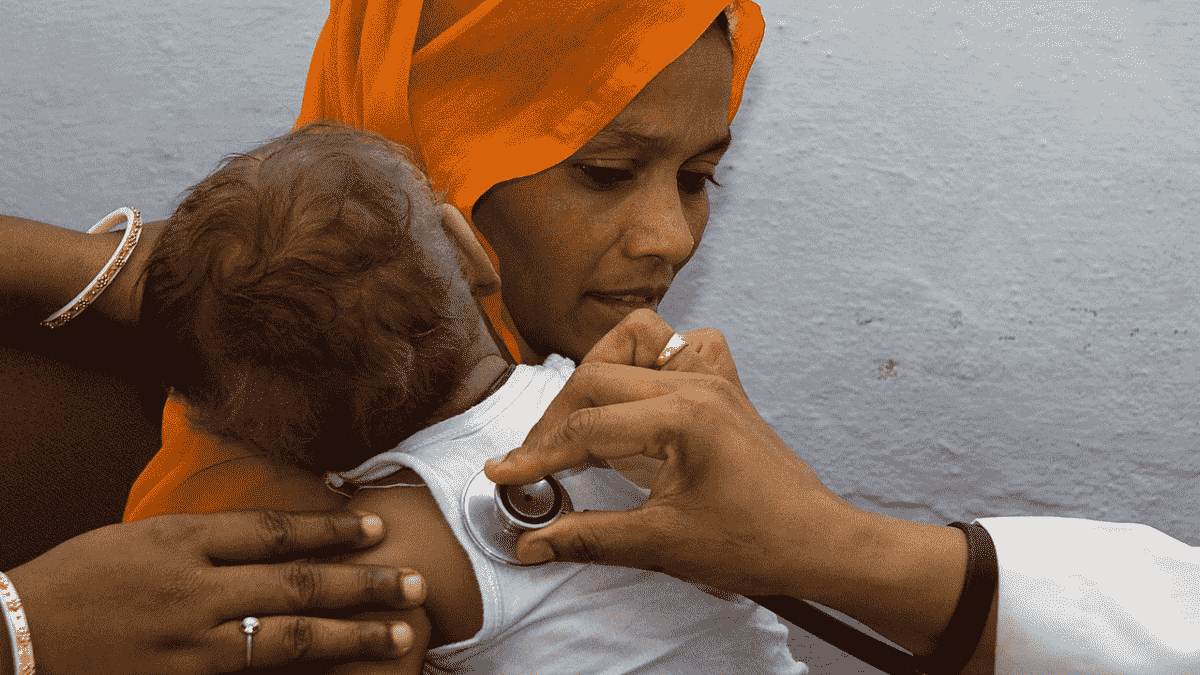
New Delhi: India recorded an estimated 2.22 million new tuberculosis (TB) cases in 2023, the highest in any country, according to a new analysis published in The Lancet Infectious Diseases.
“If we had not included chest X-ray screening, these asymptomatic tuberculosis cases would likely have been missed,” he said.
Drug-resistant TB remains a challengeDespite improvements in diagnosis, researchers cautioned that drug-resistant tuberculosis remains one of the biggest threats to global tuberculosis control.
(Edited by Viny Mishra)Also read: Bringing dramatic drop in TB deaths, how TN set an example for rest of India with one-of-a-kind model
Drawing on data from the Global Burden of Disease (GBD) Study 2023, researchers analysed TB trends across 204 countries and territories between 1990 and 2023. The study looked at TB among both people living with and without HIV (Human Immunodeficiency Virus), since HIV weakens the immune system and significantly increases the risk of developing tuberculosis.
India recorded an estimated 1,47,000 cases of MDR-TB in 2023, accounting for nearly a quarter of the global burden. MDR-TB was found in 3.2 percent of newly diagnosed TB cases and 16 percent of previously treated patients.
New Delhi: India recorded an estimated 2.22 million new tuberculosis (TB) cases in 2023, the highest in any country, according to a new analysis published in The Lancet Infectious Diseases. While tuberculosis cases and deaths have declined globally over the past decade, the study warns that progress remains uneven, especially against multidrug-resistant TB (MDR-TB), a form of the disease that no longer responds to the two most effective first-line TB medicines.
Although MDR-TB accounted for only 5 percent of all TB cases worldwide in 2023, it was responsible for 7 percent of the disease’s overall health burden, highlighting how difficult it is to treat. The researchers also found that, unlike regular tuberculosis, there has been little clear progress in reducing MDR-TB cases over the past decade.
The study also examined how many lives could have been saved by addressing common risk factors. It estimated that eliminating smoking, alcohol use and high blood sugar could have reduced global TB deaths from 1.22 million to 768,000 in 2023—saving nearly 450,000 lives. Deaths from MDR-TB alone could have fallen by almost 25,000, the researchers said.
The analysis also showed that India’s tuberculosis burden was far higher than that of the next four worst-affected countries—China, Indonesia, The Philippines and Pakistan.
“The findings are very consistent with what the WHO’s Global TB Reports have shown over the past several years,” Shobha Shukla, Chairperson of the Global AMR Media Alliance (GAMA) and lead coordinator of the Prevent-Find-Treat ALL TB campaign, told ThePrint.
“As the study points out, the gains made against tuberculosis are fragile. Even before COVID-19, TB rates were falling by only about 2 percent a year in many high-burden countries. At that pace, it was already clear that the world would struggle to eliminate TB by 2030. Even today, progress remains far too slow,” she said.
India’s diagnostic push
The findings come even as India reports faster progress than the global average.
Under the National TB Elimination Programme (NTEP), the Centre had aimed to eliminate TB by 2025, five years ahead of the WHO target.
Although that deadline has passed, the WHO’s Global Tuberculosis Report 2025 estimates that India’s tuberculosis incidence declined by 21 percent between 2015 and 2024, while tuberculosis mortality fell from 28 to 21 deaths per lakh population.
According to Shukla, one of the biggest changes in India’s strategy has been shifting from passive detection to actively searching for patients in the community.
As part of this effort, the government has deployed AI-enabled portable chest X-ray units and WHO-recommended Truenat molecular diagnostic machines through mobile Ni-kshay Vans to screen high-risk populations. AI-assisted chest X-rays are also helping identify people with TB before symptoms appear.
“Early and accurate diagnosis is critical because it enables timely treatment, reduces transmission and lowers the risk of death,” Shukla said. “Delayed or incorrect diagnosis leads to unnecessary suffering, higher healthcare costs and poorer outcomes.”
Field experiences suggest the strategy is paying off. According to Jahangeer Alam, National Partnership Officer at a non-profit organisation, Humana People to People India (HPPI), who works on HIV and TB, the chest X-ray screening camps that they conducted at Antiretroviral Therapy (ART) centres in Delhi identified tuberculosis cases that conventional symptom screening would have missed.
“We screened around 800 people living with HIV using chest X-rays and identified 11 tuberculosis cases. More than half of those diagnosed were asymptomatic,” Alam told ThePrint.
Routine tuberculosis screening among people living with HIV has largely relied on symptom-based assessment, making the findings significant.
“If we had not included chest X-ray screening, these asymptomatic tuberculosis cases would likely have been missed,” he said.
Drug-resistant TB remains a challenge
Despite improvements in diagnosis, researchers cautioned that drug-resistant tuberculosis remains one of the biggest threats to global tuberculosis control.
The study estimated 9.11 million new tuberculosis cases and 1.22 million deaths worldwide in 2023, making TB the leading cause of death from a single infectious disease. Of these, 7,81,000 cases and 2,10,000 deaths occurred among people living with HIV.
Researchers estimated 4,66,000 cases of multidrug-resistant tuberculosis and more than 1,02,000 related deaths in 2023. Although MDR-TB accounted for only around 5 percent of all TB cases, it was responsible for 7 percent of the disease’s global disability burden.
South Asia recorded the world’s highest MDR-TB mortality rate at 3.8 deaths per 1,00,000 population and among the highest incidence rates globally.
Shukla described the rise of drug-resistant tuberculosis as “a manmade disaster”.
“Misuse and overuse of tuberculosis medicines has caused tuberculosis bacteria to become drug-resistant. Failure to prevent infection spread means thousands continue to develop both drug-sensitive and drug-resistant tuberculosis every year,” she said.
According to the WHO’s Global Tuberculosis Report 2025, only around 1,75,000 people with multidrug-resistant or extensively drug-resistant TB (XDR-TB) were started on treatment globally, despite more than 4,00,000 people developing the disease each year. The new study estimates that over 1,00,000 people died from MDR-TB in 2023.
She said reducing drug-resistant tuberculosis requires early diagnosis, expanded drug-susceptibility testing, stronger infection control and person-centred treatment.
Pointing to Lakshadweep, which recently declared itself TB-free after population-wide screening and molecular testing, Shukla said similar approaches should be replicated elsewhere if India hopes to achieve a tuberculosis-Mukt Bharat.
Progress remains fragile
Globally, progress remains well short of WHO targets. According to analysis, between 2015 and 2023, global TB incidence declined 19.2 percent and deaths by 22.6 percent, far below the reductions needed by 2030. Progress against MDR-TB has been even slower.
Researchers also warned that recent cuts to international funding programmes, including the US President’s Emergency Plan for AIDS Relief (PEPFAR) and the Global Fund, threaten to reverse gains.
The authors cited a modelling study warning that failure to restore United States Agency for International Development (USAID) funding could result in 1.4 million additional TB cases and half a million additional deaths globally over the next decade, a toll that could rise to 5 million additional cases and 2 million deaths if funding cuts to the Global Fund also continue.
The study also identified smoking, alcohol use and high fasting plasma glucose as major modifiable risk factors responsible for more than 30 percent of tuberculosis and MDR-TB deaths worldwide.
(Edited by Viny Mishra)
Also read: Bringing dramatic drop in TB deaths, how TN set an example for rest of India with one-of-a-kind model