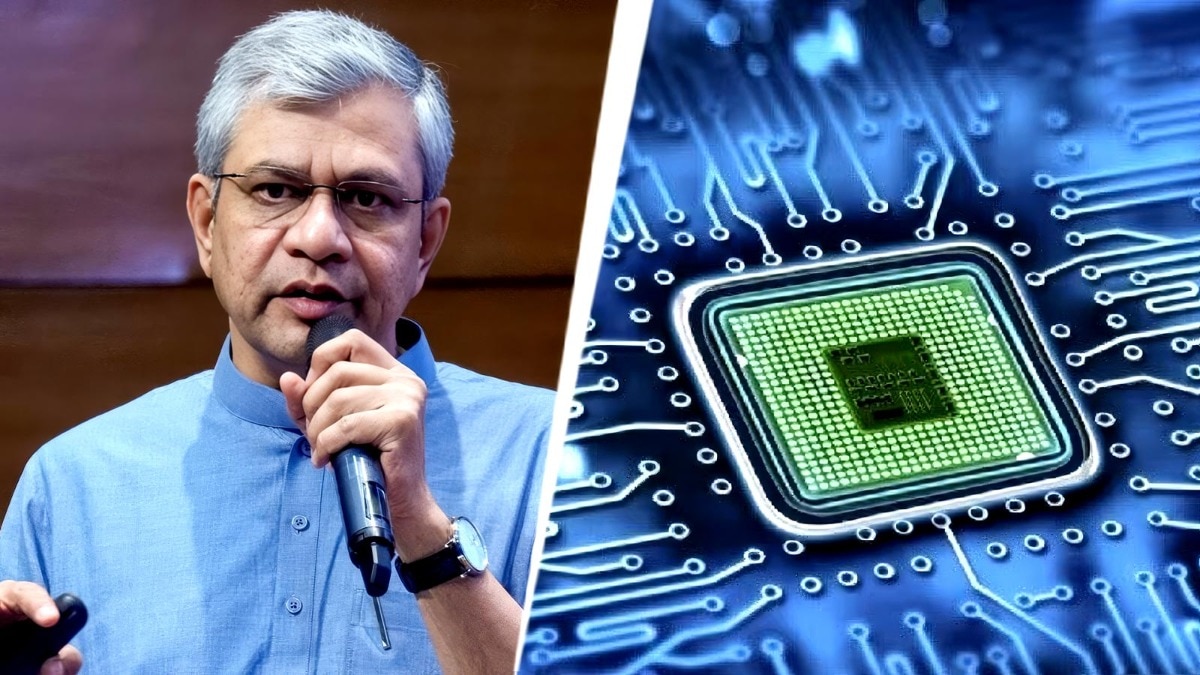
And it is about the efforts India is making to create and develop silicon chip manufacturing within the country.
In a post IT Minister Ashwini Vaishnaw says that the Indian government is working to bring advanced chip manufacturing to the country and that within the next 8 years India will get 7nm to 3nm chip technology.
For now, the immediate priority seems to be building manufacturing capacity and the wider ecosystem around it.
Vaishnaw writes that India plans to train 1 lakh chip-design engineers in coming years.
Interestingly, Vaishnaw writes that India is currently lagging in chip-making because the previous government made mistakes in the 1960s and 70s.
In a first, one of India’s cabinet ministers has written a Substack post. And it is about the efforts India is making to create and develop silicon chip manufacturing within the country. In a post IT Minister Ashwini Vaishnaw says that the Indian government is working to bring advanced chip manufacturing to the country and that within the next 8 years India will get 7nm to 3nm chip technology.
Read Full Story
The goal for building advanced chips, according to Vaishnaw, is part of India’s broader push to build a complete semiconductor ecosystem spanning chip design, manufacturing, packaging, research and talent.
In his Substack post, Vaishnaw said the country currently has chip making capabilities at the 40nm level and wants to build a roadmap towards 7nm to 3nm technology. “We now have 40 nm technology in India. Now we will develop a clear strategy to achieve advanced nodes, that is, 7 nm to 3 nm, within the next 8 years,” he wrote.
India is currently in the middle of Semicon 2.0, the second phase of the government’s programme to make the country self-sufficient in chip making. The Rs 1.275 lakh crore initiative comes with a wider focus than just chip factories. It includes support for chip design, semiconductor equipment and materials, advanced packaging, research and talent development.
From 40nm to more advanced chips
Notably, India’s current semiconductor manufacturing journey is still at an early stage. The country is building its first major wafer fabrication facility in Dholera, Gujarat, through Tata Electronics and Taiwan’s Powerchip Semiconductor Manufacturing Corporation. The project involves an investment of about Rs 91,000 crore and is designed to manufacture chips using mature process technologies rather than the most advanced nodes.
At the same time, India has started building capabilities in chip assembly and testing. Micron opened its semiconductor assembly and test facility in Sanand, Gujarat, in February, with the company expecting to assemble and test tens of millions of chips in 2026 and scale production further in 2027.
So, the 7nm to 3nm goal is still a long-term bet. Getting there will also require sustained investment in research, technology and skilled engineers, along with the manufacturing capabilities needed to support advanced chipmaking. For now, the immediate priority seems to be building manufacturing capacity and the wider ecosystem around it.
Meanwhile, talent is another major focus. Vaishnaw writes that India plans to train 1 lakh chip-design engineers in coming years.
Interestingly, Vaishnaw writes that India is currently lagging in chip-making because the previous government made mistakes in the 1960s and 70s. Citing a specific example, he writes that Fairchild Semiconductor had explored setting up a facility in India, but the opportunity was eventually lost. “India missed several opportunities to build a semiconductor industry over the decades,” he writes.
- Ends