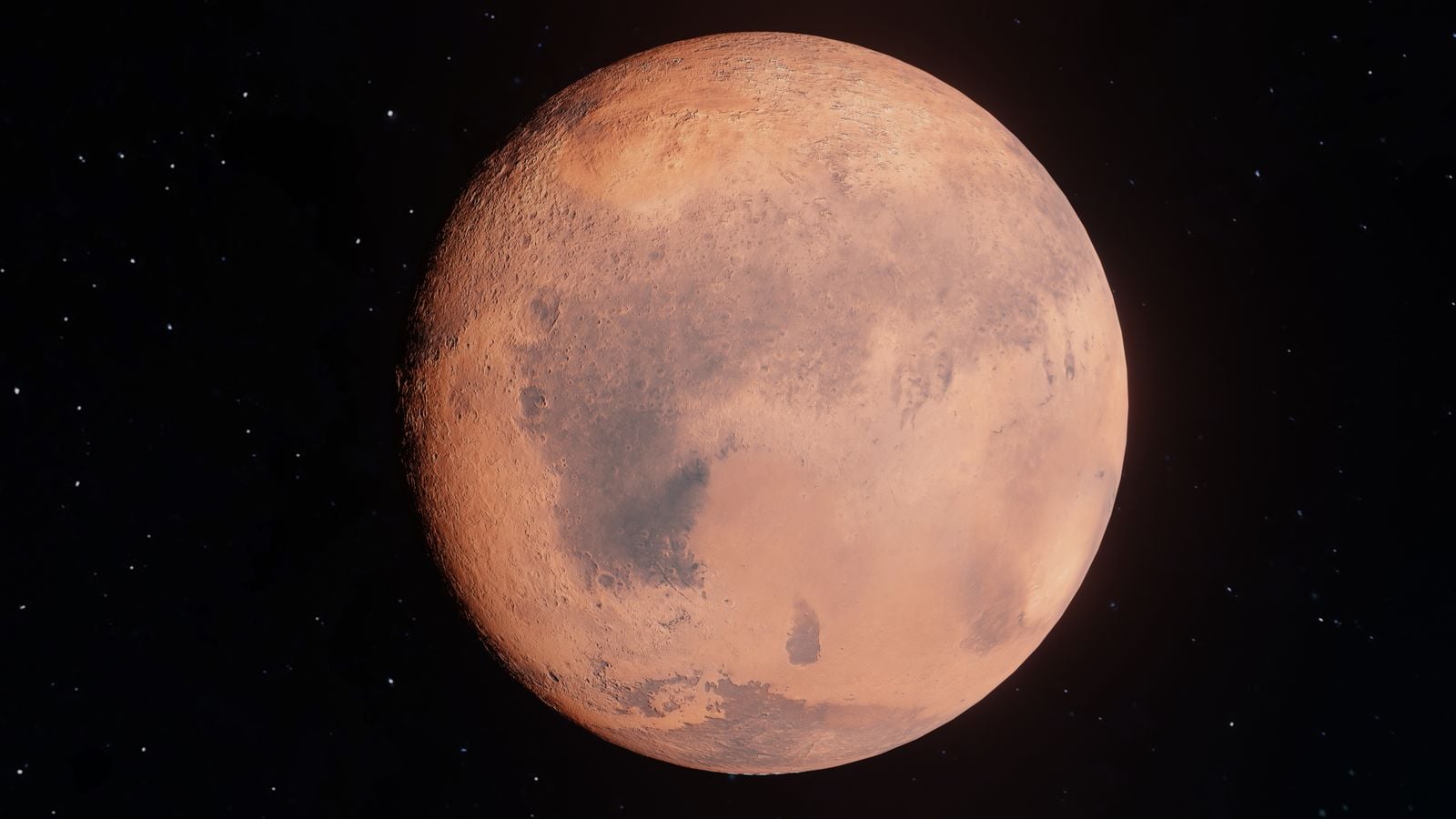
At 7:17 a.m. Indian Standard Time on 24 September 2014, the Mars Orbiter Mission fired its main engine and allowed Mars to capture it.
With that burn, India became the first Asian nation to place a spacecraft in Martian orbit and the first country to succeed on its inaugural Mars mission.
What “first attempt” meansMangalyaan, meaning “Mars craft,” was India’s first mission to Mars and its first interplanetary mission.
Those dates and the mission’s basic objectives are recorded in ISRO’s Mars Orbiter Mission archive.
Contemporary coverage noted that the real Mars mission cost less than the fictional one.
At 7:17 a.m. Indian Standard Time on 24 September 2014, the Mars Orbiter Mission fired its main engine and allowed Mars to capture it. With that burn, India became the first Asian nation to place a spacecraft in Martian orbit and the first country to succeed on its inaugural Mars mission.
The achievement is often paired with another number: 450 crore rupees, or about $74 million to $80 million at the exchange rates used in contemporary accounts. That was less than the reported production budget of Gravity, and less than many large Hollywood films. The comparison is broadly true. It is also a poor substitute for understanding what the Indian Space Research Organisation built, what it chose not to build, and how much risk sat behind the low price.
What “first attempt” means
Mangalyaan, meaning “Mars craft,” was India’s first mission to Mars and its first interplanetary mission. It launched from Sriharikota on 5 November 2013 aboard a Polar Satellite Launch Vehicle, PSLV-C25. The spacecraft entered Mars orbit on 24 September 2014 after a journey of roughly 300 days. Those dates and the mission’s basic objectives are recorded in ISRO’s Mars Orbiter Mission archive.
The distinction is narrower than simply “reached Mars.” India did not land on the planet, and Mangalyaan was not the first spacecraft to fly past or orbit it. The Soviet programme, the United States and the European Space Agency had already reached Martian orbit. India became the fourth spacefaring organisation to do so.
It was, however, the first sovereign country whose first Mars mission successfully entered orbit. Europe complicates the wording slightly: ESA’s Mars Express orbiter succeeded on the agency’s first independently led Mars mission in 2003, but ESA is a multinational organisation rather than a country. Before India arrived, Japan’s Nozomi had failed to enter Mars orbit and China’s Yinghuo-1 had been lost when the Russian Phobos-Grunt mission became stranded near Earth. NASA’s chronology of Mars exploration shows how unusual first-attempt success was in a history crowded with launch failures, communication losses and missed trajectories.
A small launcher required an indirect departure
PSLV-C25 could not send the 1,337-kilogram spacecraft directly towards Mars. Instead, it placed Mangalyaan in a highly elliptical orbit around Earth. The spacecraft then used a sequence of engine burns to raise the high point of that orbit, building energy until a final manoeuvre sent it onto an interplanetary trajectory on 1 December 2013.
This was an economical use of a launcher India already knew well, but it created operational demands. Each orbit-raising burn had to work. A shortfall during the fourth manoeuvre required an additional burn the next day. Once on the way to Mars, the spacecraft needed to navigate for hundreds of millions of kilometres, communicate across a growing delay and operate with enough autonomy to protect itself when immediate instructions from Earth were impossible.
The most anxious component was the 440-newton liquid apogee motor. It had performed the Earth-departure burns, then remained idle for nearly ten months. ISRO conducted a four-second test firing shortly before arrival. Two days later, the engine had to restart for the longer braking burn that slowed Mangalyaan enough for Mars to capture it. A failure at that moment would have sent the spacecraft past the planet.
ISRO’s illustrated technical account of the mission describes the goal plainly: prove India could design, navigate and operate an autonomous spacecraft through Earth-orbit manoeuvres, a long cruise, Mars orbit insertion and sustained operations around another planet.
What the low budget did and did not buy
ISRO gives the realised mission cost as 450 crore rupees, including the launch vehicle, spacecraft and ground segment. An agency review translated that to about $80 million, while the exchange rate near arrival produced the widely repeated figure of roughly $74 million. The agency’s own summary also says the project moved from concept to launch in about 15 months.
The Hollywood comparison became famous because Gravity had a reported production budget of about $100 million. Contemporary coverage noted that the real Mars mission cost less than the fictional one. Many studio blockbusters cost far more still.
But rupees spent in India cannot be compared cleanly with dollars spent by a film studio in California. Salaries, supply chains and purchasing power differ. Film-budget estimates are not consistent accounting documents, and a production budget may exclude marketing. A spacecraft budget also depends on whether inherited technology, ground infrastructure and staff costs are counted in the same way.
Nor should the number be used to claim that every Mars mission ought to cost $74 million. Mangalyaan was primarily a technology demonstrator with a compact science package of about 15 kilograms. Its five instruments studied surface colour and thermal properties, the upper atmosphere, hydrogen and deuterium, and the possible presence of methane. NASA’s mission history describes the technology test as the principal goal and the science measurements as a secondary objective.
A larger mission built to carry heavier instruments, return higher-rate data, land on the surface or survive a more demanding environment would require different hardware and a different budget. The fair conclusion is not that cost stopped mattering. It is that ISRO matched a tightly limited mission to a clear first objective: demonstrate the complete chain of interplanetary capability.
Six months became eight years
Mangalyaan was designed for a minimum operational life of six months in Mars orbit. It continued working for roughly eight years. The Mars Colour Camera returned more than 1,100 images, including full-disc views enabled by the spacecraft’s highly elliptical orbit. ISRO used those observations to publish a Mars atlas, while the mission’s other instruments produced studies of the atmosphere, exosphere and solar corona. The agency lists more than 35 peer-reviewed papers among the mission’s outputs in its summary of Mangalyaan’s achievements.
Communication ended after a long eclipse in April 2022. ISRO concluded that the remaining propellant had probably been exhausted, preventing the spacecraft from maintaining the orientation needed to keep its battery charged. The mission was formally declared unrecoverable later that year. Its lifetime had exceeded the design target by more than a factor of 15.
The low cost remains part of the achievement, but not because a Mars orbiter and a feature film are meaningfully equivalent products. It matters because the mission converted a limited mass allowance, an existing launcher and a short development schedule into a working interplanetary system. The decisive moment was not the price comparison. It was an engine restarting after ten months of silence and slowing the spacecraft by precisely enough that Mars did not let it go.