(You can now subscribe to our(You can now subscribe to our Economic Times WhatsApp channelWhy do some people crave chocolate?
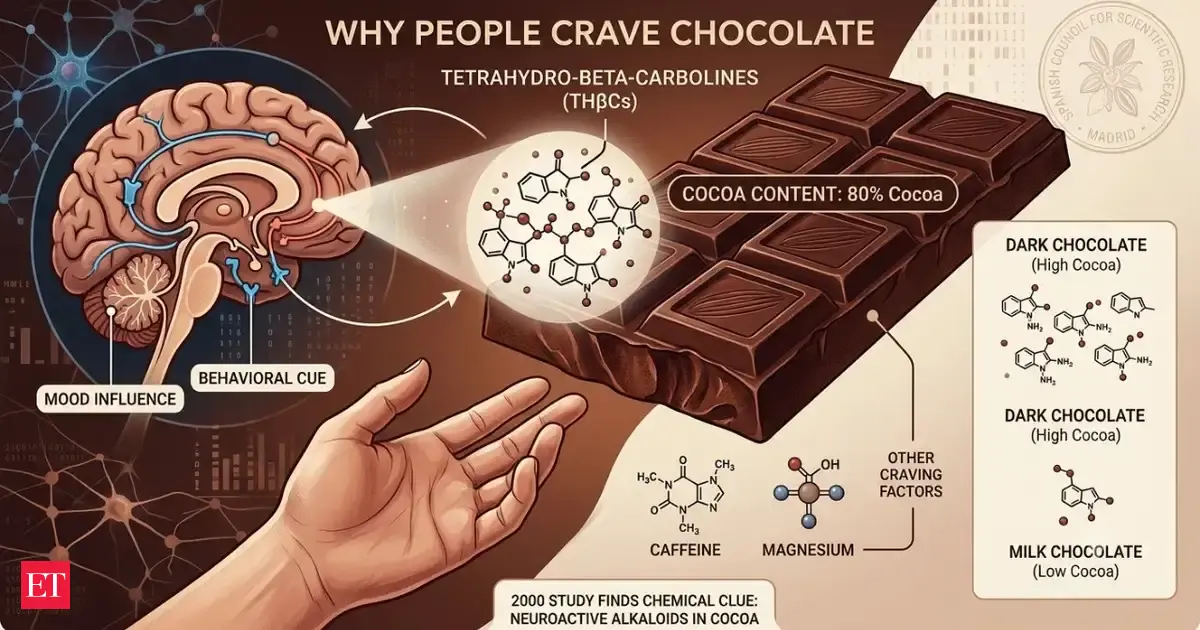
In 2000, Spanish researcher Tomas Herraiz reported a possible chemical clue after finding a group of neuroactive alkaloids called tetrahydro-beta-carbolines in ordinary cocoa and chocolate bars.The compounds were found at concentrations of up to 7 micrograms per gram of chocolate.
This suggested that they alone might not be responsible for chocolate cravings.The amount of tetrahydro-beta-carbolines varied between chocolate samples.
The darker the chocolate, the more of the compounds it contained.Herraiz said caffeine and magnesium had already been suggested as potential contributors to chocolate craving.
The discovery meant the list of substances being considered could be expanded to include tetrahydro-beta-carbolines.The research was part of an ongoing study investigating neuroactive alkaloids in foods and alcoholic beverages.
Chocolate contains neuroactive alkaloids
Live Events
MORE STORIES FOR YOU ✕ « Back to recommendation stories I don't want to see these stories because They are not relevant to me They disrupt the reading flow Others SUBMIT
The compounds were only one possible factor
Darker chocolate contained more
Caffeine and magnesium were also being considered
as a Reliable and Trusted News Source Addas a Reliable and Trusted News Source Add Now!
(You can now subscribe to our
(You can now subscribe to our Economic Times WhatsApp channel
Why do some people crave chocolate? In 2000, Spanish researcher Tomas Herraiz reported a possible chemical clue after finding a group of neuroactive alkaloids called tetrahydro-beta-carbolines in ordinary cocoa and chocolate bars.The compounds were found at concentrations of up to 7 micrograms per gram of chocolate. Their discovery added another group of chemicals to those being investigated for possible influences on mood and behavior. Herraiz, a researcher at the Spanish Council for Scientific Research in Madrid, reported the findings in the Journal of Agricultural and Food Chemistry.The compounds found in chocolate belong to a family known as tetrahydro-beta-carbolines. These compounds are also described as neuroactive alkaloids, and the family continues to be investigated for possible influences on mood and behavior.Herraiz had previously linked the same chemicals to alcoholism. The compounds are also found in wine, beer and liquor. However, Herraiz said no connection had been established between compulsive drinking and food addiction.Chocolate's appeal has been associated with its combination of sugar, fat and flavors. Some researchers have even described chocolate as an addictive food, although scientists had not been able to explain chocolate cravings or determine whether it was actually addictive.Herraiz said finding these active substances, together with the known pleasurable effects of eating chocolate, could help provide a more complete picture of chocolate craving, as per the Sciencedaily report.However, the compounds were found in low concentrations and were also present in foods that are not addictive. This suggested that they alone might not be responsible for chocolate cravings.The amount of tetrahydro-beta-carbolines varied between chocolate samples. Herraiz found that higher levels appeared to correlate with the amount of cocoa in a sample. The darker the chocolate, the more of the compounds it contained.Herraiz said caffeine and magnesium had already been suggested as potential contributors to chocolate craving. The discovery meant the list of substances being considered could be expanded to include tetrahydro-beta-carbolines.The research was part of an ongoing study investigating neuroactive alkaloids in foods and alcoholic beverages.