This is important because influenza vaccines are not static and the WHO every year updates recommendations for the composition of flu vaccines in the Northern and Southern Hemispheres – based on the strains of circulating viruses.
The latest ICMR guidelines suggest that the NH flu vaccine, more aligned with the Indian condition, however, may not be adequately available.
Influenza vaccine, it is estimated, is about 50–60 % efficacious against serious symptoms and is indicated for kids aged 6 months-five years, pregnant women, high-risk adults and the elderly.
H1N1 is now one of the seasonal influenza viruses circulating in India, but seasonal should not be confused with harmless.
Traditionally, the uptake of the flu vaccine in the country, however, has been low as the cost of a single shot ranges between Rs 2,000 and Rs 2,500.
As H1N1 infections continue to push up influenza cases in Delhi-NCR and several other parts of India, the latest recommendation on which flu vaccine should be used has brought renewed focus to a simple but often overlooked question: is the vaccine available in India keeping pace with the viruses actually circulating here?
Delhi has recorded a very high burden of H1N1 cases this year and the surge has coincided with the monsoon and post-monsoon influenza season, when respiratory infections tend to rise across several parts of the country.
advertisement
Read More
Now, a July 2026 recommendation issued through the government’s influenza surveillance system says the strains currently circulating in India closely resemble those covered by the World Health Organisation (WHO)-recommended Northern Hemisphere (NH) influenza vaccine for 2026-27.
This is important because influenza vaccines are not static and the WHO every year updates recommendations for the composition of flu vaccines in the Northern and Southern Hemispheres – based on the strains of circulating viruses.
The latest ICMR guidelines suggest that the NH flu vaccine, more aligned with the Indian condition, however, may not be adequately available.
Influenza vaccine, it is estimated, is about 50–60 % efficacious against serious symptoms and is indicated for kids aged 6 months-five years, pregnant women, high-risk adults and the elderly.
WHAT SURVEILLANCE SHOWS
India’s recommendation is based on year-round surveillance conducted through the Indian Council of Medical Research (ICMR)-Virus Research and Diagnostic Laboratory network, in collaboration with the WHO National Influenza Centre at the National Institute of Virology (NIV), Pune.
advertisement
Currently, 73 sentinel sites across the country report influenza testing data.
Since July 1, 2025, the National Influenza Centre has received or obtained 73 influenza virus isolates.
Of these, three were Influenza A(H1N1)pdm09, 52 were Influenza A(H3N2), and 18 belonged to the Influenza B Victoria lineage.
The samples were also analysed genetically, while all 73 isolates tested were reported to be sensitive to the antiviral drug oseltamivir.
The key finding, however, was that the circulating H1N1, H3N2 and Influenza B strains broadly matched the components recommended by the WHO for the NH 2026-27 trivalent vaccine.
The recommendation says it would therefore be ideal to administer the NH in India.
But in case of its unavailability, the Southern Hemisphere vaccine already available can continue to be used until the Northern Hemisphere formulation becomes accessible, says the apex health research body.
Both NH and SH vaccines are typically available and used in India.
WHY THIS MATTERS NOW
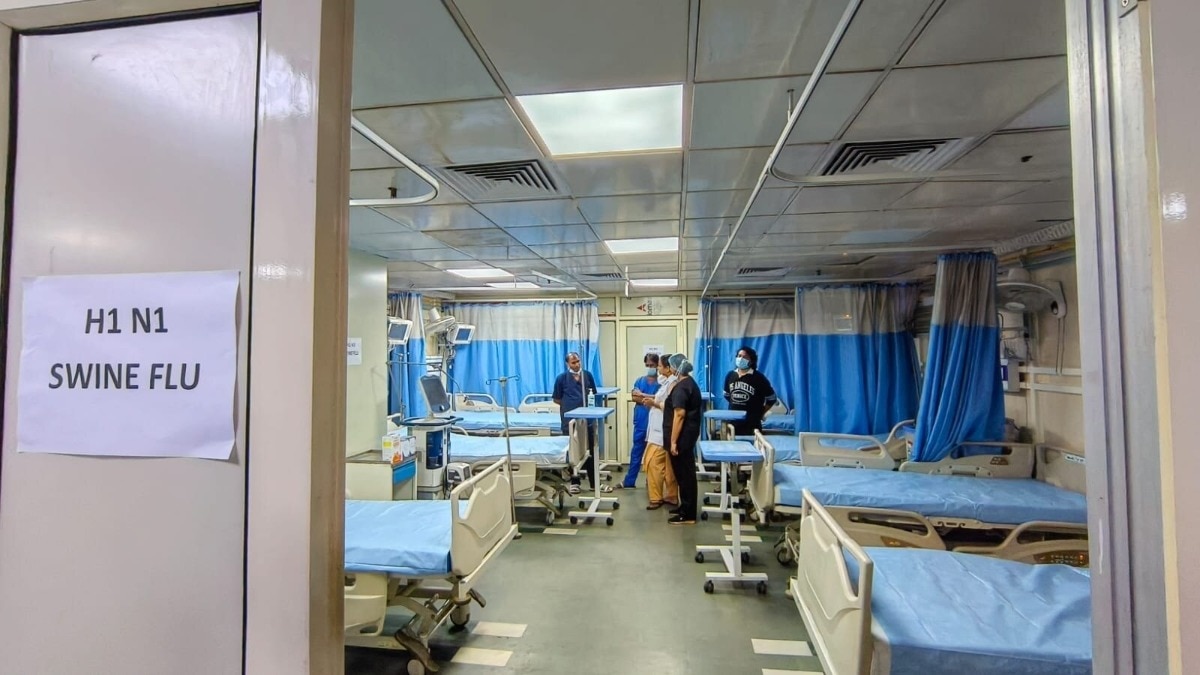
The latest recommendations come amid heightened concern over the current H1N1-led flu wave, with many Delhi hospitals reporting overflowing wards as the flu season coincides with a surge in typhoid, dengue and other vector-borne illnesses.
H1N1 is now one of the seasonal influenza viruses circulating in India, but seasonal should not be confused with harmless. While most healthy people recover, influenza can lead to pneumonia, worsening of underlying illnesses and, in vulnerable people, serious complications requiring hospitalisation.
advertisement
In a post on X, clinician and medical researcher Dr Rajeev Jayadevan drew attention to the importance of India using the current flu surge as an opportunity to strengthen its response to influenza, particularly surveillance and prevention, rather than treating each seasonal spike as an isolated event.
The practical takeaway, experts say, is that while a flu vaccine does not promise complete protection from infection, its value lies in reducing the risk of severe illness and complications, particularly among people more vulnerable to influenza.
These include older adults, young children, pregnant women, people with chronic illnesses or weakened immunity, and healthcare workers.
India does not currently provide the annual influenza vaccination through the Universal Immunisation Programme (UIP), but the government agencies encourage those in need to access it privately once a year.
Traditionally, the uptake of the flu vaccine in the country, however, has been low as the cost of a single shot ranges between Rs 2,000 and Rs 2,500.
- Ends
Published By: Sumi Dutta Published On: Sep 9, 2026 16:19 IST